Korean Beauty for Acne: Which Ingredients Calm Breakouts?
Korean beauty for acne starts with ingredients, not brands. A Gangnam dermatologist explains allicin, cica, heartleaf, tea tree and calamine spot care.

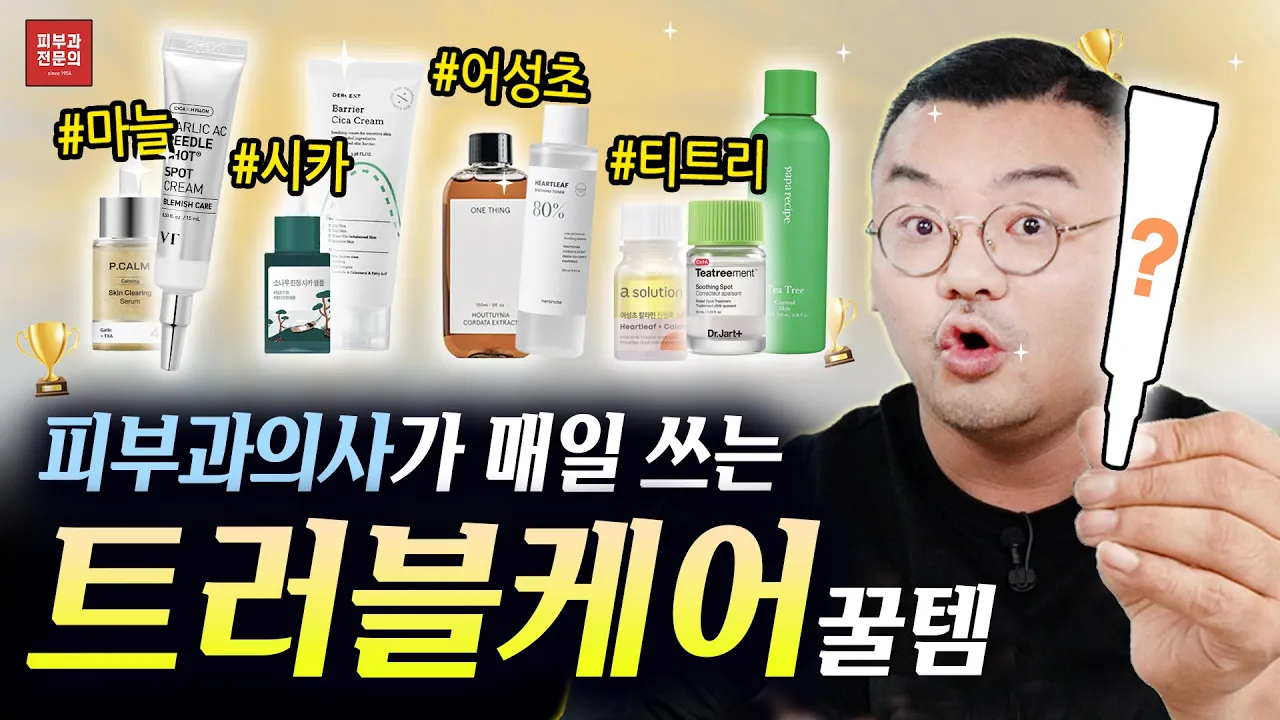
Caring for troubled skin: four standout soothing ingredients explained (a must-watch for acne-prone and sensitive skin)
From Dr. Hongseok Kim's YouTube channel — Korean audio. It plays muted; tap the video to turn the sound on.
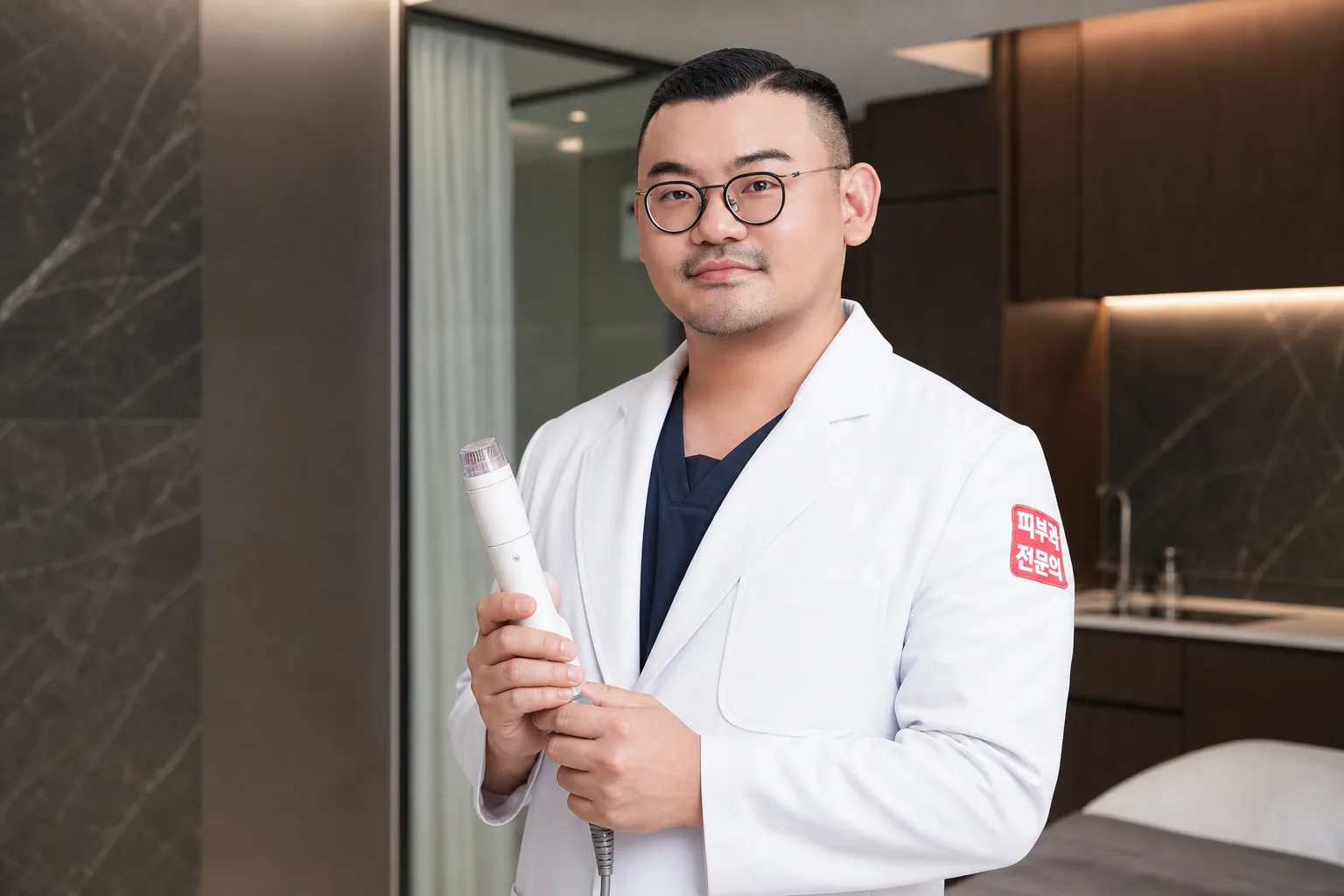
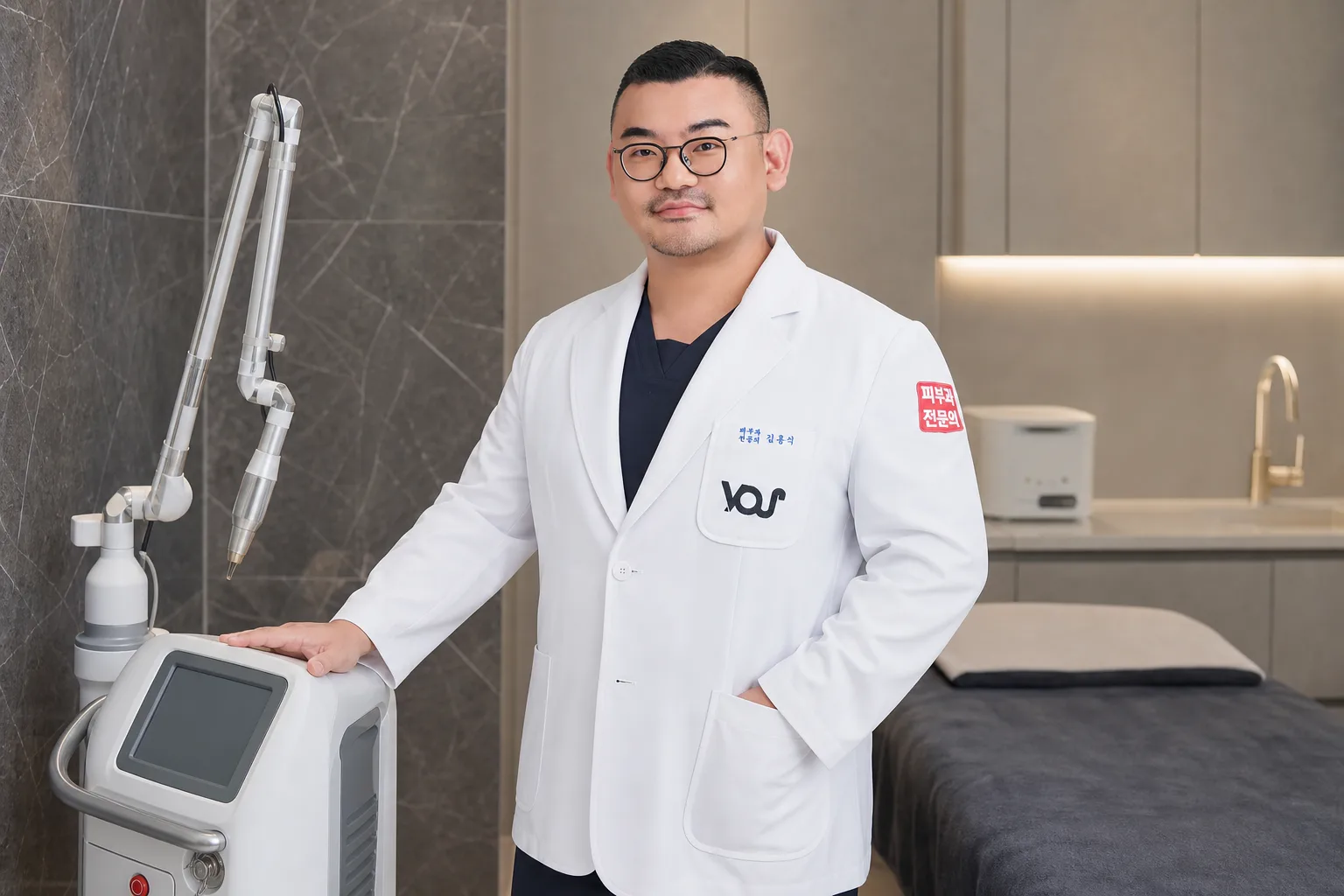
I'm Dr. Hongseok Kim, a board-certified dermatologist with 21 years of practice and the medical director of VOS Dermatology Clinic in Gangnam, Seoul, right in front of Dosan Park. I consult and treat every patient myself, and people with acne-prone or sensitive skin often ask me the same thing: which ingredients actually calm a breakout, and which just sound good on a label?
Many readers abroad search for Korean beauty for acne and find long product lists. In my clinic I think about it the other way round: start from the ingredient and what it does to the skin, then keep the routine short. This page is based on my YouTube video from June 2025; I rewrote it for readers abroad and kept it to ingredients rather than products or brands. The video above can be watched with translated captions.
The short answer
- Breakouts have overlapping causes, from a weakened barrier, poor sleep and fine dust to sudden dryness that raises sebum and an unbalanced skin microbiome, so no single ingredient fixes every case.
- Allicin from garlic, the four cica compounds, heartleaf and tea tree each calm skin in a different way: suppressing bacteria, supporting barrier repair, easing inflammation, or a mix of these.
- How an ingredient is made matters: an extract usually carries more active compounds than plant water, and tea tree oil is the strongest form but also the most irritating.
- When skin is troubled, fewer ingredients and lower irritation usually serve it better than a long, active formula.
Why breakouts flare up in the first place
Short answer: there is rarely one cause, which is why it helps to understand what each ingredient targets.
A breakout can start when the skin barrier is damaged, but lack of sleep, fatigue and fine dust can all play a part. When skin suddenly becomes very dry, sebum production can rise; if that sebum cannot drain properly, pores clog and inflammation follows. Changes in the skin microbiome matter too (in the video at 00:39). Bacteria such as Staphylococcus aureus, Staphylococcus epidermidis and Cutibacterium acnes normally live in balance on the skin, and when that balance breaks down, folliculitis or acne can appear. Because the mechanisms overlap, I explain ingredients by what they do rather than promise that one will solve everything. If dryness is part of your pattern, my note on skin hydration and the barrier explains why holding water matters more than drinking it.
Korean beauty for acne, ingredient one: allicin and tranexamic acid
Short answer: allicin, the compound behind garlic's smell, is known to suppress bacteria and ease inflammation, and tranexamic acid helps calm sensitive skin.
Tranexamic acid (TXA) is better known from melasma care and was originally developed as a medicine to stop bleeding. Applied to the skin, it helps strengthen the barrier and has a soothing effect, which is why it is also used on rosacea-prone and easily inflamed skin (in the video at 01:21).
Allicin is the more unusual one (in the video at 04:47). It contains sulfur, which explains garlic's sharp smell, and its structure lets it bind to sulfur-containing groups on bacteria. Once bound, that reaction is irreversible, and it blocks the bacteria's ability to make proteins and energy. In the research on allicin, one of the bacteria it reacts with most is Cutibacterium acnes, which can sit deep in the skin in biofilms and sometimes responds poorly to antibiotics. Allicin is also described as an indirect antioxidant, because it stimulates the skin's own antioxidant substances.
There is a catch. Too much garlic can irritate skin, so a small, refined amount in a formula is what makes sense, not raw garlic from the kitchen.
Cica compounds and pine leaf extract
Short answer: cica supports recovery through four key compounds, and it is more useful alongside barrier lipids.
When I talk about cica (Centella asiatica), I always name its four key compounds: madecassoside, madecassic acid, asiaticoside and asiatic acid (in the video at 06:24). They are associated with skin regeneration and recovery. A cica cream becomes more useful for sensitive, redness-prone skin when it also contains ceramides and cholesterol to restore the protective barrier, plus hyaluronic acid, panthenol and niacinamide for hydration and calm.
Pine leaf extract is a quieter supporting ingredient. Its distinctive scent comes from terpenoids, which have antibacterial and soothing properties, and it is paired with flavonoids such as quercetin and kaempferol, polyphenols and vitamin C, antioxidants that support recovery. When a label lists each cica compound with its exact concentration, I take that as a sign of a carefully designed formula.
Heartleaf: why extract and plant water are not the same
Short answer: heartleaf (Houttuynia cordata) soothes and supports the barrier, but the extract form carries more active compounds than flower, leaf or stem water.
On an ingredient list, "extract" and "water" mean different things (in the video at 09:20). An extract is made by soaking the plant in water, ethanol or glycerin, which pulls out both water-soluble and oil-soluble compounds. Heartleaf extract contains antioxidants such as quercetin and rutin, and a lipid-soluble compound called decanoyl acetaldehyde, which behaves like a fatty acid and disrupts bacterial cell membranes, helping to prevent bacteria-driven inflammation. Some studies also suggest heartleaf can stimulate ceramide synthesis, which is why it is linked to a stronger barrier.
Flower, leaf or stem water is produced with steam. It is mainly water-soluble, carries some of the plant's scent and has fewer actives, but it is gentle and easy to use. A heartleaf toner built on plant water with panthenol, sodium hyaluronate and allantoin is a mild option for sensitive skin.
One rule I come back to: when your skin is in trouble, choose fewer ingredients rather than more, and choose lower irritation every time. My guide to korean face care for acne explains where home care stops and treatment starts.
Calamine spot care: what the pink layer does
Short answer: calamine relieves itching and gives a cooling, soothing effect on individual spots, and recent spot products are mostly kept at 20% or less.
Calamine is the pink lotion many of us remember from chickenpox (in the video at 13:21). It is a mixture of zinc oxide and ferric oxide, an inorganic ingredient that does not dissolve in water, which is why it is pink and why it can settle into a separate layer. Toners, lotions and packs may use around 0.1% to 1% for a light calming effect, while spot products are usually under 20%; some older formulas went higher, but because they were not more helpful and carried a risk of irritation, most recent ones stay at 20% or below.
You dab it directly onto the spot. As it dries it leaves a powdery mark, so let it absorb fully before make-up, or use it at night if that is easier. Some spot formulas also add zinc oxide and titanium dioxide, which give a degree of UV protection; inflamed, weakened skin is more vulnerable to UV, so that is a sensible touch.
Tea tree, rosacea and choosing what fits your skin
Short answer: tea tree is widely known for easing acne, and it can also help rosacea-prone skin where Demodex mites are involved.
In rosacea, vascular problems and inflammation are part of the picture, and a major culprit is a mite called Demodex (in the video at 15:15). In rosacea skin, these mites can increase three to five, even ten times, which feeds inflammation. Around the eyes this is called ocular rosacea. I recently saw an ophthalmologist myself, who found build-up at my lash line and recommended a cleanser containing tea tree, dabbed on with a cotton pad. Afterwards my eyes felt fresher and the dryness and redness eased. That was on an eye doctor's advice, and I would not start using tea tree near the eyes without one.
Tea tree comes in three strengths. Oil is the most concentrated and potent, but it can be quite irritating, so only small amounts are used. Extract carries both water- and oil-soluble compounds at a lower concentration, and leaf water is milder still. If your redness keeps returning, my guide to korean rosacea treatment covers what a diagnosis adds, and one patient's redness, pores and uneven tone case shows how a plan came together.
To finish, I covered several formats on purpose, because you rarely know in advance what kind of breakout will come next (in the video at 19:08). Widespread irritation suits a gentle toner or barrier cream; a single inflamed spot suits targeted calamine or tea tree care. That is how I would build Korean beauty for acne at home: few ingredients, chosen for your skin's current state.
When home care is not enough
Short answer: if breakouts keep coming back or a product makes skin worse, the next step is a diagnosis, not another ingredient.
If you are visiting Seoul, a consultation at VOS starts with VOS Skin MBTI, which reads your skin's traits before any treatment so the plan fits how your skin actually behaves. For persistent inflamed acne, my guide to korean acne treatment explains what clinic care adds. You can also read creator experiences at VOS.
Results vary from person to person, and the right plan for your skin is decided at a consultation.
Key moments in the video
Treatments discussed in this video

Real visitors who had it at VOS
Creators and patients who filmed or wrote up their own treatment at VOS.
Keep reading on the blog
Korean Face Care for Acne: When It Won't Be Enough
Korean face care for acne: what a gentle routine can and can't do, when breakouts need a dermatologist, and what to avoid on a trip. VOS Dermatology…
Korean Acne Treatment: Options, Timing and Listed Prices
Korean acne treatment guide: active breakouts vs red marks vs scars, which in-clinic options fit each, trip timing and listed prices — VOS Dermatology, Gangnam.
Korean Rosacea Treatment: What Helps Redness in Seoul
Korean rosacea treatment explained: types, triggers, creams, vascular lasers and what one trip can realistically do for redness — VOS Dermatology, Gangnam.
Q&A — what viewers ask Dr. Kim
What does Korean beauty for acne actually mean, from a dermatologist's view?
Should I put raw garlic or pure tea tree oil on a pimple?
Is Korean beauty for acne enough, or do I need treatment?
What is the difference between heartleaf extract and heartleaf water on a label?
Is tea tree helpful if I have rosacea?
Results, swelling and recovery vary from person to person. This page is general information from VOS Dermatology Clinic based on Dr. Kim's video and does not replace an in-person consultation.
About Dr. Hongseok Kim
Dr. Kim performs your VOS Skin MBTI himself — from the first skin analysis to the follow-up check.
Dr. Kim focuses on aesthetic dermatology — skin regeneration, facial contour and healthy ageing — and builds each plan from a close look at the individual patient's skin and goals, aiming for natural, refined results.
At VOS the same specialist is responsible for the whole course of care: diagnosis, the procedure itself and follow-up. An accurate reading of skin structure and how it changes is what makes results more complete and keeps the risk of side effects low.
Credentials & appointments
- Current
- Medical Director, VOS Dermatology Clinic
- Board-certified dermatologist
- Education
- Graduated first in class, medical school
- Academic appointments
- Adjunct Professor, Dept. of Medical Aesthetics, Cheongju University
- Adjunct Professor, Dept. of Beauty Medical Science, Dongguk University
- Professional leadership
- Director, Korean Dermatologist Association (KDA)
- Director, Korean Association for Anti-Aging Dermatology (KAAD)
- Committees
- Academic Committee Member, Korean Dermatological Association
- Information Committee Member, Korean Dermatologist Association (KDA)
- Memberships
- Korean Society for Dermatologic Functional Medicine
- Korean Society for Laser Medicine and Surgery
Brand advisory
- Skincare
- The Scent
- SkinCeuticals
- La Roche-Posay
- AHC
- Bioderma
- Etat Pur
- Injectables
- Juvelook
- Revive
- Lafullen
- Rejuran
- Devices
- Ulthera
- Thermage
- Sofwave
- CoolSculpting
- Mirajet
Lecturing, live demonstrations and brand education — in Korea and across Asia.
- presentations & lectures listed
- 116
- years covered by the list
- 2016–2026
- in 2023, the busiest year listed
- 25
 Lecture
JULIA SUMMIT GLOBALJuvelook Journey — invited lecture · 2025  Conference
APS Korea 2026Aesthetic Plastic Surgery Korea · 2026  Conference
28th KDA Spring ConferenceKorean Dermatologist Association · 2026  Conference
KOREADERMA 2025COEX, Seoul · 2025  Live demo
IMLG 2025Live injection training for international physicians · 2025  Lecture
JULIA SUMMIT ASIA 2025Presentation, Hong Kong · 2025  Live demo
IMLG 2025Faculty & attendees · 2025  Brand event
SkinCeuticalsNext Beauty Code, Taiwan · 2025  Live demo
IMLG 2025Live demonstration, explained step by step · 2025  Brand event
COSRXBrand event, Seoul · 2025
Selected international & major meetings
- 2026
- APS Korea 2026
- 28th KDA Spring Conference
- Invited lecture, Baim Global Jupiter Symposium
- 2025
- JULIA SUMMIT GLOBAL – Juvelook Journey
- JULIA SUMMIT ASIA 2025Hong Kong
- KOREADERMA 2025
- SkinCeuticals: Next Beauty CodeTaiwan
- 9th KDA procedural skills training
- 2024
- AMWC-TDAC Taiwan
- Juvelook Launching Symposium in Taiwan
- KSDS 2nd International Congress Seoul
- 1st Ulthera Focus Group Meeting
Show 2 earlier yearsShow fewer
- 2023
- AMWC Japan
- 41st Annual Meeting, Japanese Society of Aesthetic Dermatology
- ACDS 2023
- MEVOS Dalian
- 2022
- ASLMS (American Society for Laser Medicine & Surgery)
- 13th I-SWAM Indonesia Convention Exhibition
Broadcast
- Morning N — hyperhidrosis and choosing cosmetics
- “Golden time of skin lifespan” (Jul 2021)
- Park Yong-kwan's Radio Show — regular Monday guest
- Good Morning — spring sunlight and skin (Mar 2023)
- Jo Woo-jong's FM Daehaengjin — Dr. Family corner
- Men On Air — summer skin care
Papers & books
- Juvelook Comparative Pain Assessment
- Cosmetic Counseling Expert Course
- Cosmetic Ingredients for Skin Care
Source: VOS Dermatology's official Korean profile of Dr. Kim.
Meet Dr. KimBefore you book, hear it from the doctor himself.
Slide through 17 videos on lifting, skin boosters and travelling for treatment. Korean audio — everything plays right here.
Travel"Flying tomorrow, no bruising or swelling?" Top 3 No-Downtime Lifting (Ultherapy prime,Sofwave,Opus)
LiftingAfter Ulthera & Thermage, What's Next? Dermatologist with 21 Years of RF Experience Breaks It Down!
Skin boostersA Dermatologist with 21 Years of Experience Breaks Down the Skin Booster Family Tree
JuvelookMust-Know Before Getting JuveLook! | What It Can & Can’t Do, Clinic Tips by Dr.DTS
JuvelookPairing Juvlook with This Can Double the Firming Effect (And Ease Nodule Concerns)
JuvelookEverything About Juvelook — Effects, Real Treatment Review, Rejuran Comparison
Skin boostersDoctors Won’t Talk About This Treatment Yet… So I’m Revealing Everything | ECM Skin Booster Q&A
Skin boostersWhy does 'that' super famous skin booster contain 'filler' ingredients?
Skin boostersGOURI Is Korea’s Hottest Skin Booster — But What About the Bruising?
Anti-agingSurface Treatments vs Deep Treatments | Which One Actually Makes You Look Younger?
AftercareDid you just pay a fortune for a dermatology treatment? You'll 100% regret skipping this video.
Dr. KimSorry to my patients... I tried it on myself first (21-Year Derm's Self-Treatment Full Process)
BodyTrapezius Slimming for Sharp Shoulders ✨ How to Get That Clean, Angular Look (Spring/Summer Must)
Travel22-Hour Flight + High-Altitude UV: The One Thing a Dermatologist Used the Whole Time
ResearchScientists Erased a “Mark of Aging” Once Thought Irreversible | A New 2026 Aging Study | Dr. PIALNAM
PoresWhy Your Pores Won’t Shrink | What Actually Works? | Dr. DTS
SkincareWhy Your Expensive Vitamin C Isn’t Working|How to Use It for Better Absorption|Dr. PIALNAM
VOS Shorts
Get to know VOS in seconds — 60-second answers from Dr. Kim to the questions you’d ask in the chair. Everything plays right here.
How to get Juvelook without side effects nodules
How long does Sofwave last?
Boost Your Results with Sofwave!
RE-TOURN! It's Different from Collagen Injections
Juvelook Skin Rejuvenation Effects
How many Ultherapy Prime shots are enough?
Want to look younger!?
Skin Booster: Myths and Facts
Most of Your Allergy Test Results Came Back Positive?! You Might Have OOO Syndrome!
More Isn’t Always Better!? How to Properly Use Moisturizer
Does Snail Cream Actually Contain Snails?
Hands-Free Exercises to Smooth Out Smile Lines
The Secret Habit of People Who Stay Healthy and Live Longer (Worth Millions)
Cleansing oil for sunscreen? Double cleansing? You’ve been doing it all wrong...
Father's Wisdom on Shaving (Secret to Avoiding Cuts)
If nothing you apply stops the dryness
What if you blindly apply too much sunscreen without knowing 'this ingredient'? Your skin will br...
2 Skincare Ingredients a Dermatologist Will Never Use (Be Extra Careful!)
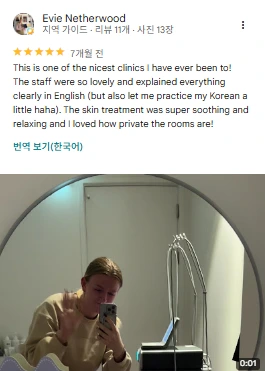
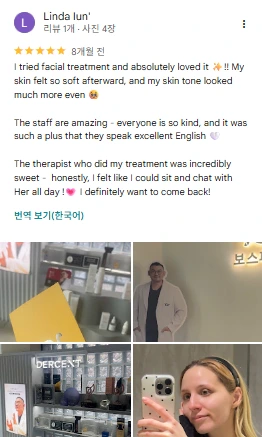
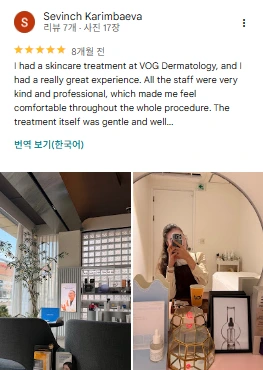
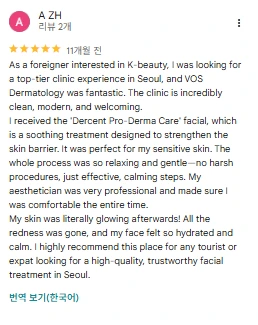
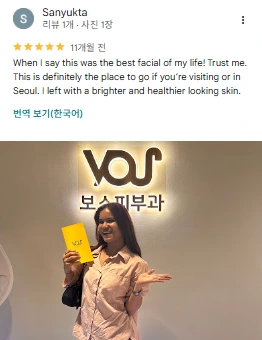
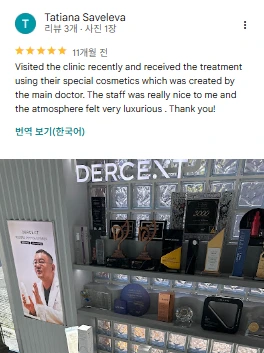
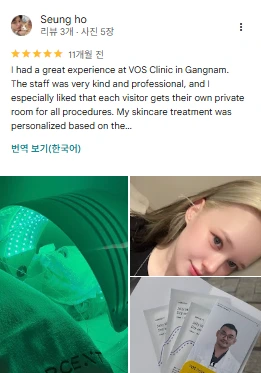
What international patients wrote on Google Maps.
Screenshots of public reviews left on Google — in their own words, unedited. Experiences and results vary from person to person.
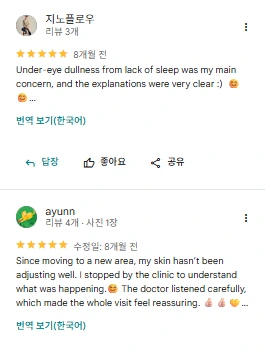
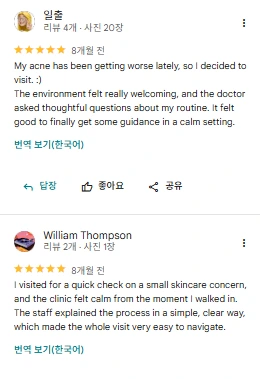
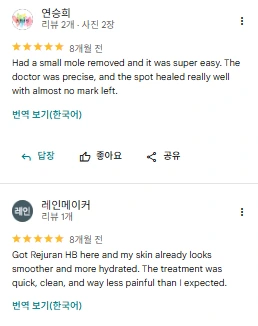
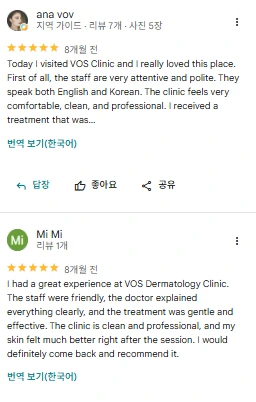
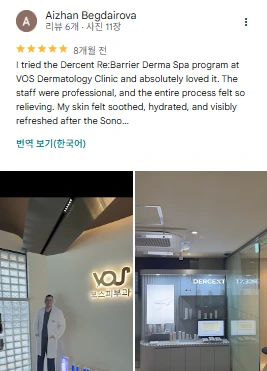
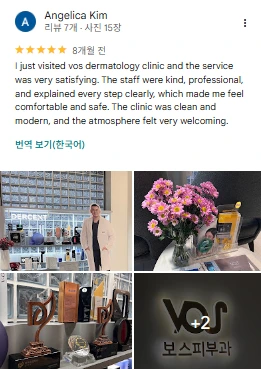
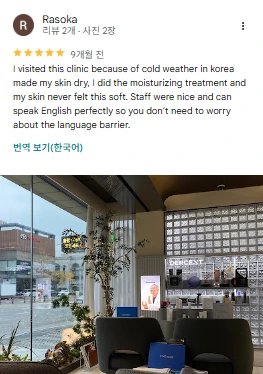
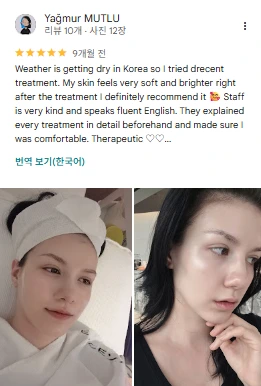
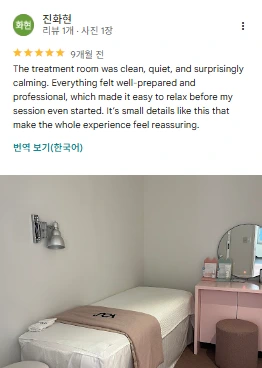
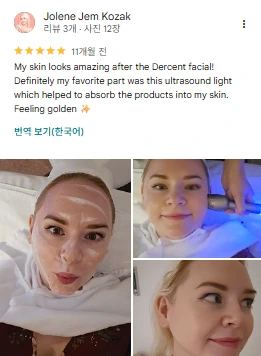
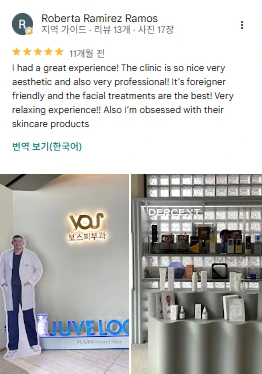
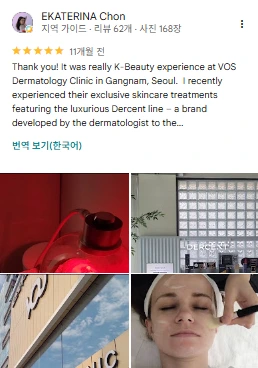
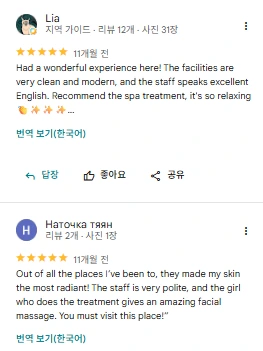
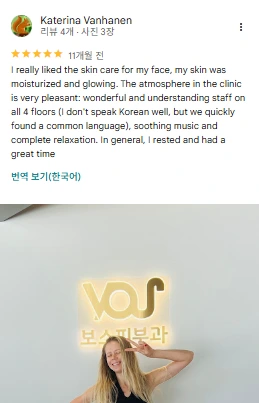
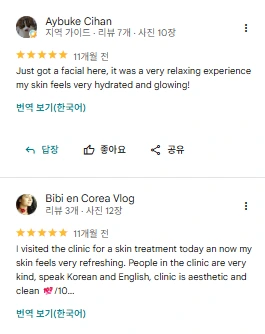
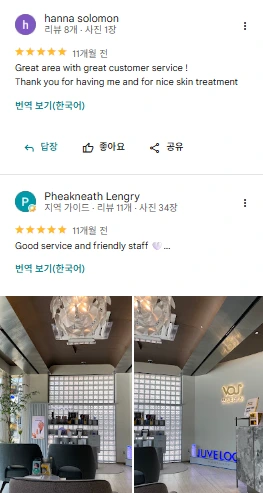
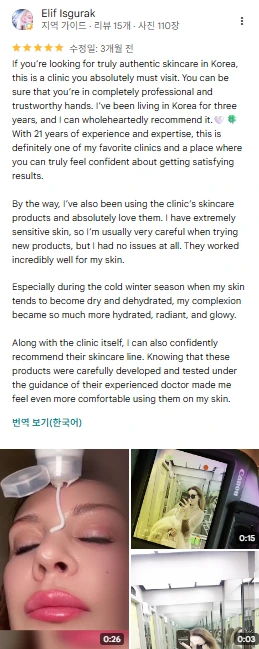
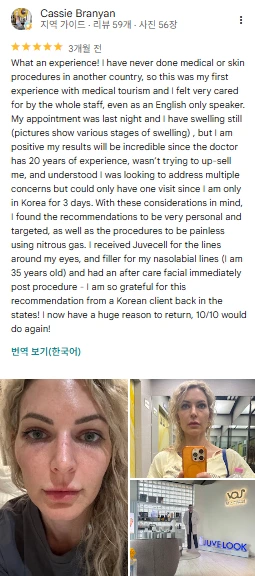
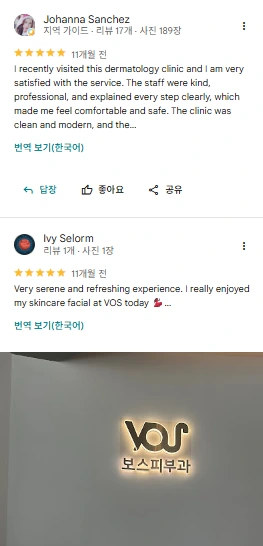
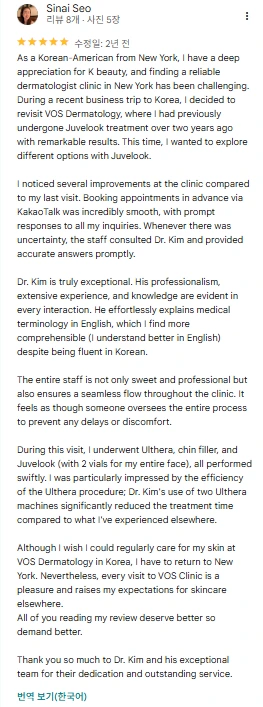
Creators who filmed their treatment at VOS.
Each video comes with Dr. Kim's notes on what was done, why, and the listed price. Opinions are the creators' own; results vary.
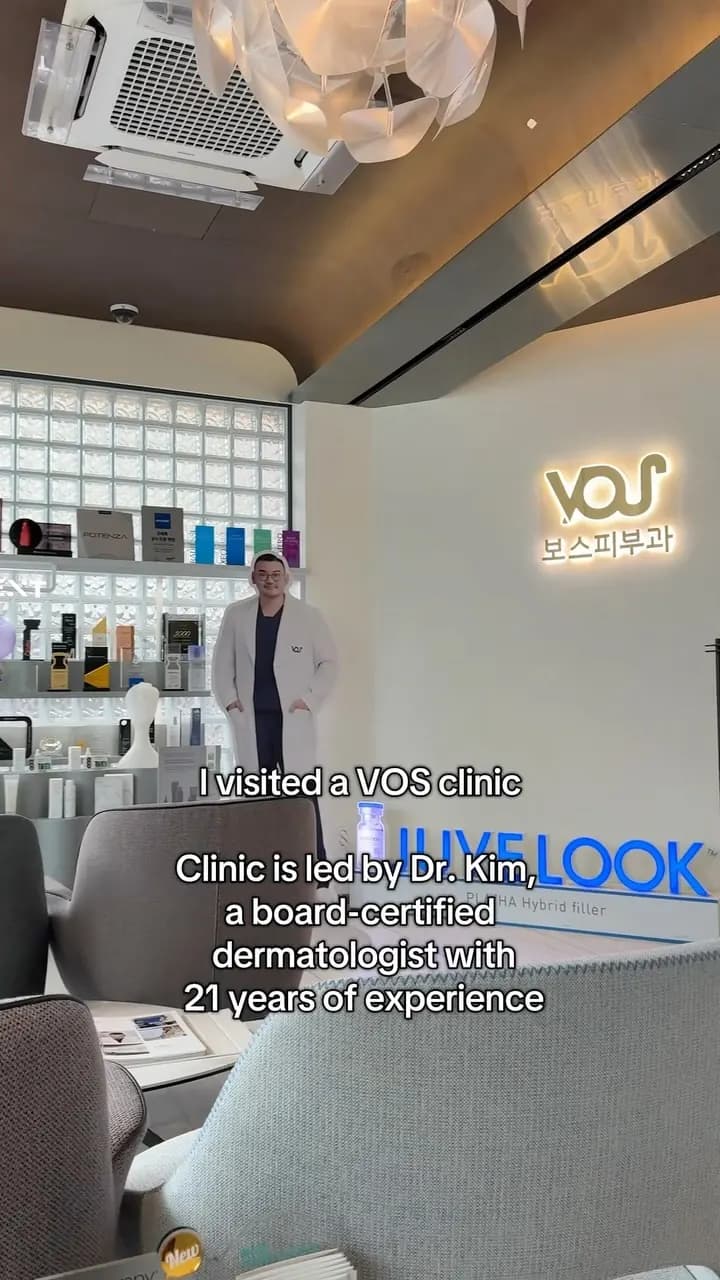
Redness, Pores and Uneven Tone in Seoul: A Real Patient Case
Aizhan came to Seoul with three concerns at once: redness, enlarged pores and uneven tone. I explain how I build one plan for skin like hers, and what it realistically changes.
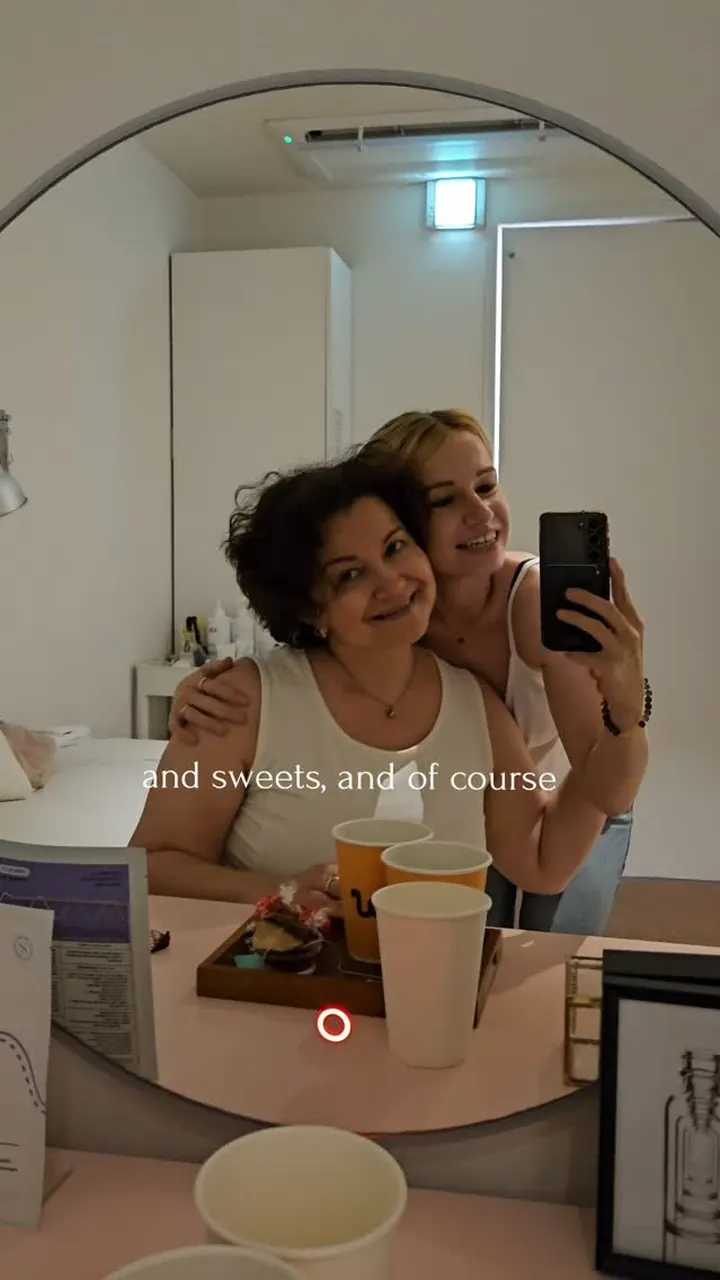
Gouri and Belotero Revive in Seoul: A Mother’s Skin Booster Case
Rina brought her mother, visiting from abroad, for a surprise skin treatment. I explain why we paired Gouri, a PCL collagen stimulator, with Belotero Revive, and what to expect.
Juvelook, Botox and Rejuran Lips in Seoul: A Natural Refresh Case
Oxana wanted to refresh her lower face and neck without looking done. I explain her combination of laser, Juvelook, botox and Rejuran in the lips, and why lips can be treated for quality, not volume.

Skin Botox + ECM Booster in Seoul: A Real Case for Textured Skin
Heli’s skin looked textured and stiff even under makeup. I explain why we paired skin botox with an ECM booster, what ECM actually means, and how the plan was built for her skin.
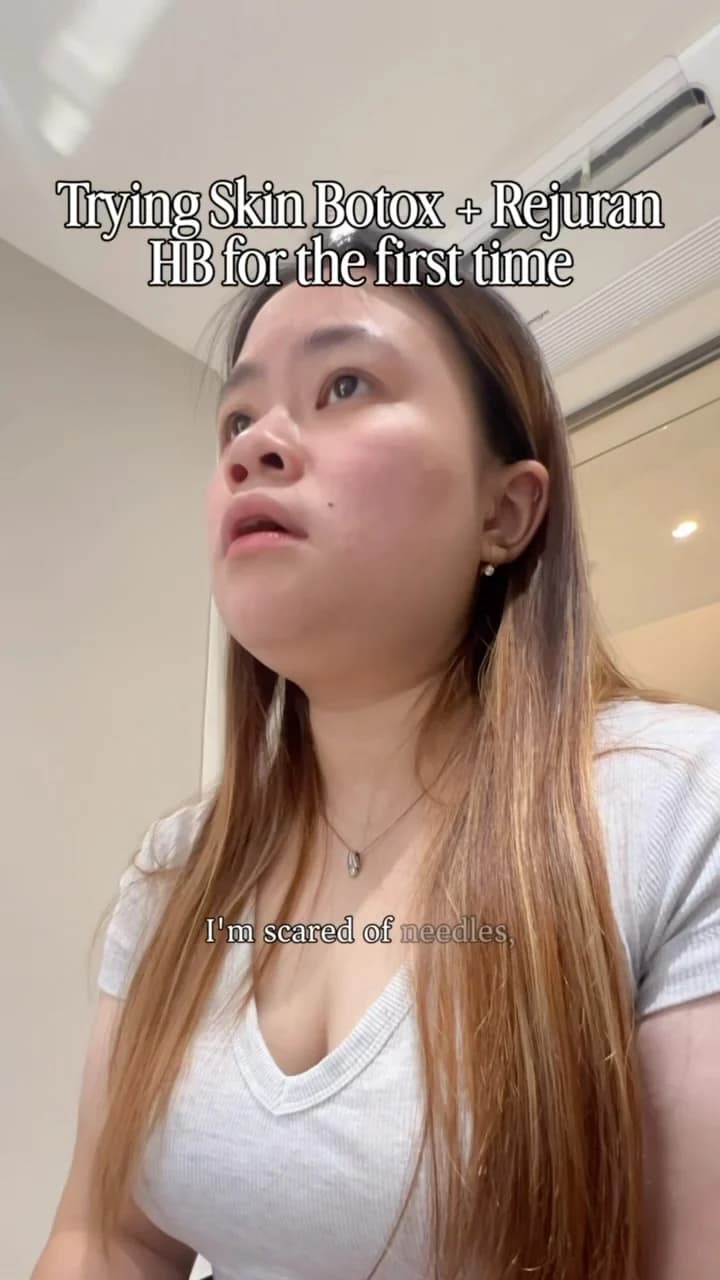
Skin Botox + Rejuran HB in Korea: A First-Timer’s Real Case
Suhandi was scared of needles and had never had a skin treatment. I explain why we paired skin botox with Rejuran HB, what the session felt like, and when results show.

Thulium Laser, CO₂ Spot Removal and Nuviju in Seoul: A Real Case
Manel stopped posting because she no longer liked her skin. I explain her one-visit plan: a full-face thulium laser, CO₂ for spots and Nuviju for the chin and jawline.
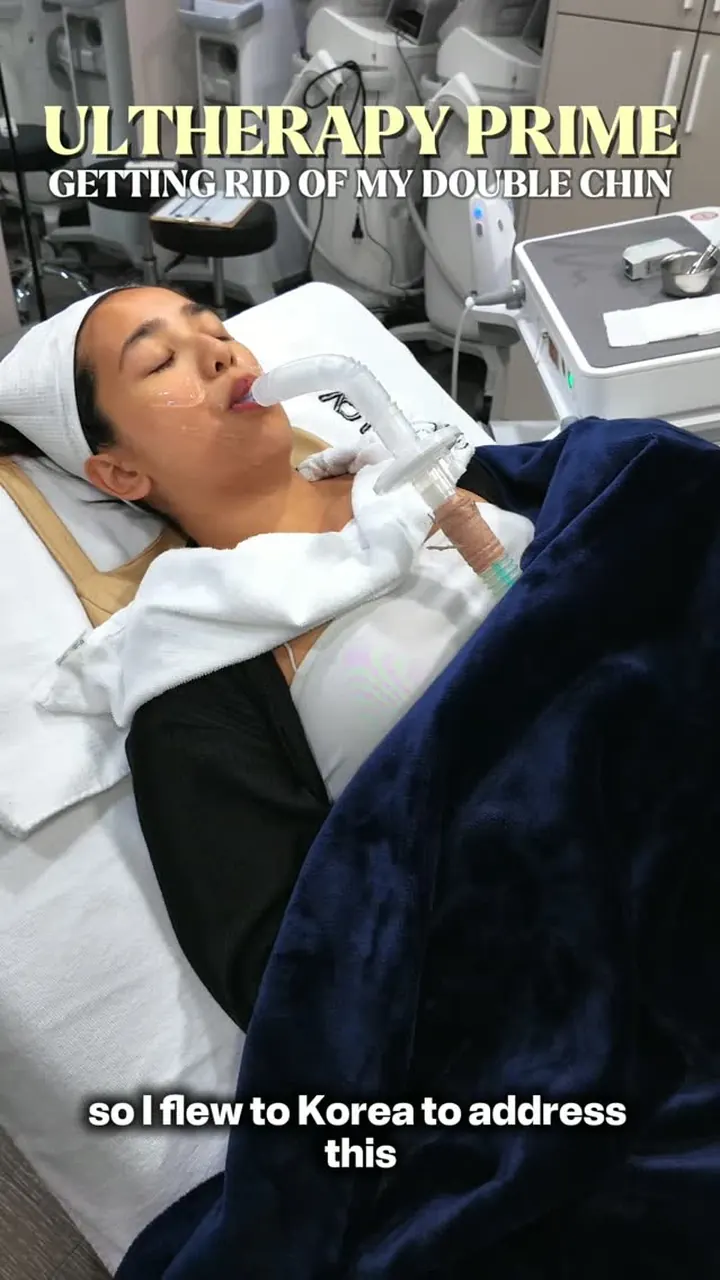
Ultherapy Prime for a Double Chin in Korea: A Real Case
Krisha flew to Seoul to tighten the area under her chin. I explain what Ultherapy Prime does there, when a double chin is fat rather than laxity, and what to expect after.
VOS Dermatology Blog
Hilo Wave Filler Korea: Right for You? Cost, Reviews, Methods
Hilo Wave filler Korea: what this HA skin booster can't do, who should wait, and what moves the cost. Dr. Hongseok Kim, VOS Dermatology, Gangnam.
Hilo Wave HA Filler Korea: Downtime? Cost, Reviews and Methods
Hilo Wave HA filler Korea downtime, day by day: what settles when, what decides cost, and how many Seoul days to plan. VOS Dermatology, Gangnam.
Oligio Korea Price: What Moves It? Reviews, Methods & Recovery
The Oligio Korea price is set by shot count, areas and add-ons. Dr. Hongseok Kim at VOS Dermatology, Gangnam explains what moves it; send a photo on…
How Much Does Rejuran Cost in Korea? Results, Reviews, Types
How much does Rejuran cost in Korea? Product, mL, sessions and trips set it. Send a daylight photo on WhatsApp to VOS Dermatology, Gangnam for your quote.
Dr Korea PDRN: Cream or Injection? Cost, Reviews & Methods
Dr Korea PDRN: creams hydrate, injected PN works in the dermis. Cost factors, methods, review claims and who it suits, from VOS Dermatology, Gangnam.
E.P.T.Q. Filler Korea: Is It Safe? Cost, Reviews & Methods
E.P.T.Q. filler Korea: what this Korean HA filler is, its risks, what decides the cost and when to skip it. Send a photo on WhatsApp.