
Korean Face Care for Acne: When It Won't Be Enough
Korean face care for acne: what a gentle routine can and can't do, when breakouts need a dermatologist, and what to avoid on a trip. VOS Dermatology…

Korean face care for acne, in the sense dermatologists use it, means gentle cleansing, a few light layers that don't clog pores and daily sunscreen; it can steady mild breakouts, but it won't clear inflamed or cystic acne on its own. Some acne also shouldn't be treated with a procedure during a short visit at all. If you're flying in from abroad, the harder question is what happens once you're home, because acne care is measured in weeks and months.
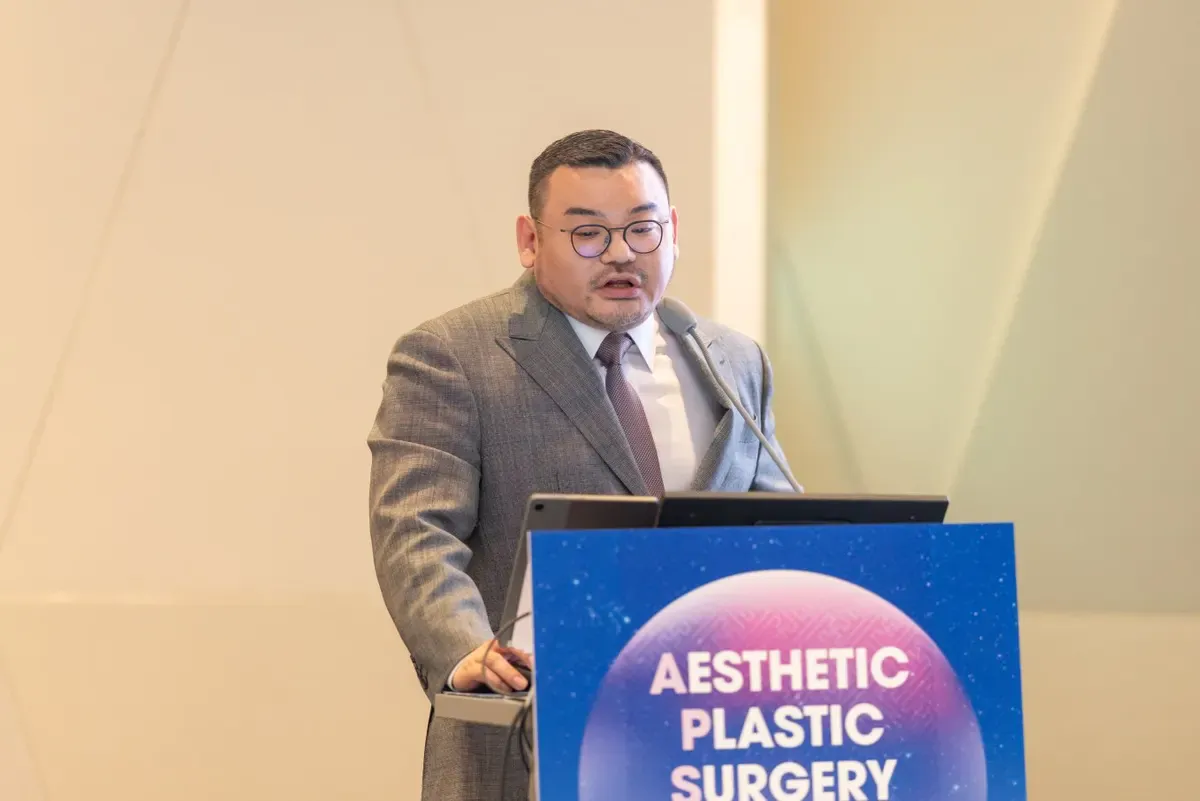
I'm Dr. Hongseok Kim, a board-certified dermatologist with 21 years in practice, and at VOS Dermatology in Gangnam I see each patient myself, from the consultation to the procedure. I'm writing this because the threads people read before booking are thorough on products and thin on limits.
If you're weighing a visit, send two things on WhatsApp: one daylight photo of your skin without makeup, and the names of everything you use on it now, including any prescription acne medicine.
Send a skin photo and your product list on WhatsApp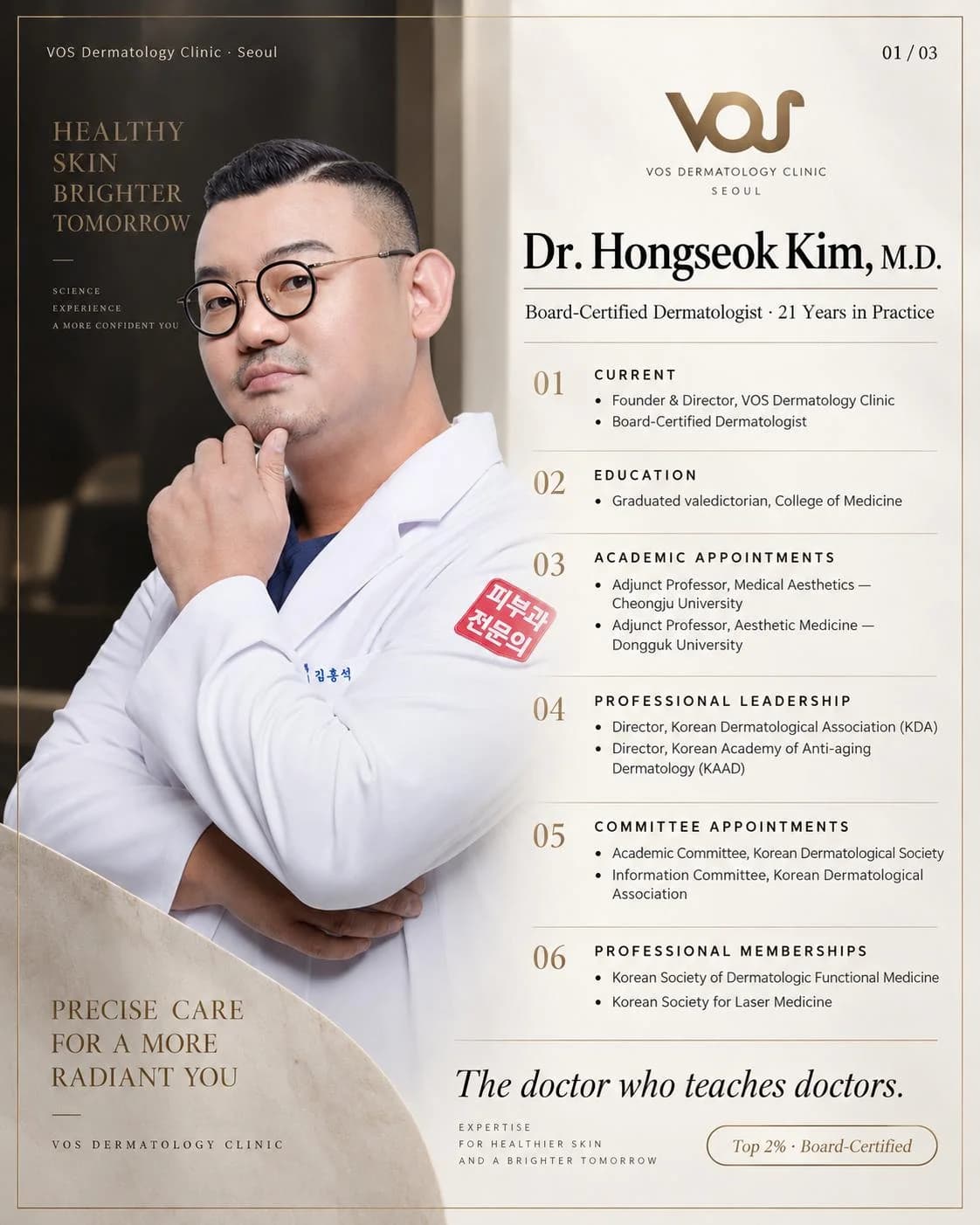
What the threads get right about Korean face care for acne
Most of the basics. Cleanse gently, keep the routine short, don't pick, and wear sunscreen every day.
The American Academy of Dermatology's acne tips land in nearly the same place: wash gently up to twice a day with your fingertips instead of a washcloth, avoid astringents, toners and exfoliants that dry the skin, and use a broad-spectrum, water-resistant sunscreen of SPF 30 or higher that's labeled non-comedogenic. Korean routines built around barrier care fit that advice well when the number of products stays low.
Where forum advice drifts is the step count. A ten-step routine with two acids, a toner, a sheet mask and a peel-off mask gives already inflamed skin ten chances to react. The AAD's guidance on exfoliating at home also asks for extra caution when skin is acne-prone or sensitive. When breakouts get worse after someone starts a new routine, the number of layers is a more likely culprit than the absence of one more serum.
Three things a forum post can't see
Your acne type, what you've already tried and for how long, and how your skin heals after a breakout. All three change the plan, and none of them shows up in a product haul.
Your acne type
Blackheads and whiteheads behave differently from red, tender papules and pus-filled pustules, and both behave differently from deep nodules and cysts. The AAD's acne overview counts all of these as acne and notes that acne can leave dark spots and scars. Deep, painful lesions are the ones most likely to scar, and they're also the ones a routine is least able to reach. Small, itchy, uniform bumps across the forehead or chest can be a different condition that only looks like acne and responds to different treatment, which is one reason a look in person matters more than a thread.
What you've tried
People often switch products every ten days, then decide nothing works. Before adding anything, the useful facts are what was used, at what strength, and for how long.
How your skin heals
Some skin leaves a brown or red mark after every breakout. That tendency affects which procedures are reasonable, how much sun you can afford afterwards, and whether a summer trip makes sense at all.
| What you see | What a gentle routine can do | What usually needs a doctor |
|---|---|---|
| Blackheads, whiteheads | Keep pores clearer with light, non-comedogenic layers | Clusters that don't change over months |
| Red bumps, pustules | Avoid making them worse | A plan that includes prescription options |
| Deep, painful cysts | Very little | Prompt medical treatment to limit scarring |
| Marks after breakouts | Sun protection slows the fading | Marks that persist and bother you |
| Pitted scars | Nothing | Procedures, once active acne is controlled |

Why a short trip can start acne care but can't finish it
Acne is managed over months, and a five-day stay covers a small slice of that. In Seoul you can get a diagnosis, a plan and, in some cases, a procedure; the follow-through happens at home.
That's the part to plan before booking flights. The U.S. Centers for Disease Control and Prevention advises anyone traveling for medical care to arrange follow-up at home and to bring copies of their records back.
Risks and side effects to know
A single visit can still do useful things. What one acne visit in Seoul can realistically cover walks through that day. If your main concern is scarring that has already formed rather than active breakouts, the scar types and how a scar program is built is the more relevant read.

When I'd hold off on a procedure for acne
In short, this is the section most threads skip. A procedure can be the wrong choice for a while even when the motivation is right.
- Actively inflamed or infected skin in the treatment area. Injecting through pustules raises the infection risk. The clinic's own patient guidance for Retizen, a skin booster on our menu, lists active skin infection as something that may restrict treatment, and the same logic applies to most injections.
- Current oral isotretinoin. Skin on this medicine heals differently, and resurfacing or aggressive procedures need careful timing. Bring the start date and the dose.
- A peel or laser one or two days before a flight to a beach week. Freshly irritated skin plus strong sun is the setup for dark marks, especially if you already mark easily.
- Pregnancy, or trying to conceive. Several acne medicines are avoided in pregnancy, which narrows the plan considerably.
- Sudden adult acne with irregular periods or other body changes. That pattern deserves a medical workup at home before any cosmetic treatment abroad.
Whether any of this applies to you can only be settled when your skin is examined in person.
Worth knowing: If you take a prescription acne medicine at home, keep taking it as prescribed and bring its name and dose. I'd rather see your skin as it really is on that medicine than meet a flare caused by stopping it a week before the trip to start fresh.
If one of these points sounds like you, it changes what's worth booking. Send the name and dose of what you take, or a note that you're pregnant or planning to be, on WhatsApp before you fix your dates. Our coordinators reply in English, and you'll arrive knowing which questions to bring to the consultation.
Send a skin photo and your product list on WhatsApp
How I approach acne in someone who's only here for a few days
The first job is sorting what's on the face: which lesions are active, which are marks, which are scars, and where they sit. The second job is the timeline: when the acne started, what's been used and for how long, and the date of the flight home.
From there the reasoning is fairly plain. Active, inflamed acne gets medical treatment first; procedures for texture and scars come once it's under control. A cleansing treatment like HydraFacial, which the clinic's notes describe as about 30 minutes with an immediate return to daily activities, can help with congestion and dryness, but it's a skin-conditioning step rather than an acne medicine. You can see how it's listed on the clinic's body and skin-conditioning menu, and what each clinic facial option actually does compares them side by side.
People sometimes hope to fit a lifting device into the same trip. Devices like Ultherapy PRIME work on sagging and contour, and they do nothing for breakouts; our Ultherapy PRIME guide for visitors covers what it's for.
The search terms that sit around this one, such as slim face, wide face or face contouring, are a separate conversation. Fat and bone change the shape of a face; acne changes its surface. Treating one doesn't fix the other, and mixing them in a single short trip usually means doing neither well.

Before you message us
Have two things ready: a daylight photo of your skin without makeup, and the names of everything you use on it now. Send them on WhatsApp at https://wa.me/821096974628, with your travel dates if you have them; our coordinators reply in English. The clinic is in front of Dosan Park in Gangnam and is closed on Wednesdays, Sundays and public holidays, which matters on a short stay. Results vary from person to person.
See me explain it on video
I answer the questions patients ask me on camera. The YouTube channel is in Korean with English titles; Instagram and TikTok are for international patients.
Questions readers ask about korean face care for acne
Can Korean skincare products alone clear cystic acne?
Is it okay to get a facial in Seoul while I have active breakouts?
Should I stop my acne medication before traveling for treatment?
What should I bring to a dermatology consultation in Seoul for acne?
How long does acne treatment take to show results?
Results, timing and recovery vary from person to person. This article is general information from VOS Dermatology Clinic and does not replace an in-person consultation. Any prices mentioned are from the clinic’s official price list (KRW, before VAT) and may change.
One Day Acne Treatment in Korea: What a Single Visit Can Do
One day acne treatment in Korea: what fits in a single visit, a same-day schedule, downtime before a flight and listed prices — VOS Dermatology, Gangnam.
Korean Acne Scar Treatment: Scar Types, Program and Prices
Korean acne scar treatment explained: which scar types respond to what, the Signature Acne Scar Program's components and listed price. VOS Dermatology, Gangnam.
Korean Facial Benefits: What Each Clinic Option Really Does
Korean facial benefits, option by option: what HydraFacial, MiraJet and boosters change, how long each lasts and what no facial can do. VOS Dermatology, Gangnam