
Cellular Reprogramming: Did 53-Year-Old Skin Cells Turn 23 Again?
What is cellular reprogramming? A Gangnam dermatologist explains the 2022 study on aged skin cells, what the 30 years mean, and why it isn't a treatment yet.

Why 53-year-old skin became 23 | Is anti-aging over?
From Dr. Hongseok Kim's YouTube channel — Korean audio. It plays muted; tap the video to turn the sound on.

I'm Dr. Hongseok Kim, a board-certified dermatologist with 21 years of practice and the medical director of VOS Dermatology Clinic in Gangnam, Seoul, right in front of Dosan Park. At VOS I see every patient myself, from the first consultation to the last treatment.
When I read that 53-year-old skin had been turned back to 23, I wanted to know what was actually done, so I went to the paper. The idea behind it is cellular reprogramming: resetting the age of a cell itself rather than repairing the damage. This page is based on my YouTube video from August 2026; I rewrote it for readers abroad. The video above can be watched with translated captions.
The video title says anti-aging is over. My actual conclusion is more careful, and I explain why below.
The short answer
- In a 2022 study led by the Babraham Institute in Cambridge, skin fibroblasts were partially reprogrammed in the lab, and their epigenetic age markers moved about 30 years in the younger direction.
- Yamanaka factors are four factors that can return a fully specialised cell to an early state; switched on all the way, the cell also loses its identity, so the 2022 study stopped the reset partway.
- More important than the number: collagen production and cell movement also shifted towards those of young cells.
- This was research on cells grown in a dish, not clinical data in people. Nobody yet knows how to stop the reset at the right point in a living person, and responses could differ between people.
What did the "53 becomes 23" study actually do?
Short answer: a 2022 lab study partially reprogrammed aged skin fibroblasts and found their age markers had moved about 30 years younger.
The paper was published in 2022 by researchers centred on the Babraham Institute in Cambridge (in the video at 00:32). The cells they used were fibroblasts from the dermis. I describe fibroblasts as a factory: they make collagen, hyaluronic acid and most of the other components of the dermis.
Cells age too. Over time, senescent fibroblasts appear; production drops, function changes and the cells start releasing various substances. The question the study asked was simple: can a collagen factory that has already aged be made young again (in the video at 01:06)?
What are Yamanaka factors, and why stop the reset halfway?
Short answer: four factors that can reset a fully specialised cell back to an early state, like a factory reset on a computer.
In 2006, Professor Shinya Yamanaka of Kyoto University published research in the journal Cell (in the video at 01:26). Our bodies start from stem cells that gradually specialise into skin, muscle or nerve. Once a cell has become a skin cell, it normally stays a skin cell for life. When four factors were introduced, fully specialised cells returned to their early state. Those four became known as the Yamanaka factors.
Think of an old computer that has slowed down after years of installed programmes. A factory reset makes it clean again. The catch is that a full reset also wipes the programmes and data (in the video at 02:44). For a cell, a full reset would not just make it younger; it would lose its identity, forgetting that it was ever a skin cell.
Partial reprogramming is the answer to that problem: the goal is to turn the cell's age back without erasing what kind of cell it is, so researchers switch the factors on only temporarily. That is partial reprogramming: you press the reset button but take your finger off before it finishes (in the video at 03:16). In the video I walked through the steps that led to the 2022 paper:
- 2016: a mouse study switched the Yamanaka factors on and off rather than leaving them on, and several features of ageing improved; it was published in Cell (in the video at 03:26).
- 2020: research on aged human cells showed that switching the factors on temporarily could shift ageing-related markers and functions in a younger direction.
- 2022: this paper pushed further with an approach called MPTR, maturation phase transient reprogramming (in the video at 04:03). The reset is started, stopped before it completes, and the cells return to being fibroblasts, now looking younger.
How do you measure a cell's age?
Short answer: with an epigenetic clock, which reads age-related chemical marks on DNA; it estimates biological age, not the years a cell has lived.
You cannot ask a cell for its date of birth (in the video at 04:33). Picture DNA as a very thick cookbook. Skin, nerve and muscle cells carry much the same book, but they open it at different chapters. Over the years, marks build up on the pages, a bit like sticky notes added one by one.
At certain DNA sites these changes follow a fairly regular pattern with age. This is DNA methylation, a small chemical tag on a specific part of the DNA (in the video at 05:41). Researchers collected methylation data from people in their 20s through 60s and built clocks that predict the age of tissues and cells; the well-known one is the Horvath clock.
The important caveat: the age this clock gives is not chronological age, the time actually lived (in the video at 06:21). It is closer to biological age, how far a cell has aged. So "53 became 23" really means that the molecular age markers measured in skin fibroblasts moved about 30 years in the younger direction, a substantial rejuvenation of epigenetic age.
Did the cells actually work like young cells?
Short answer: yes, in the lab, and to me this mattered more than the 30 years; collagen production and cell movement shifted towards those of young cells.
Changing the birth date on your ID card does not make your body younger (in the video at 07:19). Young-looking cells need to work like young cells too. When the researchers looked at the proteins involved in making collagen, production had recovered towards the level of young cells. They also measured how the cells moved, and that too moved in a younger direction (in the video at 07:43). The cells were not just younger on paper.
Can cellular reprogramming be used on my face?
Short answer: no, not now; this was research on cultured cells, and the hardest problem, where to stop the reset in a person, is unsolved.
The obvious next thought is to apply Yamanaka factors to the face (in the video at 08:17). But these were cells grown in a laboratory, and no clinical data from treating people were presented. If you used a reset button in a person, could you know exactly when to stop? I compared it to a fountain of youth in a cartoon: drink a cup and you get younger, but drink too much and an adult turns into a child. And one person might get ten years younger from a cup while another, who reacts more strongly, loses twenty. Because the response could differ so much between people, it is very hard to evaluate (in the video at 09:02).
So this is not a treatment you can book, at VOS or anywhere else.
Is the anti-aging era really over?
Short answer: not yet; today's treatments repair the old factory, while reprogramming would rebuild it, and that is a possible future direction, not today's option.
Epigenetics is about which pages of the DNA book are opened and closed. My view is that injections and other skin procedures also change that environment a little at a time (in the video at 09:16). When I compare patients who care for their skin consistently with those who don't, the difference is clear, and I think part of the reason is that this epigenetic side keeps being nudged. I believe care can influence how skin ages, although the amount differs from person to person.
Current rejuvenation is like maintaining a 50-year-old factory: cleaning it, replacing worn parts and getting it to run more smoothly (in the video at 09:54). A treatment such as Rejuran, a PN skin booster used to support fibroblast activity in the dermis, belongs in that category; it helps ageing skin repair itself, but it does not reset the age of your cells. Reprogramming with Yamanaka factors would turn the old factory into a brand-new one. I cautiously think it could become one direction for the future, and if it ever becomes safe in people, we may start saying "age reversal" instead of "anti-aging" (in the video at 10:30).
For how I combine today's options, see my overview of how I layer Korean anti-aging treatments and my guide to Korean skin boosters. My video note on what I think is realistic in reverse aging looks at young blood, stem cells and daily habits. You can also read creator experiences at VOS.
Results, timing and recovery vary from person to person, and the right plan for you is decided at an in-person consultation.
Key moments in the video
Treatments discussed in this video

Real visitors who had it at VOS
Creators and patients who filmed or wrote up their own treatment at VOS.
Keep reading on the blog
Korean Anti Aging: How a Dermatologist Layers Treatments
Korean anti aging, layer by layer: how I combine lifting devices, skin boosters and toxin, what each does, and listed prices. VOS Dermatology, Gangnam.

Korean Skin Boosters: Types, How to Choose, Seoul Prices
Korean skin booster guide: Rejuran, Juvelook, Juveàcell, HILO WAVE and more — how to choose, how they fit a trip and listed prices at VOS Dermatology, Gangnam.
Q&A — what viewers ask Dr. Kim
What is cellular reprogramming?
Did the study really make 53-year-old skin 23 again?
Can I get Yamanaka factor treatment for my face?
Does an epigenetic age of 23 mean my skin is 23?
If reprogramming is the future, is there any point in skin treatments now?
Results, swelling and recovery vary from person to person. This page is general information from VOS Dermatology Clinic based on Dr. Kim's video and does not replace an in-person consultation.
About Dr. Hongseok Kim
Dr. Kim performs your Rejuran himself — from the first skin analysis to the follow-up check.
Dr. Kim focuses on aesthetic dermatology — skin regeneration, facial contour and healthy ageing — and builds each plan from a close look at the individual patient's skin and goals, aiming for natural, refined results.
At VOS the same specialist is responsible for the whole course of care: diagnosis, the procedure itself and follow-up. An accurate reading of skin structure and how it changes is what makes results more complete and keeps the risk of side effects low.
Credentials & appointments
- Current
- Medical Director, VOS Dermatology Clinic
- Board-certified dermatologist
- Education
- Graduated first in class, medical school
- Academic appointments
- Adjunct Professor, Dept. of Medical Aesthetics, Cheongju University
- Adjunct Professor, Dept. of Beauty Medical Science, Dongguk University
- Professional leadership
- Director, Korean Dermatologist Association (KDA)
- Director, Korean Association for Anti-Aging Dermatology (KAAD)
- Committees
- Academic Committee Member, Korean Dermatological Association
- Information Committee Member, Korean Dermatologist Association (KDA)
- Memberships
- Korean Society for Dermatologic Functional Medicine
- Korean Society for Laser Medicine and Surgery
Brand advisory
- Skincare
- The Scent
- SkinCeuticals
- La Roche-Posay
- AHC
- Bioderma
- Etat Pur
- Injectables
- Juvelook
- Revive
- Lafullen
- Rejuran
- Devices
- Ulthera
- Thermage
- Sofwave
- CoolSculpting
- Mirajet
Lecturing, live demonstrations and brand education — in Korea and across Asia.
- presentations & lectures listed
- 116
- years covered by the list
- 2016–2026
- in 2023, the busiest year listed
- 25
 Lecture
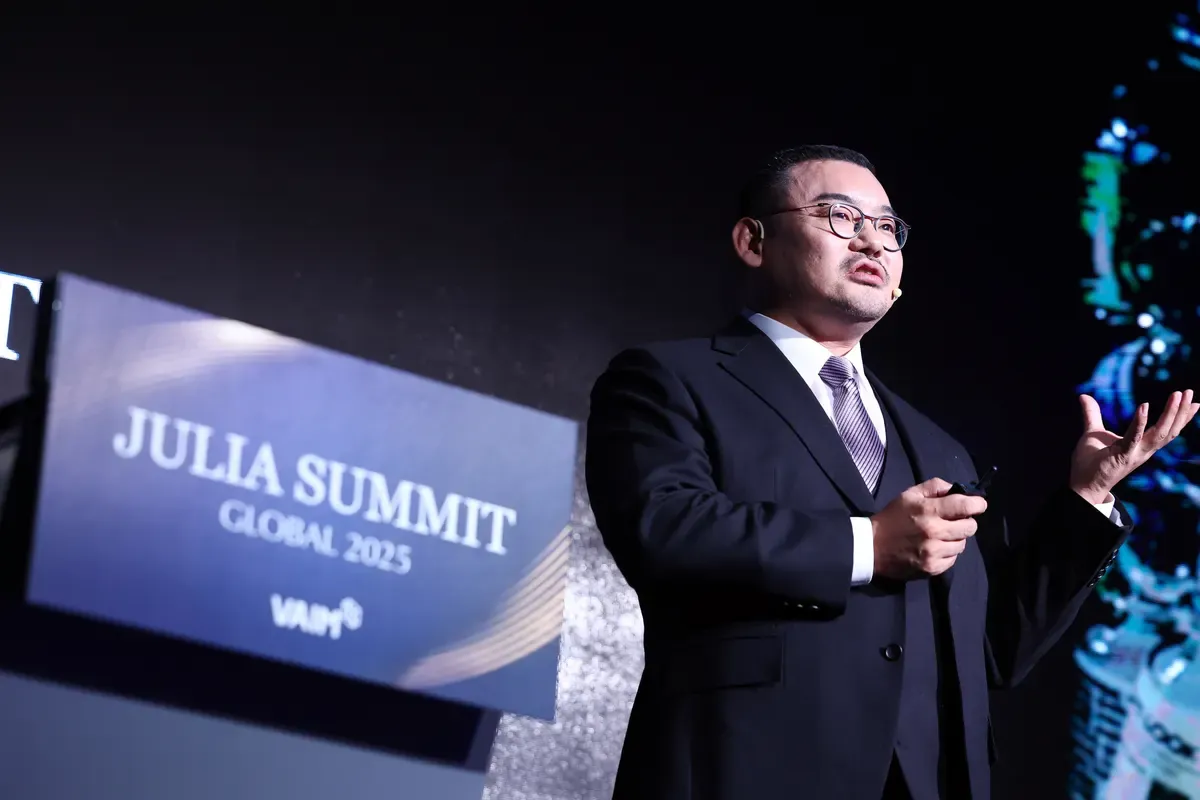
JULIA SUMMIT GLOBALJuvelook Journey — invited lecture · 2025  Conference
APS Korea 2026Aesthetic Plastic Surgery Korea · 2026  Conference
28th KDA Spring ConferenceKorean Dermatologist Association · 2026  Conference
KOREADERMA 2025COEX, Seoul · 2025  Live demo
IMLG 2025Live injection training for international physicians · 2025  Lecture
JULIA SUMMIT ASIA 2025Presentation, Hong Kong · 2025  Live demo
IMLG 2025Faculty & attendees · 2025  Brand event
SkinCeuticalsNext Beauty Code, Taiwan · 2025  Live demo
IMLG 2025Live demonstration, explained step by step · 2025  Brand event
COSRXBrand event, Seoul · 2025
Selected international & major meetings
- 2026
- APS Korea 2026
- 28th KDA Spring Conference
- Invited lecture, Baim Global Jupiter Symposium
- 2025
- JULIA SUMMIT GLOBAL – Juvelook Journey
- JULIA SUMMIT ASIA 2025Hong Kong
- KOREADERMA 2025
- SkinCeuticals: Next Beauty CodeTaiwan
- 9th KDA procedural skills training
- 2024
- AMWC-TDAC Taiwan
- Juvelook Launching Symposium in Taiwan
- KSDS 2nd International Congress Seoul
- 1st Ulthera Focus Group Meeting
Show 2 earlier yearsShow fewer
- 2023
- AMWC Japan
- 41st Annual Meeting, Japanese Society of Aesthetic Dermatology
- ACDS 2023
- MEVOS Dalian
- 2022
- ASLMS (American Society for Laser Medicine & Surgery)
- 13th I-SWAM Indonesia Convention Exhibition
Broadcast
- Morning N — hyperhidrosis and choosing cosmetics
- “Golden time of skin lifespan” (Jul 2021)
- Park Yong-kwan's Radio Show — regular Monday guest
- Good Morning — spring sunlight and skin (Mar 2023)
- Jo Woo-jong's FM Daehaengjin — Dr. Family corner
- Men On Air — summer skin care
Papers & books
- Juvelook Comparative Pain Assessment
- Cosmetic Counseling Expert Course
- Cosmetic Ingredients for Skin Care
Source: VOS Dermatology's official Korean profile of Dr. Kim.
Meet Dr. KimBefore you book, hear it from the doctor himself.
Slide through 17 videos on lifting, skin boosters and travelling for treatment. Korean audio — everything plays right here.
Travel"Flying tomorrow, no bruising or swelling?" Top 3 No-Downtime Lifting (Ultherapy prime,Sofwave,Opus)
LiftingAfter Ulthera & Thermage, What's Next? Dermatologist with 21 Years of RF Experience Breaks It Down!
Skin boostersA Dermatologist with 21 Years of Experience Breaks Down the Skin Booster Family Tree
JuvelookMust-Know Before Getting JuveLook! | What It Can & Can’t Do, Clinic Tips by Dr.DTS
JuvelookPairing Juvlook with This Can Double the Firming Effect (And Ease Nodule Concerns)
JuvelookEverything About Juvelook — Effects, Real Treatment Review, Rejuran Comparison
Skin boostersDoctors Won’t Talk About This Treatment Yet… So I’m Revealing Everything | ECM Skin Booster Q&A
Skin boostersWhy does 'that' super famous skin booster contain 'filler' ingredients?
Skin boostersGOURI Is Korea’s Hottest Skin Booster — But What About the Bruising?
Anti-agingSurface Treatments vs Deep Treatments | Which One Actually Makes You Look Younger?
AftercareDid you just pay a fortune for a dermatology treatment? You'll 100% regret skipping this video.
Dr. KimSorry to my patients... I tried it on myself first (21-Year Derm's Self-Treatment Full Process)
BodyTrapezius Slimming for Sharp Shoulders ✨ How to Get That Clean, Angular Look (Spring/Summer Must)
Travel22-Hour Flight + High-Altitude UV: The One Thing a Dermatologist Used the Whole Time
ResearchScientists Erased a “Mark of Aging” Once Thought Irreversible | A New 2026 Aging Study | Dr. PIALNAM
PoresWhy Your Pores Won’t Shrink | What Actually Works? | Dr. DTS
SkincareWhy Your Expensive Vitamin C Isn’t Working|How to Use It for Better Absorption|Dr. PIALNAM
VOS Shorts
Get to know VOS in seconds — 60-second answers from Dr. Kim to the questions you’d ask in the chair. Everything plays right here.
How to get Juvelook without side effects nodules
How long does Sofwave last?
Boost Your Results with Sofwave!
RE-TOURN! It's Different from Collagen Injections
Juvelook Skin Rejuvenation Effects
How many Ultherapy Prime shots are enough?
Want to look younger!?
Skin Booster: Myths and Facts
Most of Your Allergy Test Results Came Back Positive?! You Might Have OOO Syndrome!
More Isn’t Always Better!? How to Properly Use Moisturizer
Does Snail Cream Actually Contain Snails?
Hands-Free Exercises to Smooth Out Smile Lines
The Secret Habit of People Who Stay Healthy and Live Longer (Worth Millions)
Cleansing oil for sunscreen? Double cleansing? You’ve been doing it all wrong...
Father's Wisdom on Shaving (Secret to Avoiding Cuts)
If nothing you apply stops the dryness
What if you blindly apply too much sunscreen without knowing 'this ingredient'? Your skin will br...
2 Skincare Ingredients a Dermatologist Will Never Use (Be Extra Careful!)
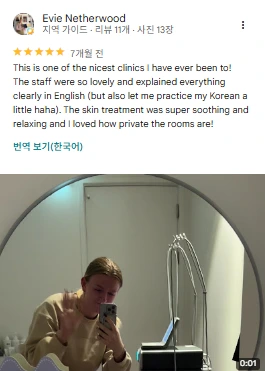
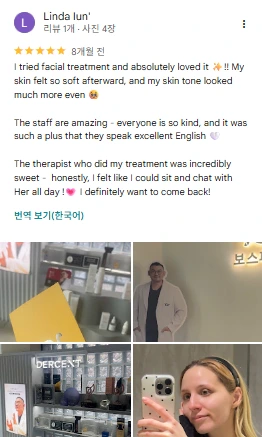
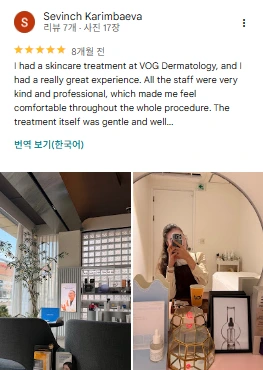
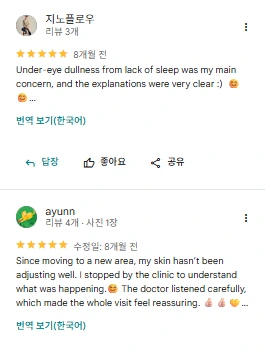
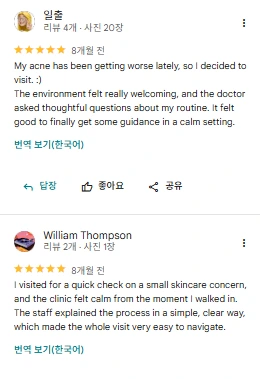
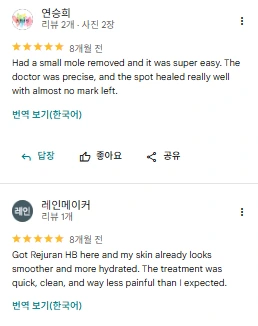
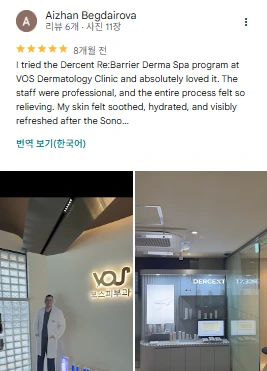
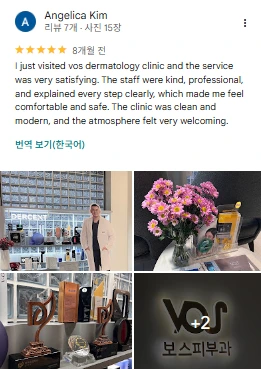
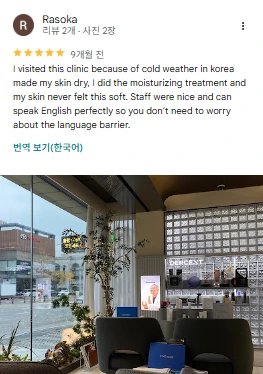
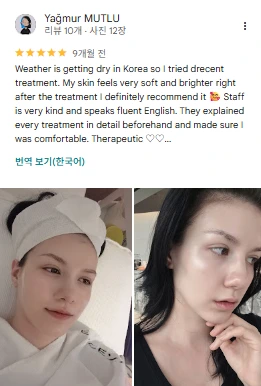
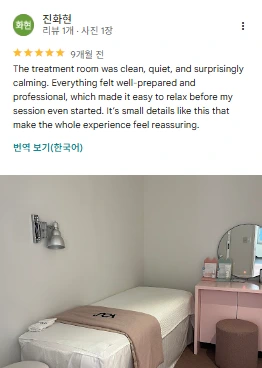
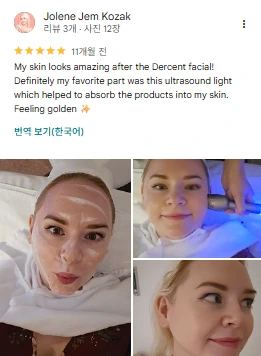
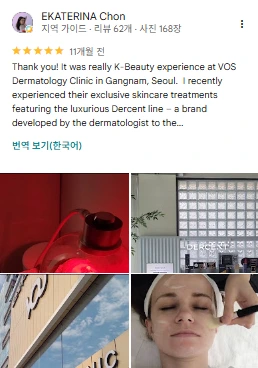
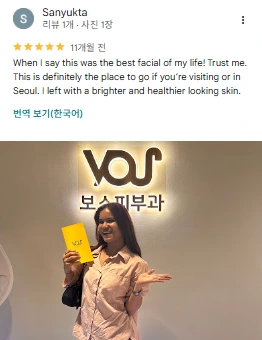
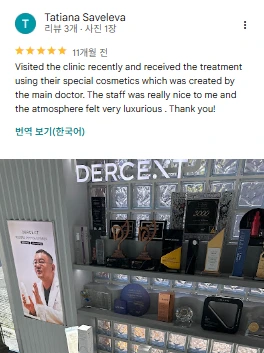
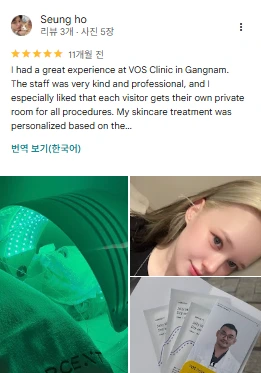
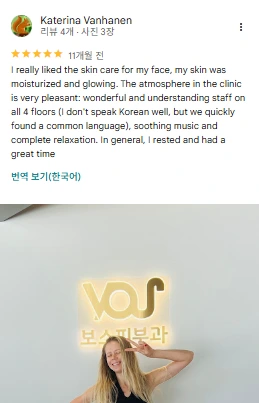
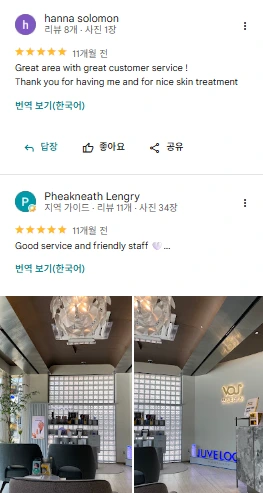
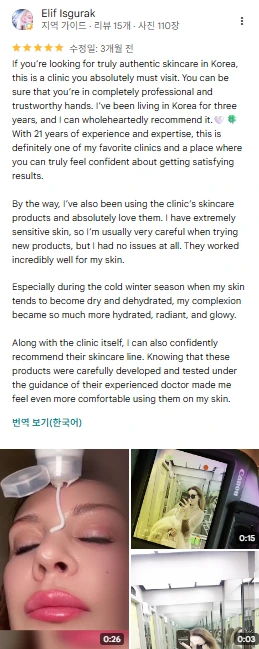
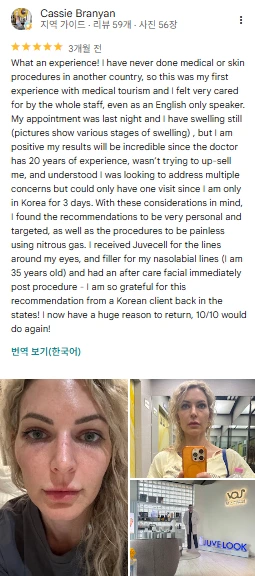
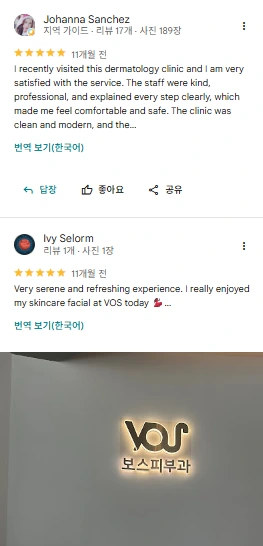
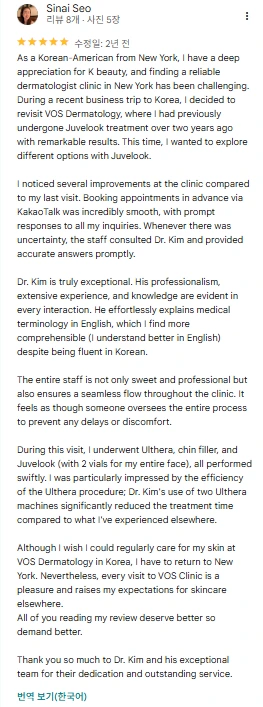
What international patients wrote on Google Maps.
Screenshots of public reviews left on Google — in their own words, unedited. Experiences and results vary from person to person.





Creators who filmed their treatment at VOS.
Each video comes with Dr. Kim's notes on what was done, why, and the listed price. Opinions are the creators' own; results vary.

Juvelook, Botox and Rejuran Lips in Seoul: A Natural Refresh Case
Oxana wanted to refresh her lower face and neck without looking done. I explain her combination of laser, Juvelook, botox and Rejuran in the lips, and why lips can be treated for quality, not volume.

Skin Botox + Rejuran HB in Korea: A First-Timer’s Real Case
Suhandi was scared of needles and had never had a skin treatment. I explain why we paired skin botox with Rejuran HB, what the session felt like, and when results show.
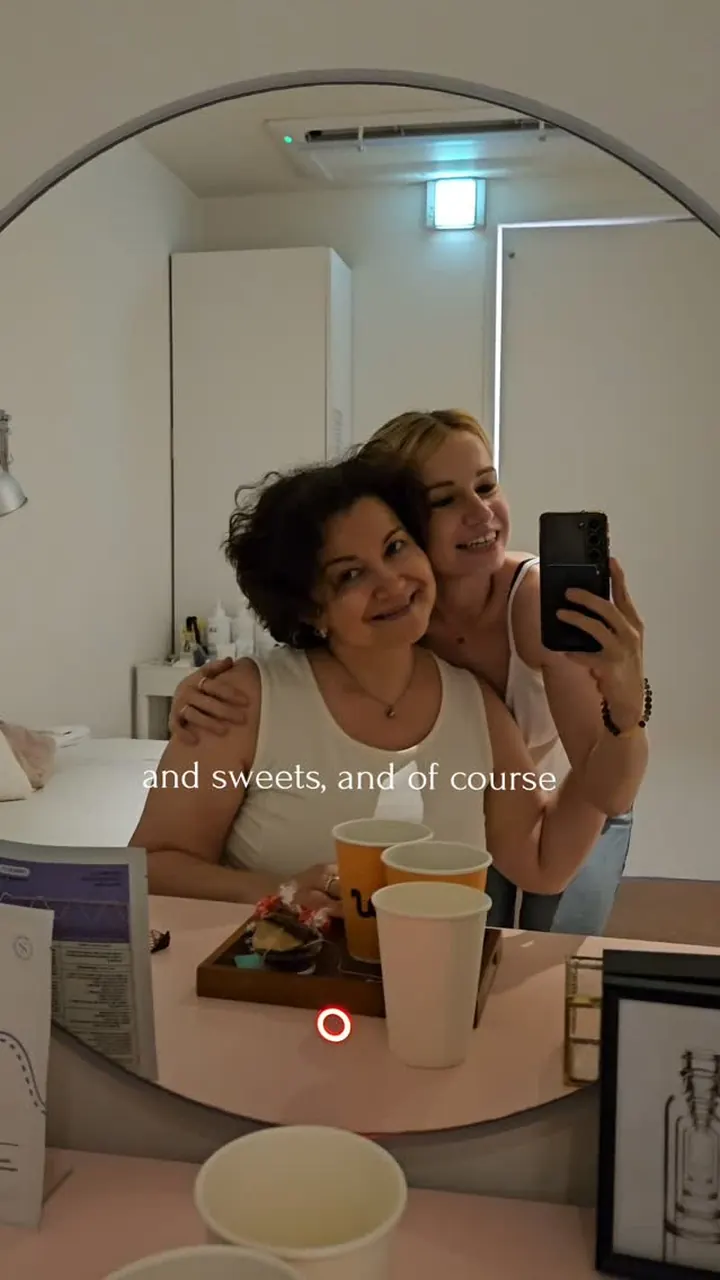
Gouri and Belotero Revive in Seoul: A Mother’s Skin Booster Case
Rina brought her mother, visiting from abroad, for a surprise skin treatment. I explain why we paired Gouri, a PCL collagen stimulator, with Belotero Revive, and what to expect.
Redness, Pores and Uneven Tone in Seoul: A Real Patient Case
Aizhan came to Seoul with three concerns at once: redness, enlarged pores and uneven tone. I explain how I build one plan for skin like hers, and what it realistically changes.

Skin Botox + ECM Booster in Seoul: A Real Case for Textured Skin
Heli’s skin looked textured and stiff even under makeup. I explain why we paired skin botox with an ECM booster, what ECM actually means, and how the plan was built for her skin.

Thulium Laser, CO₂ Spot Removal and Nuviju in Seoul: A Real Case
Manel stopped posting because she no longer liked her skin. I explain her one-visit plan: a full-face thulium laser, CO₂ for spots and Nuviju for the chin and jawline.
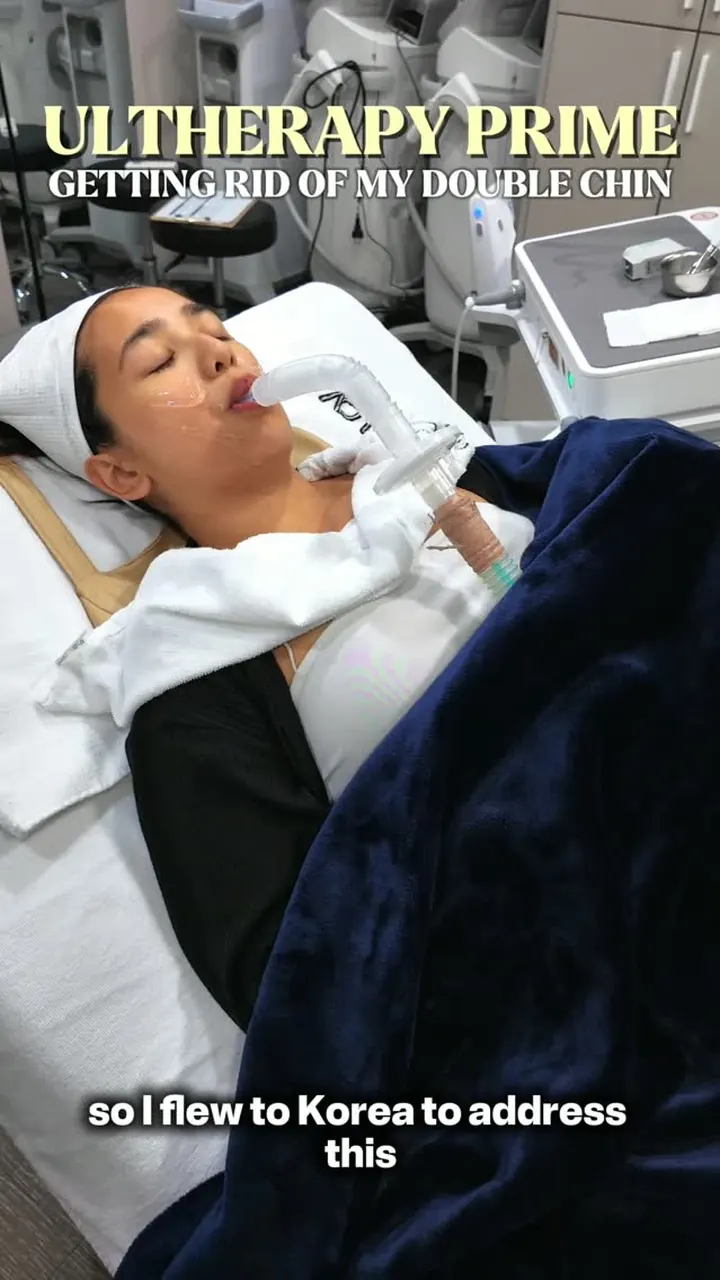
Ultherapy Prime for a Double Chin in Korea: A Real Case
Krisha flew to Seoul to tighten the area under her chin. I explain what Ultherapy Prime does there, when a double chin is fat rather than laxity, and what to expect after.
VOS Dermatology Blog
Korea Rejuran Recovery Center Worth It? Cost, Reviews, Methods
Need a Korea Rejuran recovery center? Usually not. Who should wait, what reviews get wrong, methods and the cost factors, from VOS Dermatology, Gangnam.
Korea Juvelook Recovery Program: How Many Days? Cost, Reviews
Korea Juvelook recovery program: bumps often settle in days, collagen takes weeks. Trip days, cost factors and reviews from VOS Dermatology, Gangnam.

Need a Korea Rejuran Recovery Facility? Cost, Reviews, Methods
A Korea Rejuran recovery facility is rarely needed: about 30 minutes in the chair, 2–3 days of possible swelling. Send a photo. VOS Dermatology, Gangnam.

Which South Korea Beauty Injection? Cost, Reviews, Methods
A South Korea beauty injection can mean toxin, filler, booster or fat-dissolving shot; each suits a different face. VOS Dermatology, Gangnam.

Korean Skin Booster Injection Price: What Sets It? Reviews
A Korean skin booster injection price depends on product, mL, sessions and numbing. Dr. Hongseok Kim at VOS Dermatology, Gangnam, explains each factor.

Korean Skin Boosters for Microneedling? Cost, Reviews, Methods
Korean skin boosters for microneedling: how many days of redness to plan, what decides the cost, and which review claims hold up, from VOS Dermatology…