
How to Use Retinol: 9 Questions a Korean Dermatologist Answers
How to use retinol without wrecking your skin: a Gangnam dermatologist answers nine viewer questions on eyelids, sunscreen, devices, layering order and storage.

Use retinol, the shortcut for wrinkles and pores, like this: nine ways to use it with less irritation
From Dr. Hongseok Kim's YouTube channel — Korean audio. It plays muted; tap the video to turn the sound on.
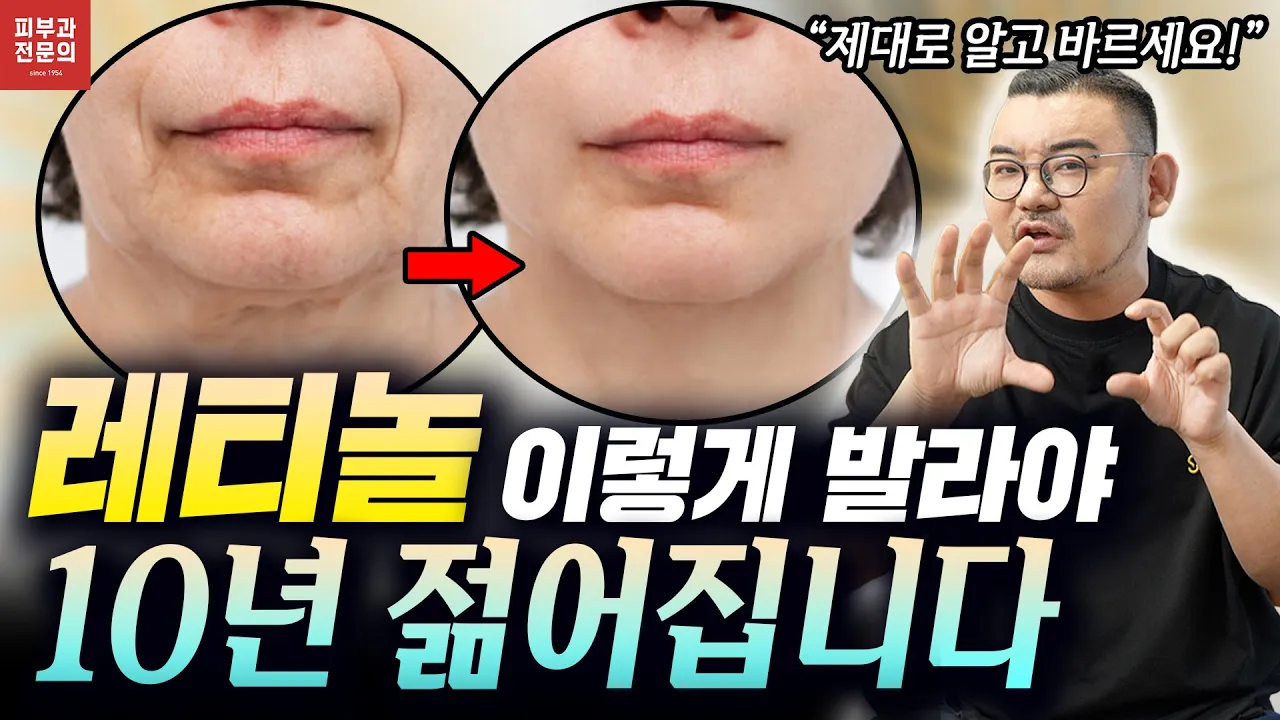
I'm Dr. Hongseok Kim, a board-certified dermatologist with 21 years of practice and the medical director of VOS Dermatology Clinic in Gangnam, Seoul, right in front of Dosan Park. At VOS I see my own patients myself, from the first consultation to the last treatment.
Retinoids are one of the most-asked topics on my channel. Most people already know retinol helps with fine lines and pores; what they ask is how to use retinol day to day without their skin turning red and sore. So I collected nine questions from viewers' comments and answered them one by one. This page is based on my YouTube video from August 2025; it summarizes what I explained there for readers abroad, without product brand names. The video above can be watched with translated captions.
The short answer
- Start with a small amount, stop when irritation appears, and increase only once your skin has adapted; the eyelids take far longer to adapt than the rest of the face.
- Retinoids can make skin more sensitive to light, so use them at night; I do not recommend layering them under daytime sunscreen or using light-emitting home devices on top before you have adapted.
- Retinol breaks down with light and air, so finish an opened product within about three months; using it up quickly matters more than refrigerating it.
- If your skin is already settled on exfoliants or vitamin C, treat that as your baseline and introduce retinol slowly from the beginning.
How to use retinol around the eyes and eyelids
Short answer: it is possible, but eyelid skin adapts slowly, so use a tiny amount and stop at the first sign of irritation.
Eyelid skin is relatively thin, so adapting to a retinoid can take much longer than on the rest of the face (in the video at 00:21). Use a very small amount, slowly; if a problem appears, stop, and repeat the process. Once adapted, it is not a problem. Getting there is the hard part. When I use retinal on my own face, the eye area always turns red and itchy, and it stings. If it happens to me, I assume it is often worse for others, so do not be greedy at the start.
Retinol at night: sunscreen and beauty devices
Short answer: use retinoids in the evening, avoid light-based home devices until you have adapted, and do not plan your retinol around daytime sunscreen.
Retinol and retinal can make skin more sensitive to light, which is why the usual advice is to apply them in the evening (in the video at 01:27). Some retinoids are said to be fine in the daytime, but it is hard for most people to tell types apart, so my rule is simple: avoid daytime use and apply at night.
Many people also own LED masks or ultrasound devices meant to push products deeper. If you are using a retinoid, I would leave LED masks aside. Home light is not strong, but it can still add a light reaction, and that increases irritation. Once your skin has fully adapted, a device that helps penetration is not a problem; before that, I do not recommend it, and especially not devices that emit light.
A common question is whether retinol goes before or after sunscreen (in the video at 02:57). My view is that the plan itself is the problem. Some retinol products say "use sunscreen if applying in the daytime", but certain chemical sunscreen filters can themselves cause light-related reactions, and retinoids can too. Using both in daylight may make skin more sensitive, with more downside than benefit. I do not recommend daytime retinol. If you truly have to, a mineral sunscreen makes more sense.
Where retinol goes in your routine: last step or before moisturizer?
Short answer: there is no fixed order; adapt first with small amounts, and if you are dry after adapting, retinol goes on before moisturizer.
There is no single right answer here (in the video at 04:09). People use retinoids to prevent fine lines and aging, improve pores or control acne. Active products like these are normally applied early so they can work. Retinoids, though, irritate and need an adaptation period, so they are more often recommended as the last step.
At first, retinoids can cause retinoid dermatitis: an irritant contact reaction with stinging, redness, itching and sensitivity. Some people suggest moisturizer to buffer it, but the more important step is to use a small amount, adapt, and then increase. Adding more products because retinol dries you out is not the ideal approach. If you have fully adapted and still feel dry, apply retinol first and moisturizer after. Honestly, the order will not change the result enough for you to notice, so I choose the order that causes the least irritation.
Moving up to retinoic acid, and taking breaks
Short answer: step up only when your current retinoid causes no problems; with long-term prescription tretinoin, short breaks are reasonable.
Retinol is converted in the skin to retinaldehyde and then to retinoic acid, the form that actually does the work (in the video at 06:03). Retinoic acid itself would be the most direct, but it is strong and irritating, which is why we use retinol. If retinol is fine, you can try retinal; if that is fine, you can consider retinoic acid. Many people, however, cannot even adapt to retinol. Ignoring irritation to chase faster results makes no sense. Move to the next step only once you are comfortable.
One viewer uses tretinoin cream, likes the results and asked whether it can be used all year (in the video at 07:17). Personally, I think small breaks are better. Retinoids keep cell turnover running fast, and keeping it fast without pause can be a lot to ask of your skin. I do not mean stopping for one or two months. Something like spacing applications out, or three weeks on and one week off, gives the skin a gap while the benefit largely remains.
Storing retinol, and using it with exfoliants or vitamin C
Short answer: finish an opened retinol within about three months; and if your skin is already calm on other actives, introduce retinol slowly from the start.
Whether you refrigerate after opening or not, the key point I make is to use it up within about three months (in the video at 08:07). Retinol is sensitive to light and air, and many products are not in airtight containers; creams in jars are exposed every time you open them. Oxidation and loss of potency begin with that exposure. I have seen a paper reporting that potency had dropped considerably after about six months. Refrigeration slows these reactions, and it has long been advised for retinoids and hydroquinone, but finishing the product quickly matters more.
Retinol is an unstable ingredient. Labels state that retinol or retinaldehyde is included, but the amount is usually checked at the start, not three or six months later, so nobody really knows how much remains active over time. Airtight packaging helps, but it raises cost, so many brands do not use it. Keep that in mind when choosing and storing a product.
What about combining retinol with exfoliants or vitamin C (in the video at 10:00)? The answer is one rule. If you have used an exfoliant or vitamin C for a long time with no problems, that is your normal skin. Start retinol from zero on top of it and adapt again, slowly.
Bakuchiol, and the two products I would keep
Short answer: bakuchiol is a gentler, weaker alternative for people who cannot tolerate retinoids; if I had to keep only two products, they would be a retinoid and sunscreen.
Bakuchiol is a plant-derived ingredient with a mechanism similar to retinol, and it gets attention for that reason (in the video at 10:48). Its strength is clearly different, though. If retinoids are high-intensity training, bakuchiol feels more like stretching or yoga. Do not expect the same effect. Still, for someone whose skin is too reactive for retinoids, using it consistently as a gentler option can help.
Too much is as bad as too little. Retinol, retinaldehyde and retinoic acid do irritate, and overdoing them can leave skin worse than before. Adapt, then move forward step by step. Once you have adapted, I do not think there is a comparable ingredient (in the video at 12:53). If I could only recommend two things, it would be a retinoid and sunscreen, used consistently and without irritation.
That is how to use retinol in practice: small amounts, at night, with patience. If you are considering clinic options for lines and pores, my notes on Korean wrinkle treatment and Korean pore treatment explain what clinics add on top of home care, and you can see the treatments we offer or read creator experiences at VOS.
Results vary from person to person, and what suits your skin is decided at a consultation.
Key moments in the video
- 0:00Retinol Q&A starts
- 0:21Can I apply retinol or retinal on my eyelids?
- 1:27Is it safe to use a beauty device after retinol?
- 2:57Retinol before or after sunscreen?
- 4:09Retinol as the last step, or followed by moisturizer?
- 6:02If my skin adapts, should I switch to retinoic acid?
- 7:11Can I use tretinoin all year, or should I take breaks?
- 8:07How should I store retinol? Does it need the fridge?
- 10:00Can I combine retinol with exfoliants or vitamin C?
- 10:48What about bakuchiol, the so-called plant retinol?
Real visitors who had it at VOS
Creators and patients who filmed or wrote up their own treatment at VOS.
Keep reading on the blog

Korean Wrinkle Treatment: Matching Each Line to a Fix
Korean wrinkle treatment by line type: wrinkle-relaxing injections for movement lines, devices and boosters for fine lines, fillers for folds, and prices. VOS Dermatology, Gangnam.

Korean Pore Treatment: What Shrinks Pores and What It Costs
Korean pore treatment: why pores look large, what skin smoothing injection, RF microneedling and boosters change, and the Pore Refinement Program. VOS Dermatology, Gangnam.
Q&A — what viewers ask Dr. Kim
How to use retinol as a beginner?
Should retinol go before or after moisturizer?
Can I use retinol on my eyelids?
Can I use retinol with vitamin C or an exfoliant?
Is bakuchiol as effective as retinol?
Results, swelling and recovery vary from person to person. This page is general information from VOS Dermatology Clinic based on Dr. Kim's video and does not replace an in-person consultation.
What to look at next
Not sure what fits your face? Send a photo and your travel dates — Dr. Kim’s team replies on WhatsApp in English.
Ask about this on WhatsAppAbout Dr. Hongseok Kim
Dr. Kim focuses on aesthetic dermatology — skin regeneration, facial contour and healthy aging — and builds each plan from a close look at the individual patient's skin and goals, aiming for natural, refined results.
At VOS the same specialist is responsible for the whole course of care: diagnosis, the procedure itself and follow-up. An accurate reading of skin structure and how it changes is what makes results more complete and keeps the risk of side effects low.
Credentials & appointments
- Current
- Medical Director, VOS Dermatology Clinic
- Board-certified dermatologist
- Education
- Graduated first in class, medical school
- Academic appointments
- Adjunct Professor, Dept. of Medical Aesthetics, Cheongju University
- Adjunct Professor, Dept. of Beauty Medical Science, Dongguk University
- Professional leadership
- Director, Korean Dermatologist Association (KDA)
- Director, Korean Association for Anti-Aging Dermatology (KAAD)
- Committees
- Academic Committee Member, Korean Dermatological Association
- Information Committee Member, Korean Dermatologist Association (KDA)
- Memberships
- Korean Society for Dermatologic Functional Medicine
- Korean Society for Laser Medicine and Surgery
Brand advisory
- Skincare
- The Scent
- SkinCeuticals
- La Roche-Posay
- AHC
- Bioderma
- Etat Pur
- Injectables
- Juvelook
- Revive
- Lafullen
- Rejuran
- Devices
- Ulthera
- Thermage
- Sofwave
- CoolSculpting
- Mirajet
Lecturing, live demonstrations and brand education — in Korea and across Asia.
- presentations & lectures listed
- 116
- years covered by the list
- 2016–2026
- in 2023, the busiest year listed
- 25
 Lecture
JULIA SUMMIT GLOBALJuvelook Journey — invited lecture · 2025  Conference
APS Korea 2026Aesthetic Plastic Surgery Korea · 2026  Conference
28th KDA Spring ConferenceKorean Dermatologist Association · 2026  Conference
KOREADERMA 2025COEX, Seoul · 2025  Live demo
IMLG 2025Live injection training for international physicians · 2025  Lecture
JULIA SUMMIT ASIA 2025Presentation, Hong Kong · 2025  Live demo
IMLG 2025Faculty & attendees · 2025  Brand event
SkinCeuticalsNext Beauty Code, Taiwan · 2025  Live demo
IMLG 2025Live demonstration, explained step by step · 2025  Brand event
COSRXBrand event, Seoul · 2025
Selected international & major meetings
- 2026
- APS Korea 2026
- 28th KDA Spring Conference
- Invited lecture, Baim Global Jupiter Symposium
- 2025
- JULIA SUMMIT GLOBAL – Juvelook Journey
- JULIA SUMMIT ASIA 2025Hong Kong
- KOREADERMA 2025
- SkinCeuticals: Next Beauty CodeTaiwan
- 9th KDA procedural skills training
- 2024
- AMWC-TDAC Taiwan
- Juvelook Launching Symposium in Taiwan
- KSDS 2nd International Congress Seoul
- 1st Ulthera Focus Group Meeting
Show 2 earlier yearsShow fewer
- 2023
- AMWC Japan
- 41st Annual Meeting, Japanese Society of Aesthetic Dermatology
- ACDS 2023
- MEVOS Dalian
- 2022
- ASLMS (American Society for Laser Medicine & Surgery)
- 13th I-SWAM Indonesia Convention Exhibition
Broadcast
- Morning N — hyperhidrosis and choosing cosmetics
- “Golden time of skin lifespan” (Jul 2021)
- Park Yong-kwan's Radio Show — regular Monday guest
- Good Morning — spring sunlight and skin (Mar 2023)
- Jo Woo-jong's FM Daehaengjin — Dr. Family corner
- Men On Air — summer skin care
Papers & books
- Juvelook Comparative Pain Assessment
- Cosmetic Counseling Expert Course
- Cosmetic Ingredients for Skin Care
Source: VOS Dermatology's official Korean profile of Dr. Kim.
Meet Dr. KimDr. Jaewoo Lim
Dr. Lim is a board-certified dermatologist at VOS Dermatology and performs the same treatments as Dr. Kim. He completed his dermatology residency at Gachon University Gil Medical Center and worked as a dermatology research fellow at Harvard Medical School / Massachusetts General Hospital from 2024 to 2026.
- Education
- Emory UniversityBachelor's degree2008.09 – 2012.12
- Gachon University Graduate School of MedicineMaster of Medicine2015.03 – 2019.02
- Career
- Gachon University Gil Medical CenterInternship2019.03 – 2020.02
- Gachon University Gil Medical Center, Department of DermatologyDermatology residency (board-certified dermatologist)2020.03 – 2024.02
- Harvard Medical School / Massachusetts General Hospital (MGH)Research Fellow in Dermatology — Cutaneous Biology Research Center (CBRC) / Clinical Unit for Research Trials and Outcomes in Skin (CURTIS)2024.08 – 2026.08
Dr. Kim explains lifting and other treatments on YouTube.
Slide through 17 videos on lifting, skin boosters and traveling for treatment. Korean audio — everything plays right here.
Travel"Flying tomorrow, no bruising or swelling?" Top 3 No-Downtime Lifting (Ultherapy prime,Sofwave,Opus)
LiftingAfter Ulthera & Thermage, What's Next? Dermatologist with 21 Years of RF Experience Breaks It Down!
Skin boostersA Dermatologist with 21 Years of Experience Breaks Down the Skin Booster Family Tree
JuvelookMust-Know Before Getting JuveLook! | What It Can & Can’t Do, Clinic Tips by Dr.DTS
JuvelookPairing Juvelook with This Can Double the Firming Effect (And Ease Nodule Concerns)
JuvelookEverything About Juvelook — Effects, Real Treatment Review, Rejuran Comparison
Skin boostersDoctors Won’t Talk About This Treatment Yet… So I’m Revealing Everything | ECM Skin Booster Q&A
Skin boostersWhy does 'that' super famous skin booster contain 'filler' ingredients?
Skin boostersGOURI Is Korea’s Hottest Skin Booster — But What About the Bruising?
Anti-agingSurface Treatments vs Deep Treatments | Which One Actually Makes You Look Younger?
AftercareDid you just pay a fortune for a dermatology treatment? You'll 100% regret skipping this video.
Dr. KimSorry to my patients... I tried it on myself first (21-Year Derm's Self-Treatment Full Process)
BodyTrapezius Slimming for Sharp Shoulders ✨ How to Get That Clean, Angular Look (Spring/Summer Must)
Travel22-Hour Flight + High-Altitude UV: The One Thing a Dermatologist Used the Whole Time
ResearchScientists Erased a “Mark of Aging” Once Thought Irreversible | A New 2026 Aging Study | Dr. PIALNAM
PoresWhy Your Pores Won’t Shrink | What Actually Works? | Dr. DTS
SkincareWhy Your Expensive Vitamin C Isn’t Working|How to Use It for Better Absorption|Dr. PIALNAM
VOS Shorts
60-second videos in which Dr. Kim answers common questions about treatments. They play on this page.
How to get Juvelook without side effects
How long does Sofwave last?
Boost Your Results with Sofwave!
RE-TOURN! It's Different from Collagen Injections
Juvelook Skin Rejuvenation Effects
How many Ultherapy Prime shots are enough?
Want to look younger!?
Skin Booster: Myths and Facts
Most of Your Allergy Test Results Came Back Positive?! You Might Have OOO Syndrome!
More Isn’t Always Better!? How to Properly Use Moisturizer
Does Snail Cream Actually Contain Snails?
Hands-Free Exercises to Smooth Out Smile Lines
The Secret Habit of People Who Stay Healthy and Live Longer (Worth Millions)
Cleansing oil for sunscreen? Double cleansing? You’ve been doing it all wrong...
Father's Wisdom on Shaving (Secret to Avoiding Cuts)
If nothing you apply stops the dryness
What if you blindly apply too much sunscreen without knowing 'this ingredient'? Your skin will br...
2 Skincare Ingredients a Dermatologist Will Never Use (Be Extra Careful!)
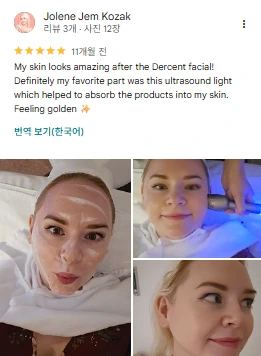
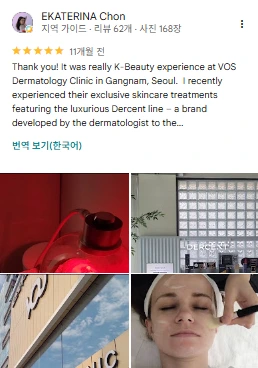
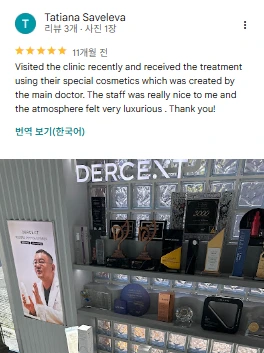
What international patients wrote on Google Maps.
Screenshots of public reviews left on Google — in their own words, unedited. Experiences and results vary from person to person.
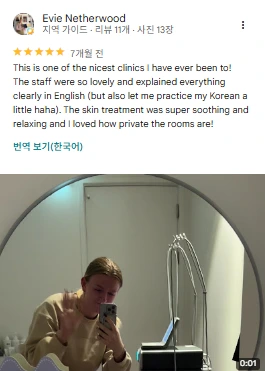
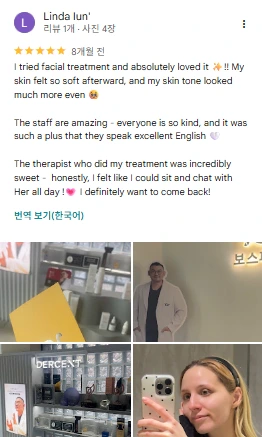
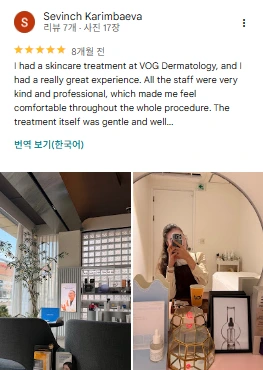
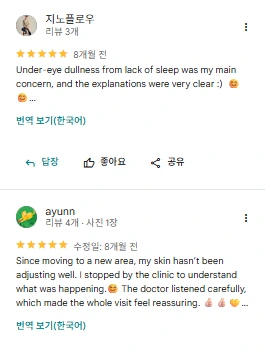
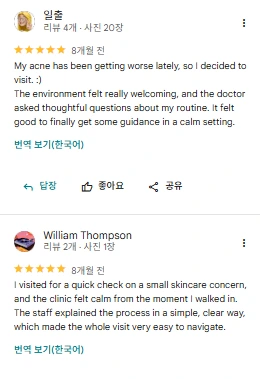
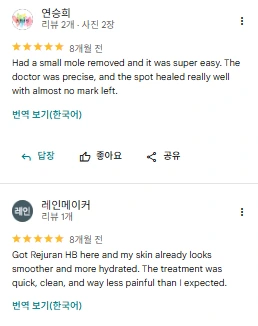

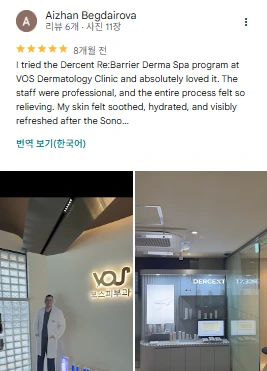
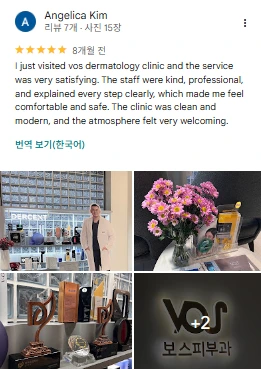
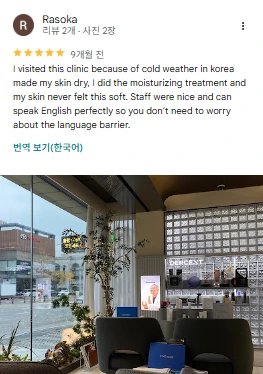
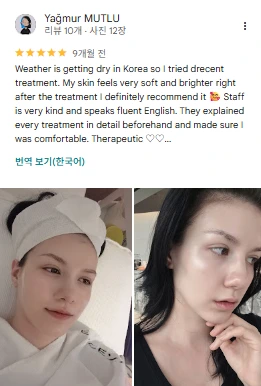
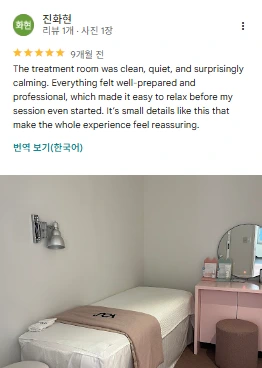


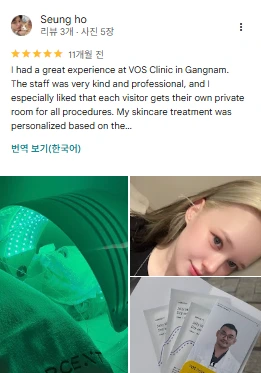
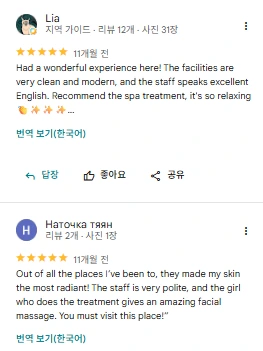
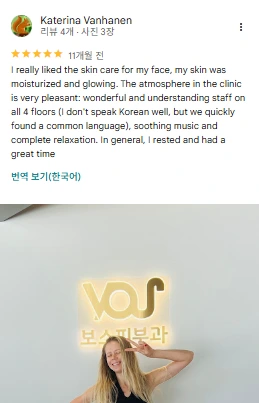
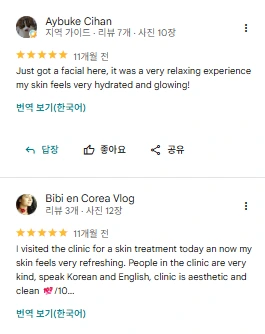

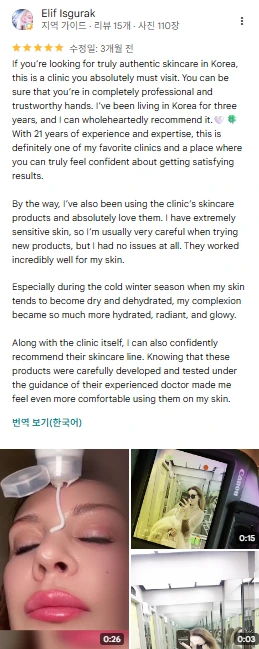
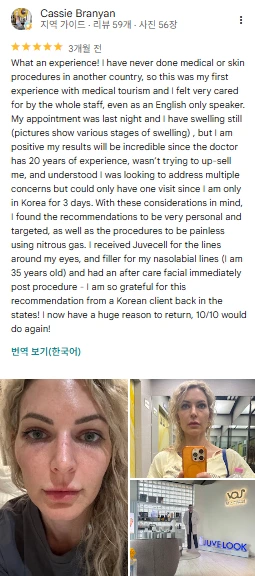
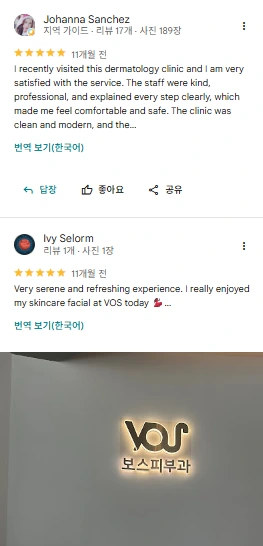
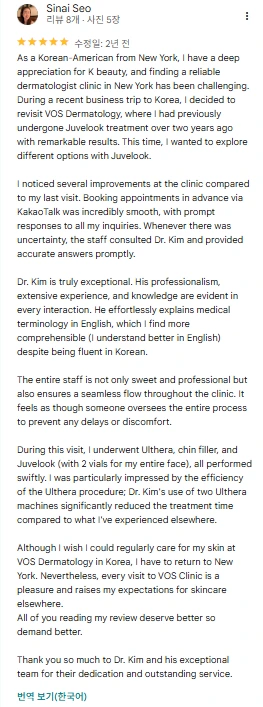
Creators who filmed their treatment at VOS.
Each video comes with Dr. Kim's notes on what was done, why, and the listed price. Opinions are the creators' own; results vary.

Gouri and Belotero Revive in Seoul: A Mother’s Skin Booster Case
Rina brought her mother, visiting from abroad, for a surprise skin treatment. I explain why we paired Gouri, a PCL collagen stimulator, with Belotero Revive, and what to expect.

Juvelook, Anti-Wrinkle Injection and Rejuran Lips in Seoul: A Natural Refresh Case
Oxana wanted to refresh her lower face and neck without looking done. I explain her combination of laser, Juvelook, anti-wrinkle injection and Rejuran in the lips, and why lips can be treated for quality, not volume.

Redness, Pores and Uneven Tone in Seoul: A Real Patient Case
Aizhan came to Seoul with three concerns at once: redness, enlarged pores and uneven tone. I explain how I build one plan for skin like hers, and what it realistically changes.

Skin Smoothing Injection + ECM Booster in Seoul: A Real Case for Textured Skin
Heli’s skin looked textured and stiff even under makeup. I explain why we paired skin smoothing injection with an ECM booster, what ECM actually means, and how the plan was built for her skin.

Skin Smoothing Injection + Rejuran HB in Korea: A First-Timer’s Real Case
Suhandi was scared of needles and had never had a skin treatment. I explain why we paired skin smoothing injection with Rejuran HB, what the session felt like, and when results show.

Thulium Laser, CO₂ Spot Removal and Nuviju in Seoul: A Real Case
Manel stopped posting because she no longer liked her skin. I explain her one-visit plan: a full-face thulium laser, CO₂ for spots and Nuviju for the chin and jawline.

Ultherapy Prime for a Double Chin in Korea: A Real Case
Krisha flew to Seoul to tighten the area under her chin. I explain what Ultherapy Prime does there, when a double chin is fat rather than laxity, and what to expect after.
VOS Dermatology Blog

Sculptra vs Filler? Filler Fills Now, Sculptra Builds Slowly
Sculptra vs filler: HA filler shapes one spot today, Sculptra builds collagen over months. Who suits each, who should skip both, from VOS Dermatology…

Hilo Wave vs Rejuran: Thirsty Skin or Reactive Skin Decides
Hilo Wave vs Rejuran: Hilo Wave hydrates dry, dull skin for 3–4 months; Rejuran supports repair in reactive skin. Who each suits — VOS Dermatology…

Rejuran PDRN Injection: Small Risks, but Some Should Wait
A Rejuran PDRN injection usually means 1–3 days of small bumps. Who should wait, what it can't fix, and what to send first. VOS Dermatology, Gangnam.

Which Dermal Filler Lasts the Longest, and Can It Be Undone?
Which dermal filler lasts the longest? Collagen stimulators often outlast hyaluronic acid, but only HA dissolves. VOS Dermatology, Gangnam on the…

Are Fat Dissolving Injections Safe? Placement Decides It
Are fat dissolving injections safe? Mostly, if dose and placement are right. Nerve, skin and lump risks, and who should skip, from VOS Dermatology…
Forehead Wrinkles When Raising Eyebrows: Treat on Day One
Forehead wrinkles when raising eyebrows soften 3–5 days after a wrinkle-relaxing injection and settle near two weeks. Trip timing from VOS Dermatology…