Rejuran Healer vs Juvelook: Which Fits? Recovery, Risks, Days
Rejuran healer vs juvelook: both leave small bumps for a few days, but Juvelook builds over weeks. VOS Dermatology, Gangnam, on trip length and sessions.

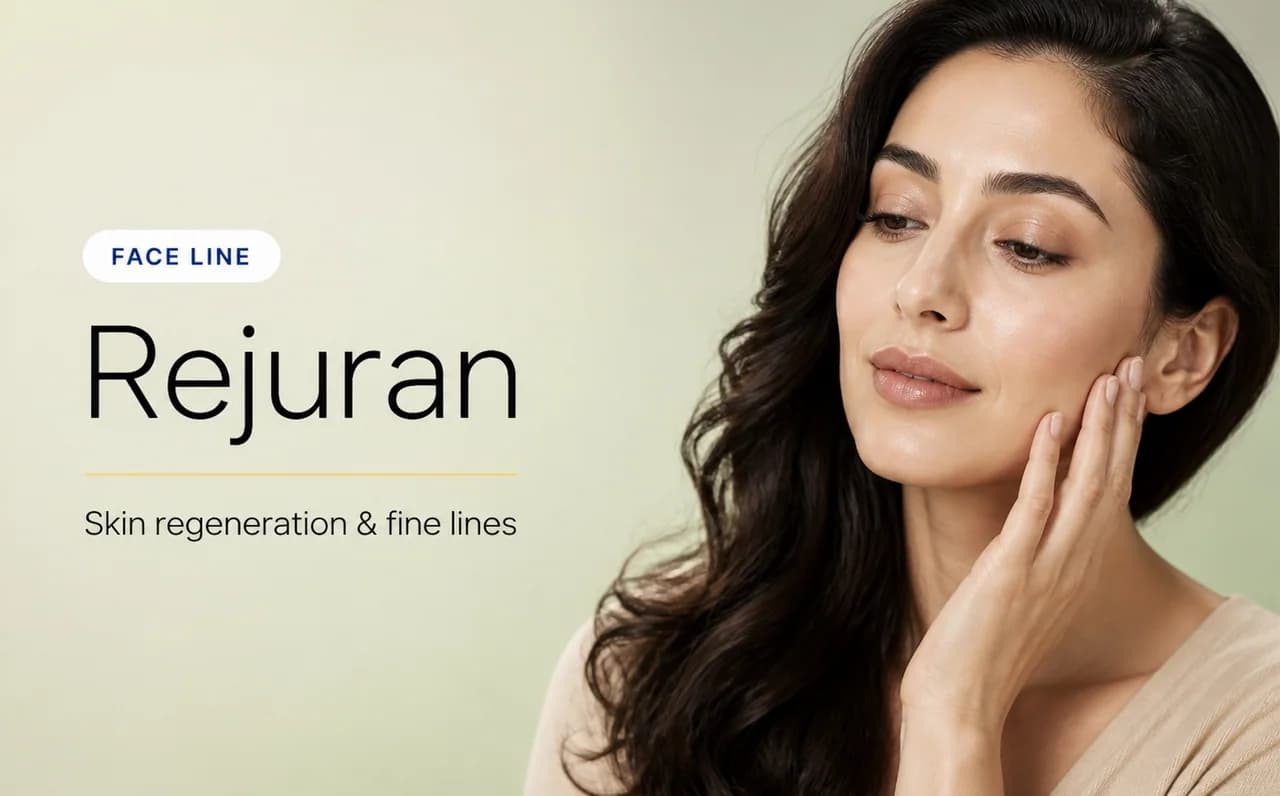
Rejuran Healer vs Juvelook: if you have one week in Seoul and skin that was called thin or reactive at home, which one lets you fly back without bumps you'd have to explain at work?
If your leave dates are already fixed, start with the day-by-day table.
How each one heals in the first week, how many visits each usually needs, what can go wrong, and how many days in Korea that adds up to: those four answers decide which one fits your skin and your trip.
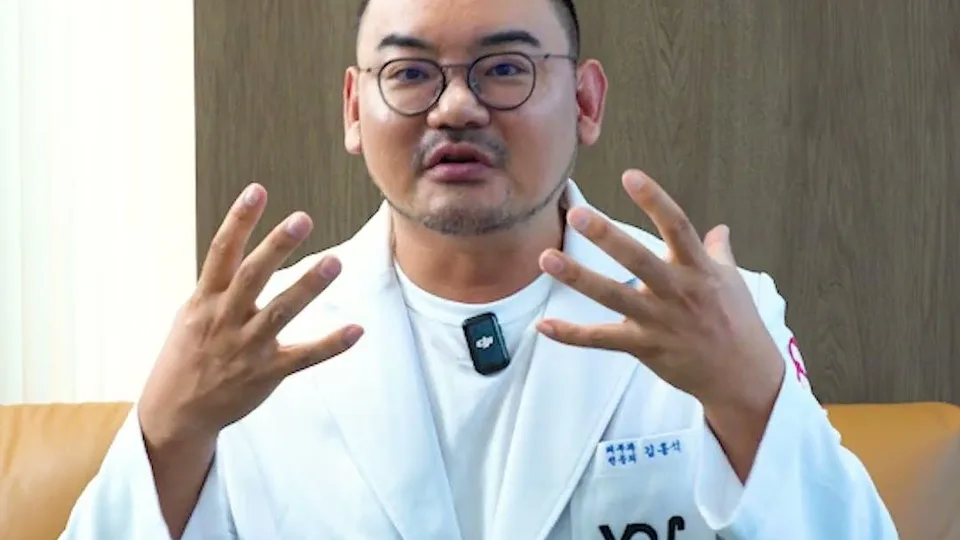
Hello, I'm Dr. Hongseok Kim, a board-certified dermatologist with 21 years of experience and the medical director of VOS Dermatology Clinic in Gangnam. I do the consultation and the injections myself.
At VOS the price list is the same for every nationality, a medical interpreter for your language is provided at no extra charge, and nitrous-oxide sedation is available if needles are the part you dread. It has been used here in more than 5,700 cases.
Most people choose between these two by looking at results, then find out later that the healing days and the weeks between sessions are what actually shape the trip.
Rejuran Healer usually leaves small raised bumps that settle within a day or two, which makes one session realistic on a short trip. Juvelook's bumps tend to stay a few days longer, and because its collagen effect builds over weeks, it suits a plan with at least two visits spaced about a month apart.
The WhatsApp consult is free. Send one daylight photo of your face without makeup, plus your arrival and departure dates, and ask which of the two you'd start with in that window.
Send a daylight photo and your Seoul dates on WhatsApp
What does each one actually do?
Rejuran Healer is a polynucleotide (PN) injection made from purified salmon DNA fragments. It goes in as many small blebs just under the skin and works on the skin's repair environment: rough texture, fine crepey lines, dryness, and the fragile look skin gets after too many actives or lasers. A systematic review of polynucleotides in aesthetic medicine in the Journal of Cosmetic Dermatology describes improvements in skin quality with mostly mild, short-lived reactions, and also points out that many of the studies are small.
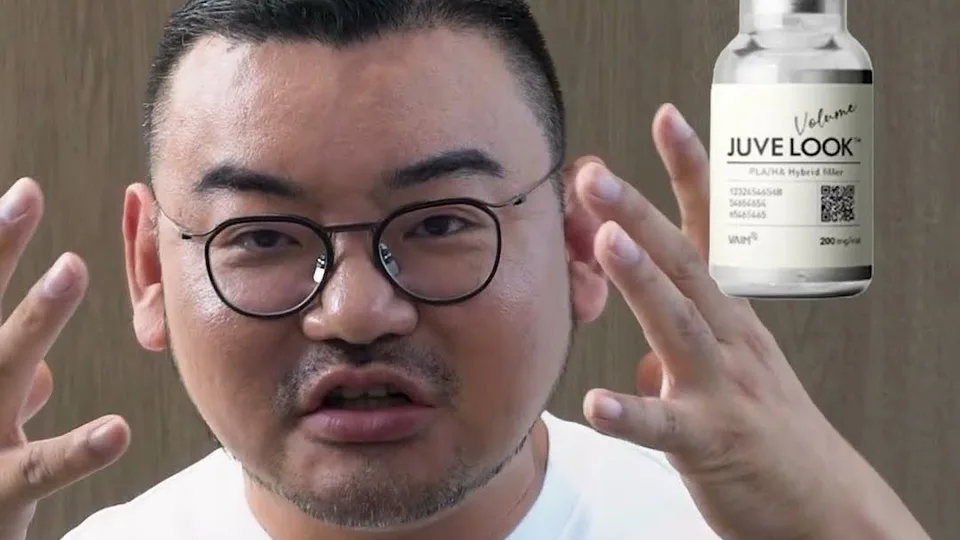
Juvelook is a collagen stimulator: poly-D,L-lactic acid (PDLLA) particles combined with hyaluronic acid. The particles set off a controlled response in the dermis, and the body lays down new collagen around them over the following weeks. Juvelook for skin quality is placed in fine, shallow points. Juvelook Volume is the version aimed at deeper hollows such as the temples or flat cheeks.
Here is the part that changes the decision. Rejuran's visible effect comes mainly from calmer, better-hydrated skin over a few weeks. Juvelook's comes from collagen that is still being built a month or more after the injection. One is forgiving of a short stay; the other rewards patience and a second visit.
Which one fits a skin like yours?
If your skin flushes easily, stings with retinoids, or stayed red for weeks after a laser at home, I would usually start with Rejuran Healer. It doesn't depend on provoking inflammation to work, and repairing reactive skin first tends to make every later treatment easier to tolerate.
If your skin is thin over the cheekbones, creases like tissue paper when you smile, or has started to lose a little volume, and you were told at home that hyaluronic filler would look heavy on you, Juvelook is the closer fit. Where the main problem is a hollow rather than texture, Juvelook Volume is the one I'd consider.
Some faces need both, and then the order matters more than the product. Settle reactive skin first, then build collagen once the skin takes injections without flaring. On firm skin in the twenties with few lines, collagen stimulation has little to work on, and I would rather tell you that in the first message than after you've booked a flight.

How does recovery compare, day by day?
In short, this is the typical course after a full-face treatment, as general medicine. Your own skin may run faster or slower.
| When | Rejuran Healer | Juvelook |
|---|---|---|
| Treatment day | Rows of small raised bumps at each injection point, some redness | Small bumps and mild swelling at injection points, some redness |
| Days 1–2 | Bumps flatten for most people; light makeup is often fine after 24 hours | Bumps still visible up close, mild tenderness |
| Days 3–5 | Usually nothing left but a bruise, if you had one | Most bumps settled; a bruise can take up to a week to fade |
| Weeks 2–4 | Skin looks more hydrated and even | Firmness starts to show gradually |
| Around week 4 | Next session in a series is often planned | Next session is often planned |
For a flight, the real gap shows on days two to four. With Rejuran, the bumps you see in the mirror that evening are usually gone by the time you board. With Juvelook, give yourself three or four clear days before a work meeting or a family photo.
A bruise is the wild card for both. It comes from a small vessel at one injection point, so it can happen with either product, and it can take about a week to fade fully, though concealer covers most by the second day. Fish oil, aspirin and other supplements that thin the blood make bruising more likely. Mention them in your first message, and don't stop a prescribed medicine on your own.
Cabin pressure isn't known to undo either treatment. What I'd ask you to skip for the first couple of days is heat and flushing: sauna, hot yoga, heavy drinking, a long hard workout.

How many days in Korea does each one need?
Rejuran Healer is usually given as a series, often three sessions a few weeks apart. One session still does something, and I've written about whether one Rejuran Healer session is enough if that's your situation. Juvelook is usually planned as two or three sessions about four weeks apart, so a single trip covers a single session.
For the trip itself, leave at least two days between a Rejuran session and your flight, and three or four after Juvelook if you want the bumps fully settled before anyone sees you. The clinic is open Monday, Tuesday and Thursday from 10:00 to 19:00, Friday until 20:00 and Saturday from 10:00 to 16:00, and closed on Wednesday, Sunday and public holidays. Book the injection on an open day early in your stay, not the morning you leave.
Say you're 42, the skin over your cheekbones is thin, it stayed red for two weeks after a laser at home, and you have Saturday to the following Saturday in Seoul. A Monday treatment gives you five days before the flight, which is enough for either product. With skin that reactive, I would lean toward Rejuran Healer on this trip and keep Juvelook for a later visit, once your skin has shown how it handles injections. If you can only come once a year, that changes the plan, and it's worth saying so up front.
If Rejuran looks like your starting point, my notes on planning Rejuran on a short trip cover what one visit can and can't do. If your lips or the fine lines around them are part of the picture, lips swell more than cheeks, so the healing days for Rejuran HB are worth checking separately.
If your dates are fixed, send your flight times and the name of anything injected or lasered on your face in the last six months, and ask whether one session of either product fits before you fly.
Send a daylight photo and your Seoul dates on WhatsAppHow I approach Rejuran Healer vs Juvelook for difficult skin
Every skin is different, so the diagnosis and the treatment have to differ too. Every plan here starts with a skin analysis, and I choose the product or the combination for your face rather than a package.
With thin skin, the problem with a collagen stimulator is product placed too shallow or too much of it in one spot. That is how visible lumps form. My rule for injectables is the exact dose your skin needs, never more and never less. On thin skin I would rather spread a measured amount evenly and add at a later session than put everything in on one visit because the trip is short.
With reactive skin, the problem is a flare that outlasts your stay. Gentler first, stronger later is the order I trust here.
Worth knowing: Rejuran Healer is made from salmon DNA. If you have a fish allergy, put it in your first message, because that alone can change which product is on the table.
Risks and side effects to know
Both products leave bumps, redness, tenderness and sometimes bruising, usually for a few days and up to about a week for a bruise. Rejuran tends to sting more during the injection than people expect, because the gel is thick and the points are many. Numbing helps, and nitrous-oxide sedation is an option if needles are the part you fear. Results vary by person.
The less common risk worth knowing about is with Juvelook: small firm nodules under the skin, sometimes noticed weeks or months later. A report in the Annals of Dermatology describes late-onset foreign body reactions after poly-L-lactic acid injections, a related class of collagen stimulator. The US FDA's page on dermal fillers lists bumps, swelling, bruising and infection among the risks of injectable fillers, and injection into a blood vessel as a rare serious one. Juvelook Nodule Treatment is on our menu for lumps that need care.
As general medicine, it's better to wait or to discuss it first if any of these apply to you:
- active acne, infection or a cold sore where the injections would go
- a laser or peel on the face in the last couple of weeks
- current or recent isotretinoin
- pregnancy or breastfeeding
- a fish allergy (Rejuran) or an autoimmune condition or keloid tendency (Juvelook)
How much either product changes your skin differs from person to person, and so does how long the bumps take to settle.
If something appears after you fly home, take a daylight photo of it and note the treatment date. Redness that spreads, warmth, fever or pain that grows instead of fading needs a doctor at home the same day. A small firm lump found weeks later is rarely urgent; send the photo on WhatsApp with the date and ask what to do next.

Before you message us
The consult on WhatsApp is free, and an interpreter for your language comes at no extra charge if you visit. A front photo and a side photo in daylight, without makeup, give the clearest picture, together with your dates, any regular medication and whether you're allergic to fish. Skin heals at its own pace, which is why the photo matters more than any table.
If Juvelook is on your list, ask what it would cost for your case; what moves a Juvelook quote explains the vial count behind it. If you're ready to book, ask in the same message how the deposit and payment work, since both are settled after the consultation.
Your visit begins with a skin analysis, and for this choice I'm looking mainly at how thin the skin over your cheekbones is and how quickly it reddens under touch.
Then message us on WhatsApp with the one question you actually need answered: with my skin and these dates, which one would you start with?
See me explain it on video
I answer the questions patients ask me on camera. The YouTube channel is in Korean with English titles; Instagram and TikTok are for international patients.

Questions readers ask about rejuran healer vs juvelook
Can I have Rejuran Healer and Juvelook on the same day?
Does Rejuran Healer hurt more than Juvelook?
Can I fly home the day after treatment?
Which one lasts longer, Rejuran Healer or Juvelook?
Is Juvelook the same thing as Sculptra?
Results, timing and recovery vary from person to person. This article is general information from VOS Dermatology Clinic and does not replace an in-person consultation. Any prices mentioned are from the clinic’s official price list (KRW, before VAT) and may change.
Is One Rejuran Healer Session Enough? Usually Not, and Why
Rejuran Healer is a three-session course a month apart. How to plan it if you live in Asia or visit Seoul only once, from VOS Dermatology, Gangnam.
Rejuran Skin Booster Korea on a Short Trip? Yes, With Limits
Rejuran skin booster Korea on a short trip: injection bumps, bruising, how many sessions, and when to skip it before a big event. VOS Dermatology, Gangnam.
Rejuran HB Plus Seoul After 40: Healing Days and Trip Length
Rejuran HB plus Seoul: a 30-minute visit, 2–3 days of possible redness, three sessions a month apart. Plan the trip with VOS Dermatology, Gangnam.