
How to Achieve Korean Glass Skin: The Order That Works
How to achieve Korean glass skin in order: what to stop at home, the daily basics, then cleansing, boosters and Seoul trip timing. VOS Dermatology, Gangnam

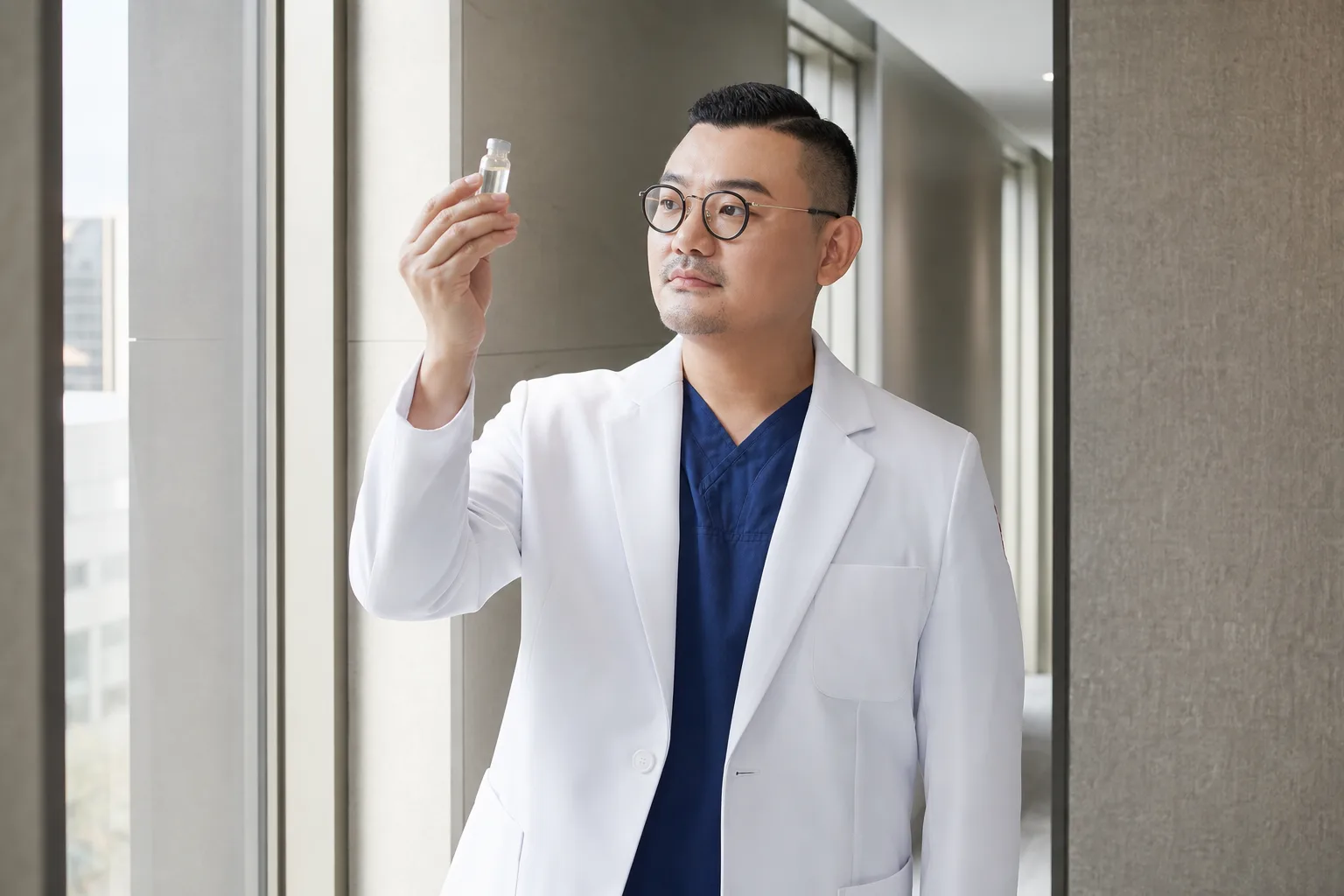
I'm Dr. Hongseok Kim, a board-certified dermatologist with 21 years of practice. At VOS Dermatology Clinic in Gangnam, I see every patient myself, from the first conversation about their skin to the treatment itself, one person at a time. The glass-skin question comes to me in some form almost every week, often from someone who has already bought every product in the trend videos and still does not see the result.
Here is the direct answer to how to achieve Korean glass skin: work in order. First remove what is dulling the skin, then keep a short daily routine that protects the barrier and blocks UV, and only then add clinic steps that clear the surface and put hydration and repair into the dermis. This guide is for adults planning a trip to Seoul who want a realistic sequence, not a shopping list. If you want the product-by-product detail of the boosters themselves, I cover that in my Korean glass skin treatment guide.
What follows is the order I would explain to you across my desk, including the parts you can do at home before you ever book a flight.

What you are actually trying to build
Glass skin is a beauty phrase, not a diagnosis. When I translate it into what I can examine, it means four things: enough water held in the skin, a smooth surface, an even tone without blotchy redness, and a calm barrier. When those line up, light reflects off the face in one clean sheet. That reflection is the glassy look.
The order matters because each condition depends on the one before it. A booster placed into irritated skin will not show its full effect, because redness still breaks up the reflection. A hydrating treatment over congested pores looks less even than the same treatment over clear ones. So the steps below are not a menu. They are a sequence.
It also helps to remember that many glass-skin photos are shaped by lighting, make-up and editing. The aim is healthy, luminous skin in daylight, not a filter.
Step one: stop what is dulling your skin
The fastest improvement I see is often from removing something, not adding it. Before you plan any treatment, look honestly at your routine.
- Over-exfoliation. Daily scrubs, peeling pads or strong acids thin the barrier. The skin becomes tight, shiny in patches and easily red.
- Too many active products at once. Layering several strong serums can irritate even resilient skin.
- Harsh cleansing. If your face feels squeaky or tight after washing, the cleanser is too strong or the water too hot.
- Skipping sunscreen. UV breaks down collagen, deepens pigment and irritates the barrier, so it works against every other step.
- Picking and squeezing. Each spot that is squeezed can leave a mark that lasts longer than the spot itself.
If any of these sound familiar, give your skin three or four weeks of simplicity before judging what it needs. Many people are surprised how much glow returns once the barrier is no longer under constant stress.
Step two: the short routine that holds the glass look
A glass skin routine does not need ten steps. In my experience, the routines that work are short enough to repeat every day without irritation.
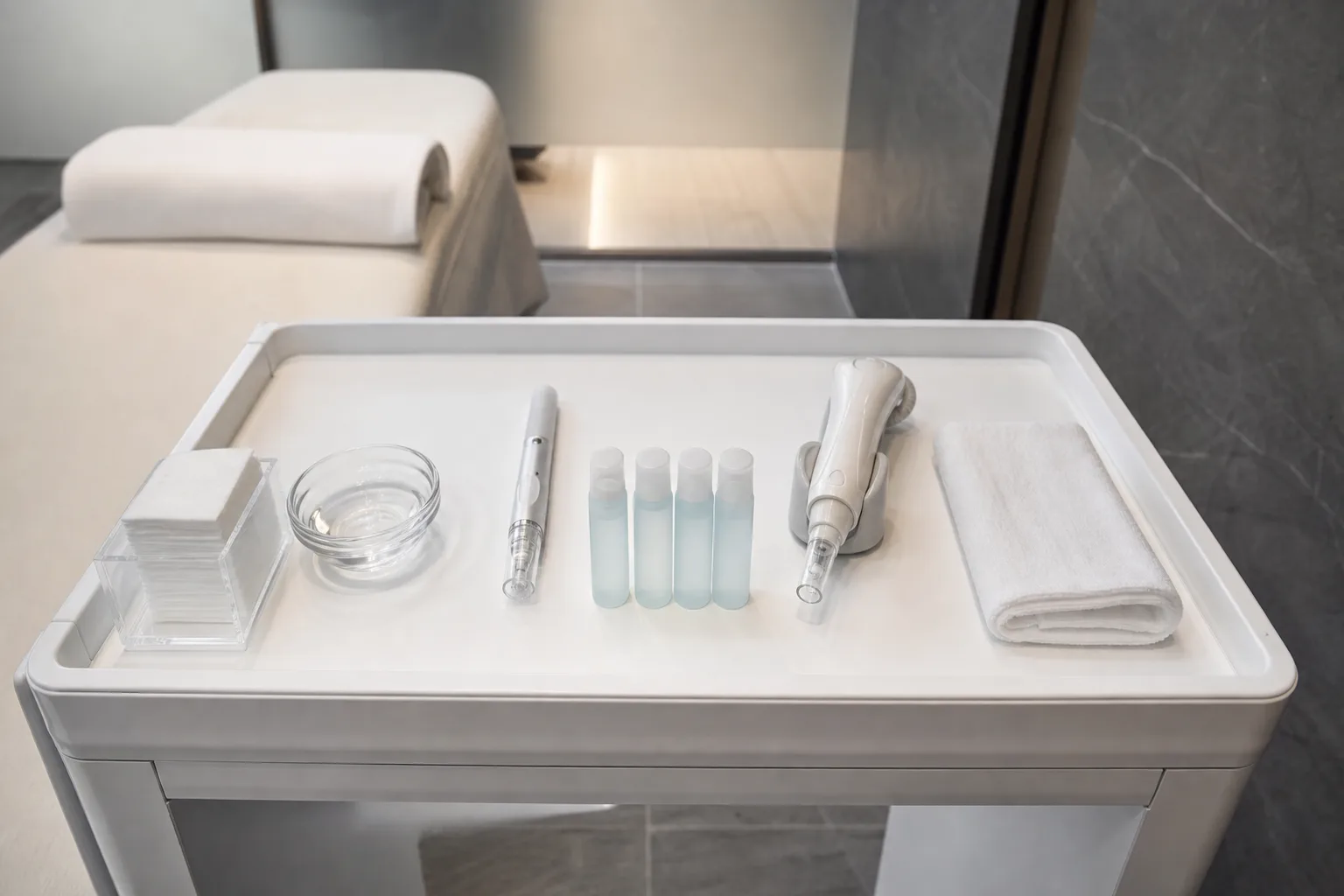
In the morning, a gentle rinse or mild cleanser, a moisturizer that suits your skin type, and a broad-spectrum sunscreen. In the evening, a mild cleanser that removes sunscreen and make-up, then a moisturizer. If your skin tolerates it, one active product at night, introduced slowly, is enough.
Hydration at home works on the surface. A good moisturizer reduces water loss from the outer layer and makes the skin feel smoother. What it cannot do is add water-binding support inside the dermis, or prompt the skin to rebuild collagen. That is the point where home care plateaus, and where clinic steps begin to make sense. If you want to understand why this simple, protective approach is so common in Seoul, I explain it in my article on why Korean skin is so good.
Step three: clear the surface before you hydrate it
When the routine is calm but the skin still looks dull, the next question is the surface. Dead skin cells, sebum and impurities in the pores scatter light, even on well-hydrated skin.
For this step, I often use HydraFacial. It works in three stages, gentle exfoliation, deep cleansing that vacuums out impurities and sebum, and infusion of serums matched to the skin. There are no lasers, no injections and no anesthesia, and you can return to normal activities straight away. VOS is a designated HydraFacial Black Diamond Center. Details are on the HydraFacial page.
A cleansing treatment gives an immediate freshness, but it does not change what happens deeper in the skin. For a special event, some people combine it with needle-free hydration on the same day, and I explain that combination in my article on the Korean glass skin facial.

Step four: put water and repair into the dermis
This is the step people usually mean when they ask how to get glass skin in a Korean clinic. Skin boosters are placed into the dermis, below where creams can reach.
For dry, flat-looking skin, I usually think of HILO WAVE. It combines high- and low-molecular-weight hyaluronic acid and remodels the full thickness of the skin, including the dermis. Deep dryness and glow typically improve from the next day and elasticity from about one week. Treatment pain is low and downtime is minimal. See the HILO WAVE page.
For red, sensitive or over-treated skin, I start with repair. Rejuran Healer is a polynucleotide booster derived from purified salmon DNA that supports the skin's own repair environment. Improvement appears within 12 weeks, and three sessions a month apart are recommended. See the Rejuran page.
For people who dislike needles or bruise easily, MiraJet delivers hyaluronic acid, vitamins and growth-factor solutions into the dermis with a high-pressure micro-jet instead of a needle. Mild redness usually settles within hours to a day, and one session typically holds 3–6 months.
Every one of these varies from person to person, and none of them lifts sagging skin or changes the shape of the face.
A realistic order for a trip to Seoul
The glass skin steps above fit differently depending on how long you stay. This is how I usually think about the sequence. It is a starting point, not a fixed prescription.
| Stage | What happens | Where it fits on a trip |
|---|---|---|
| Weeks before you fly | Stop over-exfoliating, simplify the routine, daily sunscreen | At home, three or four weeks ahead |
| Day one in Seoul | Consultation and skin analysis | First day, so the plan matches your skin |
| Early in the stay | Cleansing treatment if pores are congested | Any day; no downtime |
| Early to mid stay | Hyaluronic acid booster or needle-free hydration | Leave a few days before photos or events |
| Repeat visits | Repair course, such as three Rejuran sessions a month apart | For people who return to Seoul or live nearby |
| After you fly home | Gentle routine and sunscreen every day | Keeps the result longer |
For a one-week stay, I usually build around one session of something that shows quickly. I will not compress a three-session course into a few days; the skin needs the interval to respond.
What can slow you down
Small raised bumps at injection points are normal after a booster and usually flatten within hours to a day. Redness, mild swelling or a small bruise can last a few days, depending on the product. After Rejuran, I ask you to avoid washing your face and make-up for 24 hours and to skip saunas, intense exercise and alcohol for about a week.
Pregnancy, an active skin infection or an allergy to an ingredient can rule a product out, so tell us before anything is booked. Enlarged pores are another limit: hydration makes skin glow, but on its own it does not tighten a widened pore.
Worth knowing: The skin you bring to the clinic decides much of the result. If your barrier is irritated when you arrive, I may suggest calming it first and delaying a booster, even on a short trip. It feels slower, but it usually gives a better glass-skin result than treating stressed skin.
How I approach glass skin plans at VOS
I start with your skin, not with the trend. At the consultation I examine you in person and use our 3D skin analysis and VOS Skin MBTI, a questionnaire-and-analysis method that reads how your skin tends to behave. Then I tell you which of the four conditions is furthest from where you want it, and I choose the fewest steps that close that gap.
For reference, these are listed prices from our official English price list. HILO WAVE 2 mL is listed at ₩600,000, Rejuran Healer 2 mL at ₩400,000, and MiraJet at ₩300,000 per session. HydraFacial is not on the English price list, so it is quoted after consultation. All prices are in KRW before 10% VAT, the same for every nationality, and may change without prior notice; please check our pricing page before you travel.
What I will not do is add steps to reach a package or promise that skin will look like an edited photo. If you are curious how the change usually unfolds week by week, my article on glass skin treatment results walks through the timeline.

Before you message us
The FAQ above covers what I am asked most. The most useful thing you can send is a clear daylight photo of your face without make-up, a short note on your current routine, and your travel dates. With that, I can tell you which step your skin seems to need first and how it fits the time you have in Seoul. The clinic is in front of Dosan Park and is closed on Wednesdays, Sundays and public holidays.
Results, timing and recovery vary from person to person. Nothing here replaces an in-person consultation with a dermatologist.
Send your photo, your routine and your dates on WhatsApp, and our team will reply with a clear plan before anything is scheduled.
See me explain it on video
I answer the questions patients ask me on camera. The YouTube channel is in Korean with English titles; Instagram and TikTok are for international patients.


Questions readers ask about how to achieve korean glass skin
How long does it take to get glass skin?
Can I get glass skin with skincare alone?
Is double cleansing or a ten-step routine needed?
Which clinic treatment should I try first?
Will exfoliating more often make my skin glassier?
Results, timing and recovery vary from person to person. This article is general information from VOS Dermatology Clinic and does not replace an in-person consultation. Any prices mentioned are from the clinic’s official price list (KRW, before VAT) and may change.
Related articles
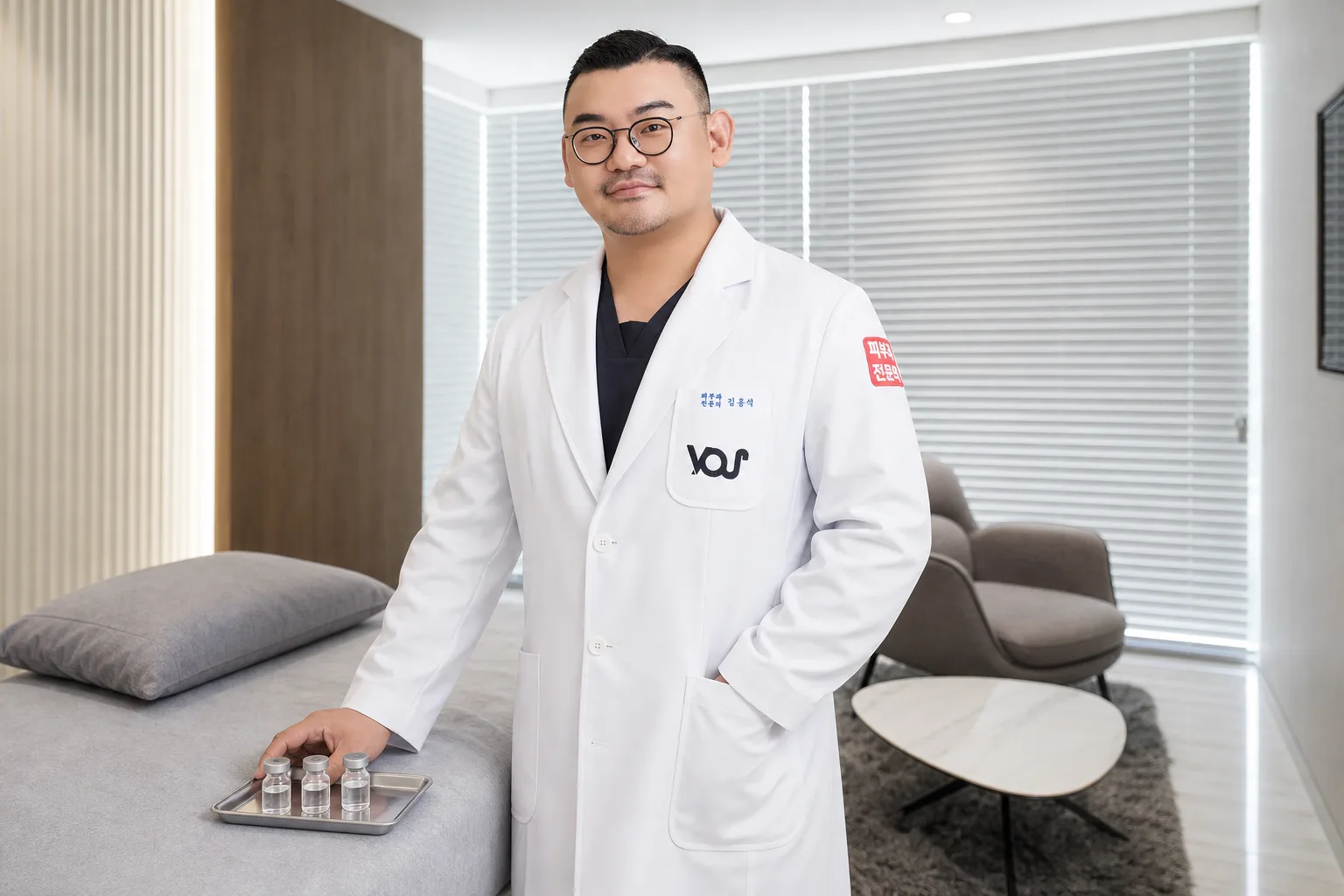
Korean Glass Skin Treatment: Boosters Behind the Dewy Look
Korean glass skin treatment guide: which boosters build the dewy, even look, how fast it shows, what it can't do and listed prices — VOS Dermatology, Gangnam.
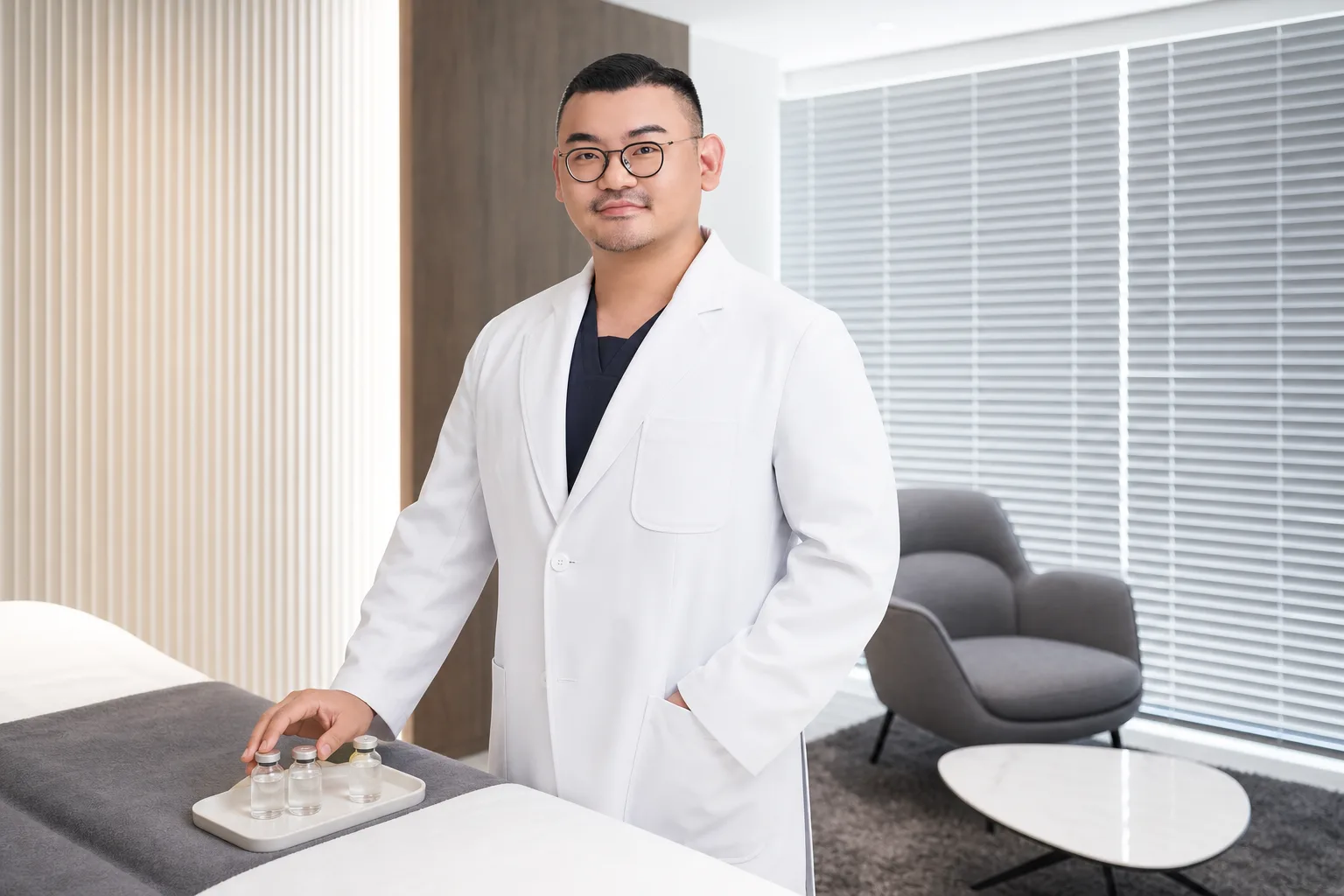
Korean Glass Skin Facial: What It Combines, Spa vs Clinic
Korean glass skin facial explained: the steps a clinic combines, how it differs from a spa facial, how long the glow lasts and cost — VOS Dermatology, Gangnam.
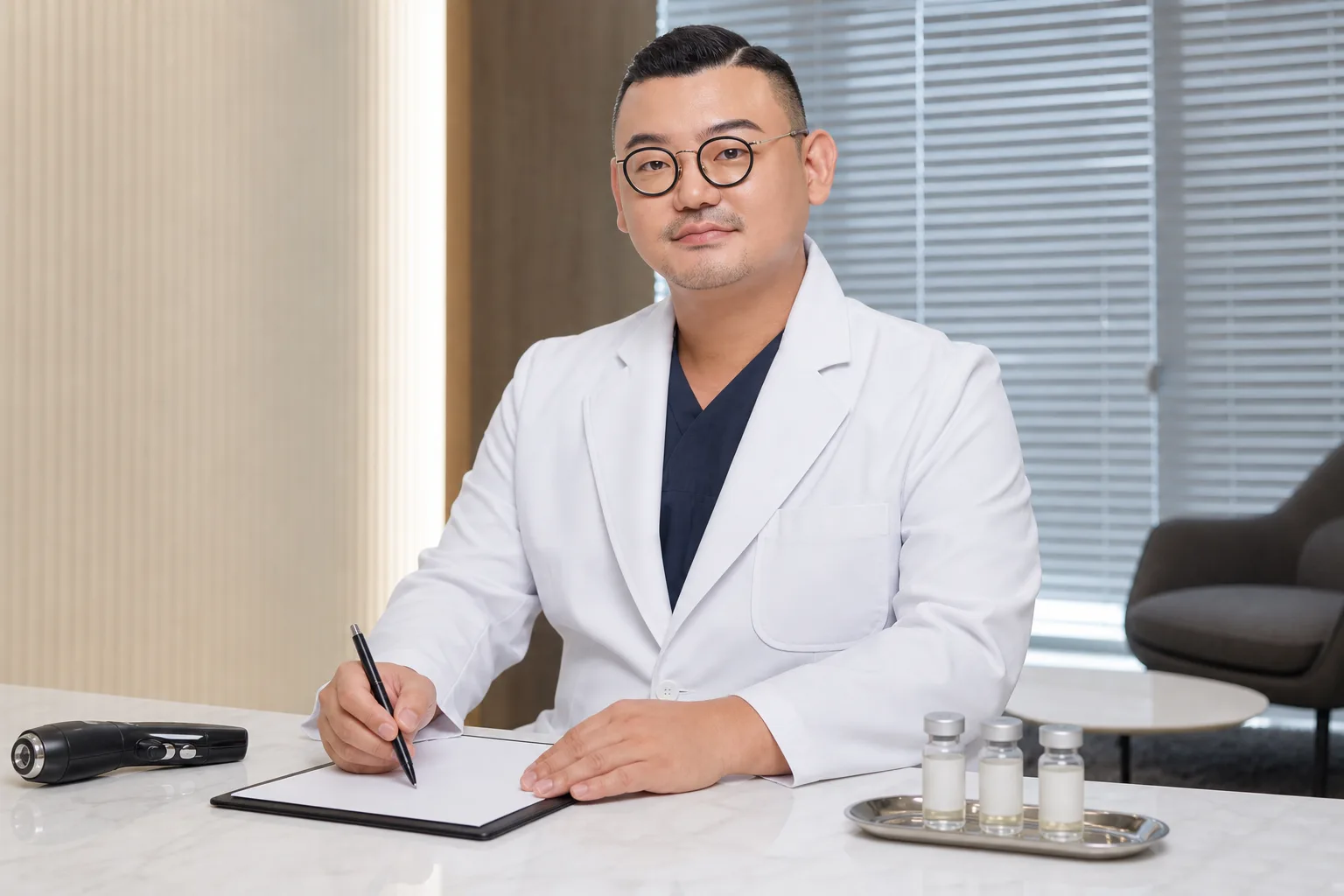
Korean Glass Skin Treatment Before and After: The Timeline
Korean glass skin treatment before and after, explained honestly: what changes week by week, what stays and how long results last — VOS Dermatology, Gangnam.