
Reading dr korea pdrn reviews: What to Ask, in Order
Reading dr korea pdrn reviews? A Seoul dermatologist explains cream vs injection, PDRN vs PN, and what to ask before booking. VOS Dermatology, Gangnam.

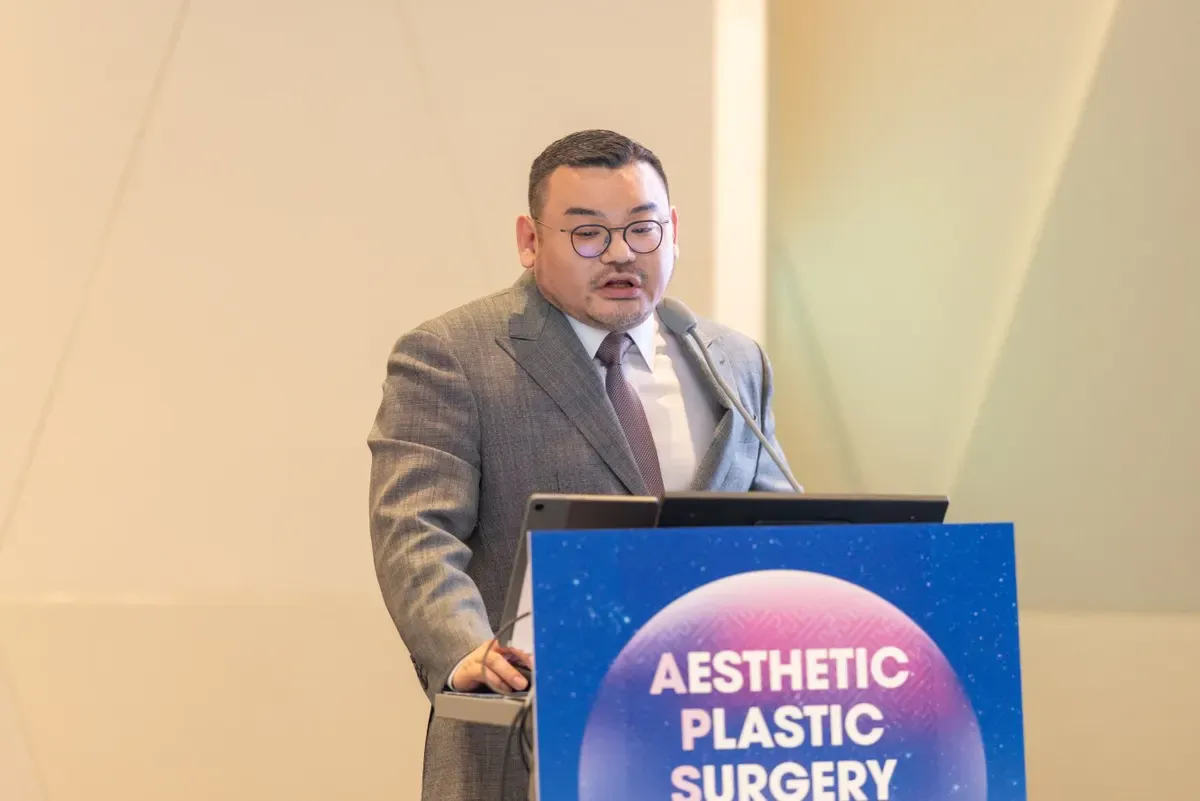
Most of what turns up when you search "dr korea pdrn reviews" mixes three different things: PDRN creams from Korean pharmacies and beauty shops, PDRN injections, and polynucleotide (PN) boosters such as Rejuran. A glowing review can describe something other than what would go into your own skin. When you're flying in for a short stay, that gap matters, because you can't drop by next week to ask what was actually in the syringe. I'm Dr. Hongseok Kim, a board-certified dermatologist with 21 years of experience, and at VOS Dermatology in Gangnam I do every consultation and every procedure myself; I'm writing this because the questions below are the ones that turn a pile of reviews into a decision.
Reviews are good at some things: how a visit felt, how long the redness lasted for that one person, whether anyone explained what was happening. They can't tell you which molecule was injected, how much of it, or whether it suits your skin. Those answers come from a consultation, and you're allowed to ask for them directly.
If one particular review is what brought you here, send a screenshot of it on WhatsApp with the dates you'll be in Seoul, and ask the question you'd put to that reviewer: what exactly did you have?
Send the product name or a skin photo on WhatsApp
Why PDRN reviews talk past each other
Korean skincare turned "PDRN" into a shelf word. The same four letters now appear on serums, ampoules and sheet masks, and on vials that only a doctor injects. One reviewer writes about a month of using an ampoule and a softer feel to their skin. Another writes about small bumps the day after an injection. A third had a PN booster, calls it PDRN because a friend did, and all three posts land under the same search.
Then there's the "salmon DNA" label. PDRN and PN are both purified from fish DNA, so forum threads use "salmon DNA", "PDRN" and "PN" as if they were one product. They are related, but they behave differently in the skin. If dry skin is the reason you started reading, I've covered which PDRN options help dry skin and what to pair them with separately. This post is about reading the reviews themselves.
Does a PDRN cream do what an injection does?
Not in the same way. Intact skin is built to keep large molecules out. A widely cited paper in Experimental Dermatology by Bos and Meinardi described the "500 Dalton rule": compounds above roughly that size penetrate healthy skin poorly. The DNA fragments in PDRN and PN are far larger than that.
So a PDRN cream mostly works at the surface, as a moisturiser, and the hydrating ingredients around it often do much of the visible work. An injection places the material in the dermis, where the fibroblasts that make collagen actually live. Those are two different experiences, and reviews of one don't predict the other.
That doesn't make the cream pointless. If you like a product and your skin feels comfortable on it, keep using it. Just don't read a cream review as a preview of an injection, or the other way round. For the daily-routine side of the picture, the order of steps for Korean glass skin shows where a booster fits and where it doesn't.

PDRN or PN: which one is actually in the syringe?
PDRN is made of shorter DNA fragments. It was studied first for wound healing, and research describes it acting partly through adenosine A2A receptors, which are involved in tissue repair. PN is made of longer chains. A 2025 review in Pharmaceutics comparing the two describes PN as forming a more viscous gel that stays in the tissue longer and supports hydration, while PDRN is more often discussed for its signalling effect.
On my menu, the polynucleotide option is Rejuran, a PN skin booster derived from purified salmon DNA. It comes in three forms: Rejuran Healer for the face and neck, Rejuran i for the eye area, and Rejuran HB+, which adds hyaluronic acid and lidocaine. The product decides how the treatment feels, how the skin looks the next day and how many sessions make sense. That is why the product name matters more than the word "PDRN" in a review title.
What should I ask before anything is injected?
In short, these are the questions that turn "I had PDRN in Korea" into something you can compare. The right-hand column is what a clear answer sounds like.
| Question to ask | What a clear answer sounds like |
|---|---|
| Is this PDRN or PN, and what is the product name? | A named product you can look up, with the box shown to you |
| How much goes in, and where? | A volume and the areas, said before the needle comes out |
| Who does the injecting? | A person's name and role |
| What can one session do if I only visit once? | A plain statement of what to expect and what not to expect |
| What should I watch for once I'm home? | Specific signs, and who to contact |
| Does anything in it matter for my allergies? | A direct check of fish-derived content and any local anaesthetic |
A vague answer is information too. "Our special booster" or "a cocktail" with no product behind it tells you that you can't compare it with anything you've read. Ask again, and if the product still has no name, you have your answer.
Worth knowing: Because PN and PDRN are purified from fish DNA, mention any fish allergy at the consultation. If Rejuran HB+ is being considered, also mention any reaction you've had to local anaesthetic, since it contains lidocaine.
How I approach a PDRN question from a visitor
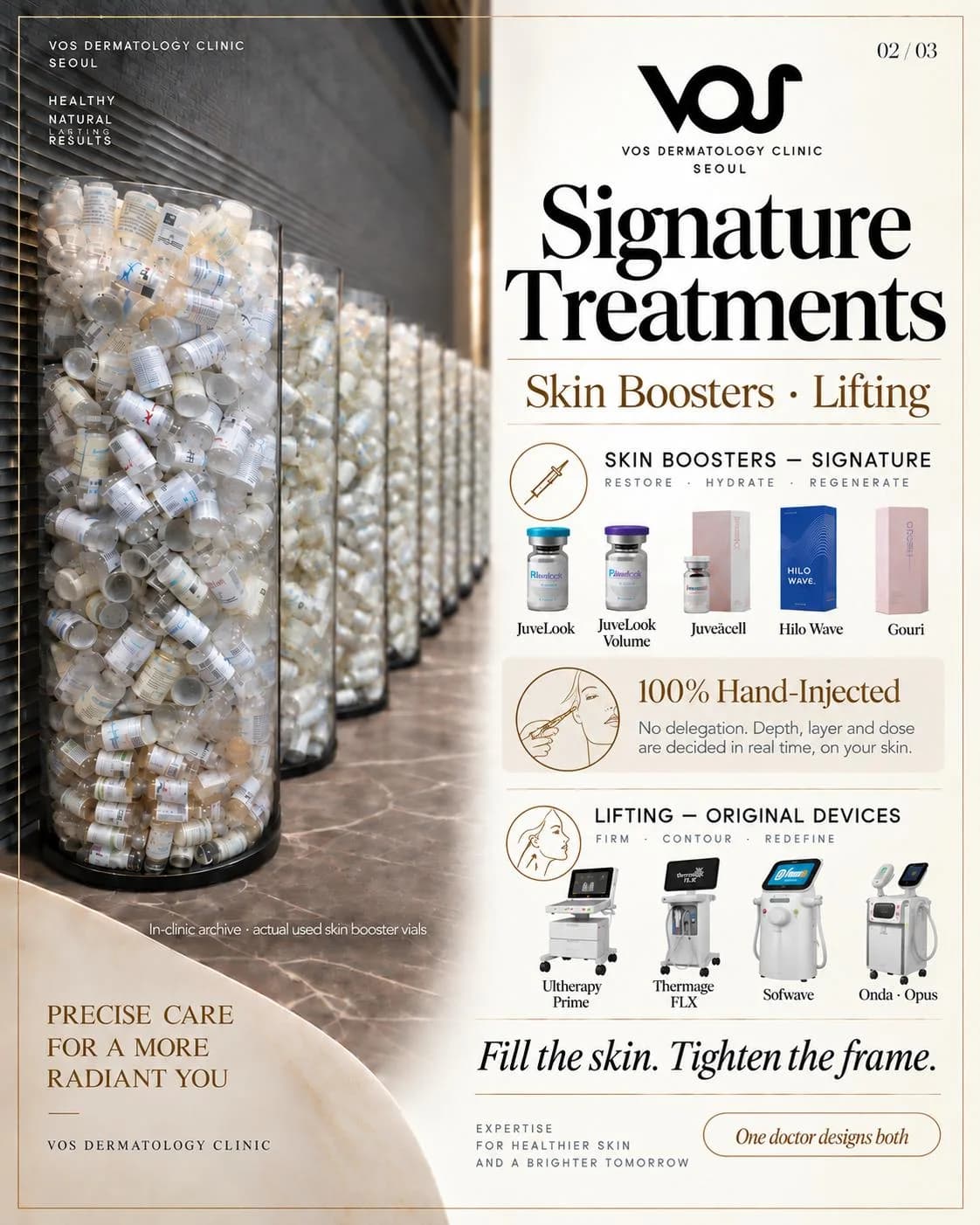
Every skin is different, and the diagnosis and treatment have to differ too. So when someone arrives with a stack of reviews and asks for "the PDRN everyone had", I start with a skin analysis, not with the product. At VOS the plan begins with that analysis, and I choose the product or combination for your face rather than handing over a package. You can see the range I choose from on the Better Face Line treatment menu.
Two principles here are about safety more than marketing. The first is genuine product: the device, tip or vial has to be the real one, because counterfeit or unauthorised supplies are a known cause of side effects. The second is exact dosage, never more and never less than your skin needs. The clinic also uses 5μm ultra-fine filter syringes, designed to catch micro-particles such as glass fragments from ampoules.
Sometimes my answer is that a booster is the wrong tool. A PN booster improves skin quality: texture, fine lines, a skin barrier that reacts to everything. It does not lift a jawline that has started to soften. If that's your real concern, the devices in this comparison of Korean skin tightening treatments are the conversation to have. And if what you mostly want is a lit-from-within look for a wedding photo, glowing skin, Korean style may get you there with less.
What can a review not tell you about risk?
Reviews are written by people whose week went fine, or by people whose week went badly. Neither tells you how often each outcome happens, and there are no reliable public numbers I could give you here. What I can describe is what to expect and what to act on.
The common effects of an injected skin booster are small raised bumps at the injection points, redness and mild swelling. For many people these settle within a day or a few days. Bruising can happen and can take longer to fade, which matters if you have photos or meetings planned. Less common are lumps that persist or a patch that stays tender. Infection and allergic reactions are uncommon but are the reason to tell the doctor about your allergies and to keep the skin clean afterwards.
If you're already home and notice pain that is getting worse instead of better, warmth, spreading redness, pus or a fever, see a local doctor promptly rather than waiting. The U.S. CDC's guidance on medical tourism recommends taking copies of your treatment records home and planning follow-up care before you travel, so keep the product name and the areas treated with you. Results and recovery vary from person to person, and whether a booster suits you at all is decided at the in-person examination.

How many visits fit into one trip?
For Rejuran, the standard protocol is three sessions a month apart, with results typically lasting over six months. Individual outcomes vary. A one-week trip therefore usually holds one session, and the realistic question is what one session can do for your skin, or whether you'd come back on later trips to continue.
Plan the injection early in your stay rather than the day before your flight, so any bumps have time to settle while you're still in Seoul. The clinic is open Monday, Tuesday and Thursday from 10:00 to 19:00, Friday until 20:00, and Saturday from 10:00 to 16:00. It is closed on Wednesdays, Sundays and public holidays, which is worth checking against your arrival day before you book flights.

Before you message us
If you're still weighing the reviews, send two things on WhatsApp: the product name or a photo of the box from the review you trust most, and a daylight photo of the area that bothers you, with your travel dates. Then ask the one question that's been stopping you, whether that's fish allergy, bruising before a flight, or whether you need an injection at all. You'll get an honest answer about what is realistic before you book anything. Results vary from person to person.
See me explain it on video
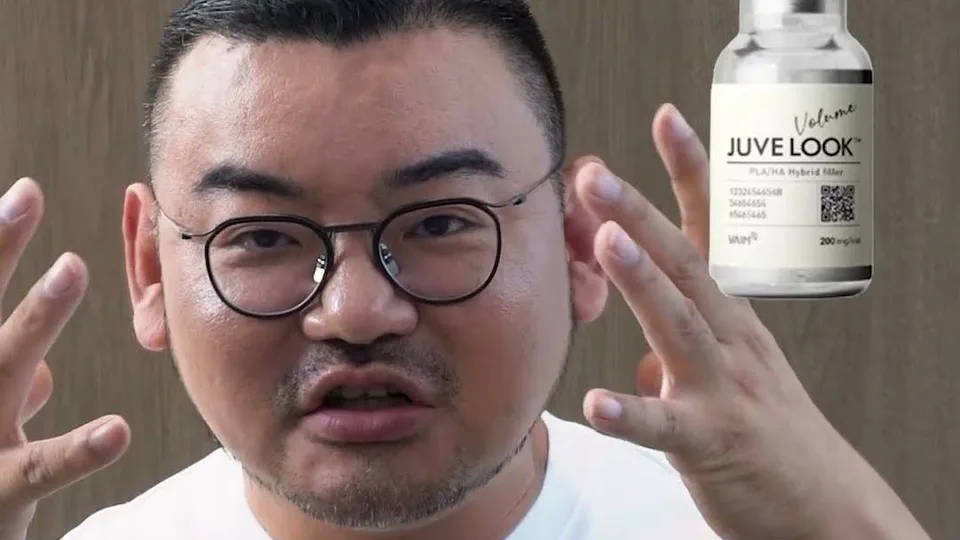
I answer the questions patients ask me on camera. The YouTube channel is in Korean with English titles; Instagram and TikTok are for international patients.

Questions readers ask about dr korea pdrn reviews
Is PDRN the same thing as a salmon DNA injection?
Can I buy PDRN injections at a Korean pharmacy?
How long do PN booster results last?
Can I fly home soon after a skin booster injection?
Does a PN or PDRN injection hurt?
Results, timing and recovery vary from person to person. This article is general information from VOS Dermatology Clinic and does not replace an in-person consultation. Any prices mentioned are from the clinic’s official price list (KRW, before VAT) and may change.

PDRN in Korea for Dry Skin: What Helps and What to Pair
PDRN in Korea for dry skin: dryness vs dehydration, where salmon DNA helps, when hyaluronic acid works faster, and listed prices. VOS Dermatology, Gangnam
How to Achieve Korean Glass Skin: The Order That Works
How to achieve Korean glass skin in order: what to stop at home, the daily basics, then cleansing, boosters and Seoul trip timing. VOS Dermatology, Gangnam

Korean Skin Tightening Treatment: Five Devices Compared
Korean skin tightening treatment: how Thermage FLX, Ultherapy Prime, Sofwave, Volnewmer and Double Tite differ, and what they cost. VOS Dermatology, Gangnam.