PDRN in Korea for Dry Skin: What Helps and What to Pair
PDRN in Korea for dry skin: dryness vs dehydration, where salmon DNA helps, when hyaluronic acid works faster, and listed prices. VOS Dermatology, Gangnam


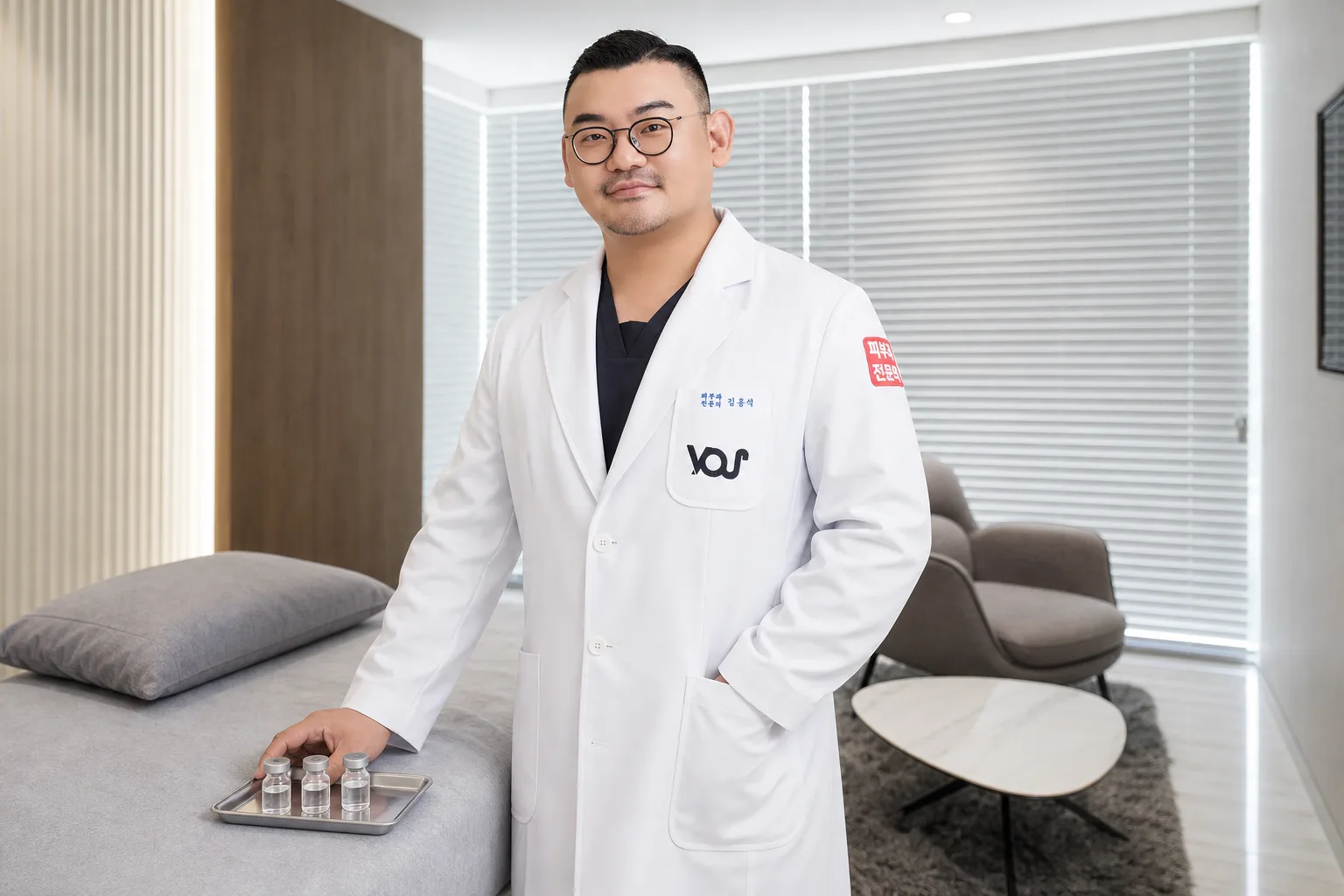
I'm Dr. Hongseok Kim, a board-certified dermatologist with 21 years in practice, and at VOS Dermatology Clinic in Gangnam I do each consultation and each treatment myself, one patient at a time. Dry, tight skin is one of the most common reasons people from abroad write to me, and lately the message often ends with "should I get PDRN while I'm in Seoul?" I want to answer that carefully, because the right answer depends on what kind of dry you are.
Here is the short version on PDRN in Korea for dry skin. PDRN and its close relative PN are salmon DNA boosters that help dry skin mainly by supporting barrier repair, while hyaluronic acid boosters add water-binding capacity more directly. If your dryness comes with thin, sensitive, easily irritated skin, a salmon DNA booster is a sensible base; if it is mostly dehydration, hyaluronic acid usually changes the feel of your skin faster. My broader guide to Korean salmon DNA injections explains the ingredient itself; this article is for people whose main complaint is dryness.

Dry skin and dehydrated skin are not the same problem
Patients use "dry" for two different things, and the treatment differs. Dry skin, in the strict sense, lacks lipids. The barrier that holds water in is weak, so the skin feels tight, flakes and stings with products that used to be fine.
Dehydrated skin lacks water rather than oil. It can even be oily at the same time. It looks dull, shows fine crisscross lines when you smile, and feels better for an hour after moisturizer before tightening again.
Many faces have both, especially after a long-haul flight or a few days in heated hotel rooms. Seoul also gets dry in the colder months, and visitors often notice their skin changing within days of arrival. Knowing which pattern dominates is the first step, because it decides whether we lead with repair or with hydration.
How PDRN and PN help dry skin
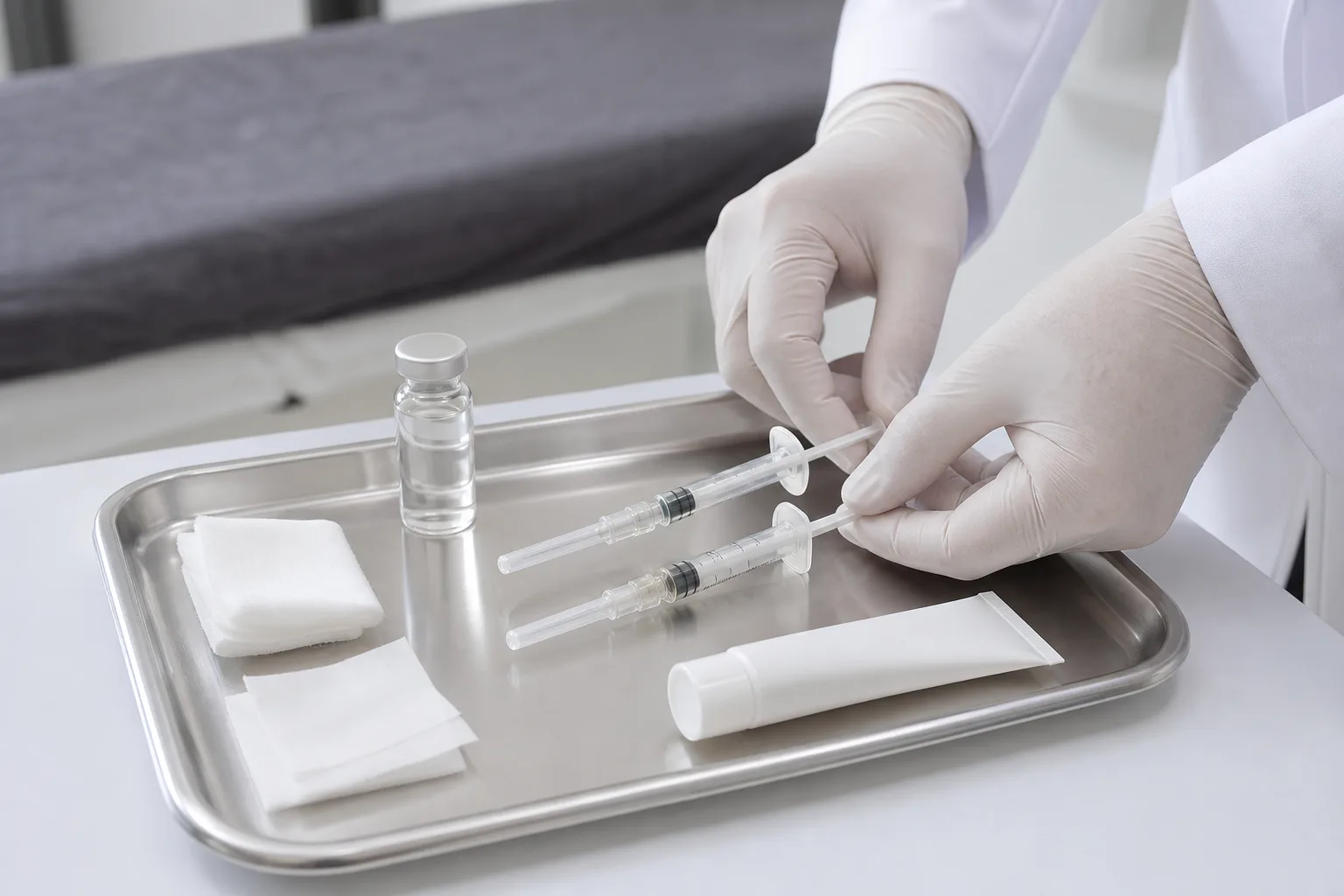
PDRN, polydeoxyribonucleotide, and PN, polynucleotide, are both made from DNA purified from salmon. PDRN uses shorter fragments; PN uses longer chains that form a thicker gel. In general terms, both are described as supporting tissue repair and fibroblast activity rather than holding water themselves.
For dry skin, that matters in a specific way. When the dermis and the barrier recover, the skin keeps its own moisture better. It is an indirect route to hydration, and it is slower, but it treats the reason the skin keeps drying out.
At VOS, the documented salmon DNA option is Rejuran, which is a PN product. A stand-alone PDRN product is not listed on our English treatment pages or price list. VOS does not publish details for this treatment on its website; ask during consultation whether it is available or which VOS treatment addresses the same concern. For most dry-skin patients, the question is less about the PDRN or PN label and more about which concern we treat first.
Which booster fits which kind of dryness
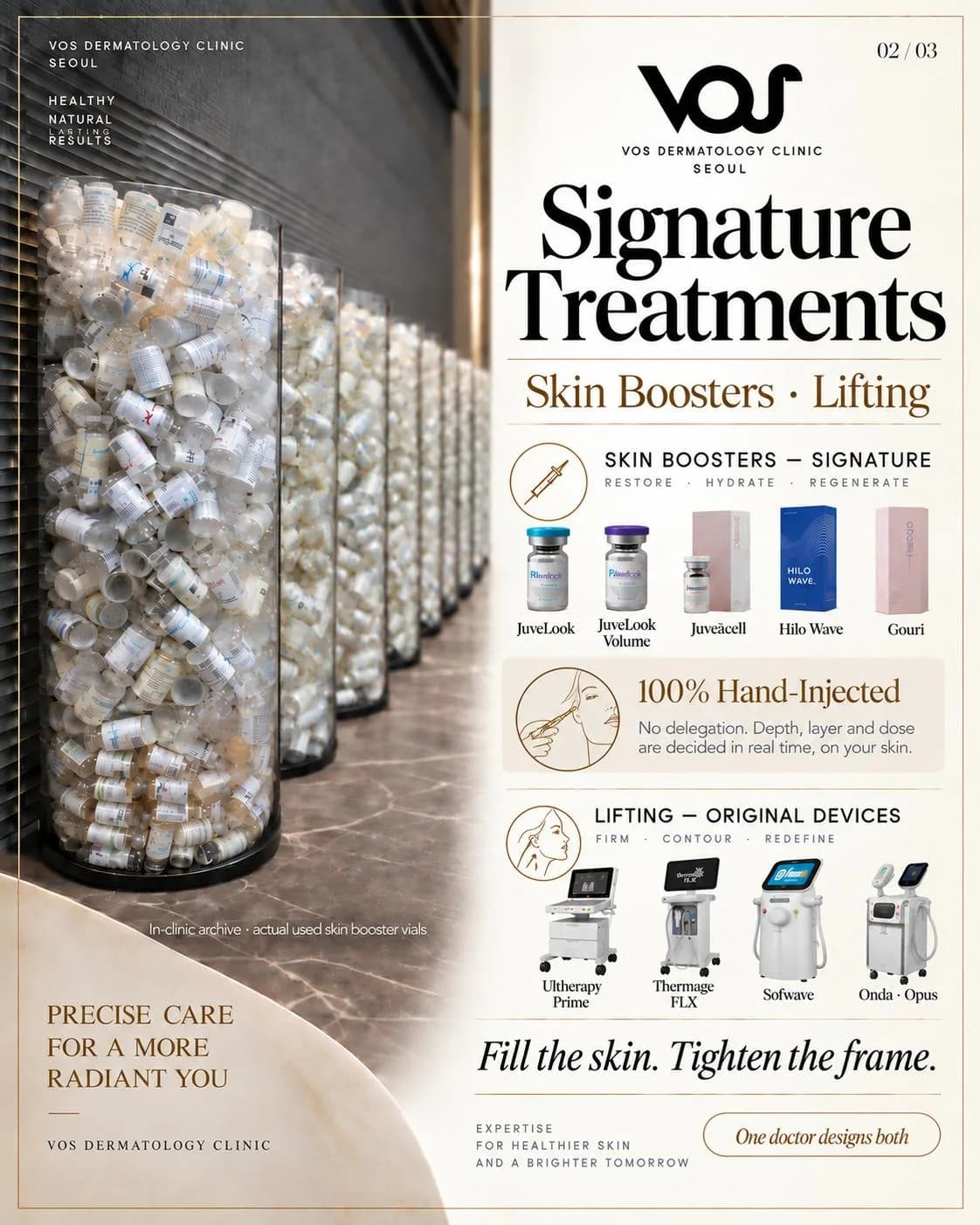
This is how I match options to dryness in the consultation room. All of these are documented on our treatment pages, and individual results vary.
| Your dryness | What I usually start with | Why |
|---|---|---|
| Thin, sensitive, stinging, weak barrier | Rejuran Healer (PN) | Supports repair of a compromised barrier |
| Tight and dehydrated, with fine lines | Rejuran HB (PN + hyaluronic acid + lidocaine) | Combines repair with hydration, more comfortable injection |
| Deep dryness, dullness, wants glow | Hilo Wave (dual hyaluronic acid) | Dryness and glow improve from the next day |
| Dry and anxious about needles or bruising | Mirajet (needle-free jet) | Delivers hydrating solutions without a needle |
Rejuran HB is often the middle ground for dry skin, because it carries both the salmon DNA component and hyaluronic acid in one injection. Our Rejuran treatment page explains the full product line.
If what you are really after is the dewy, light-reflecting finish people call glass skin, the plan usually layers more than one booster. I explain that combination in my article on Korean glass skin treatment.
Worth knowing: A salmon DNA booster does not replace your moisturizer. It improves how well the skin holds water over weeks, but if your daily routine strips the barrier, dryness returns. The injection and the bathroom shelf have to work together.
When a booster is not the first step
Some dryness is a medical condition rather than a skin-quality issue. Eczema, contact dermatitis, and dryness from certain medicines or acne treatments need their own management first. Injecting a booster into inflamed or cracked skin is the wrong order.
I would also slow down if any of these apply:
- Your skin is itchy, red and flaking in patches rather than evenly dry
- You recently started or stopped an oral acne medicine
- You are pregnant or breastfeeding
- You have an active skin infection or a cold sore
And if your skin is mostly dull and congested rather than tight, a facial-based treatment can be a gentler starting point. My article on the Korean HydraFacial covers what that does and does not do for dryness.
The visit, the bumps and dry-skin aftercare
For Rejuran, numbing cream goes on first, and the injections take about 30 minutes. Small bumps appear where the product was placed and generally settle within hours to a day. Minor swelling, bruising or redness can last 2–3 days. Hilo Wave has low treatment pain and minimal downtime. Mirajet leaves mild redness or swelling for a few hours, up to a day.
Dry skin needs a little more care afterwards. Do not wash your face or apply make-up for 24 hours. For about a week, skip saunas, intense exercise and alcohol, wear sunscreen and avoid rubbing the treated skin. I also ask dry-skin patients to pause exfoliating acids and retinoids for those first days, and to use one plain, fragrance-free moisturizer.
Plane cabins are very dry. If you fly within a few days of treatment, apply moisturizer before boarding and drink water during the flight. Book the session early in your stay so the bumps have settled before you travel. Results and recovery vary from person to person.
How I approach dry skin at VOS
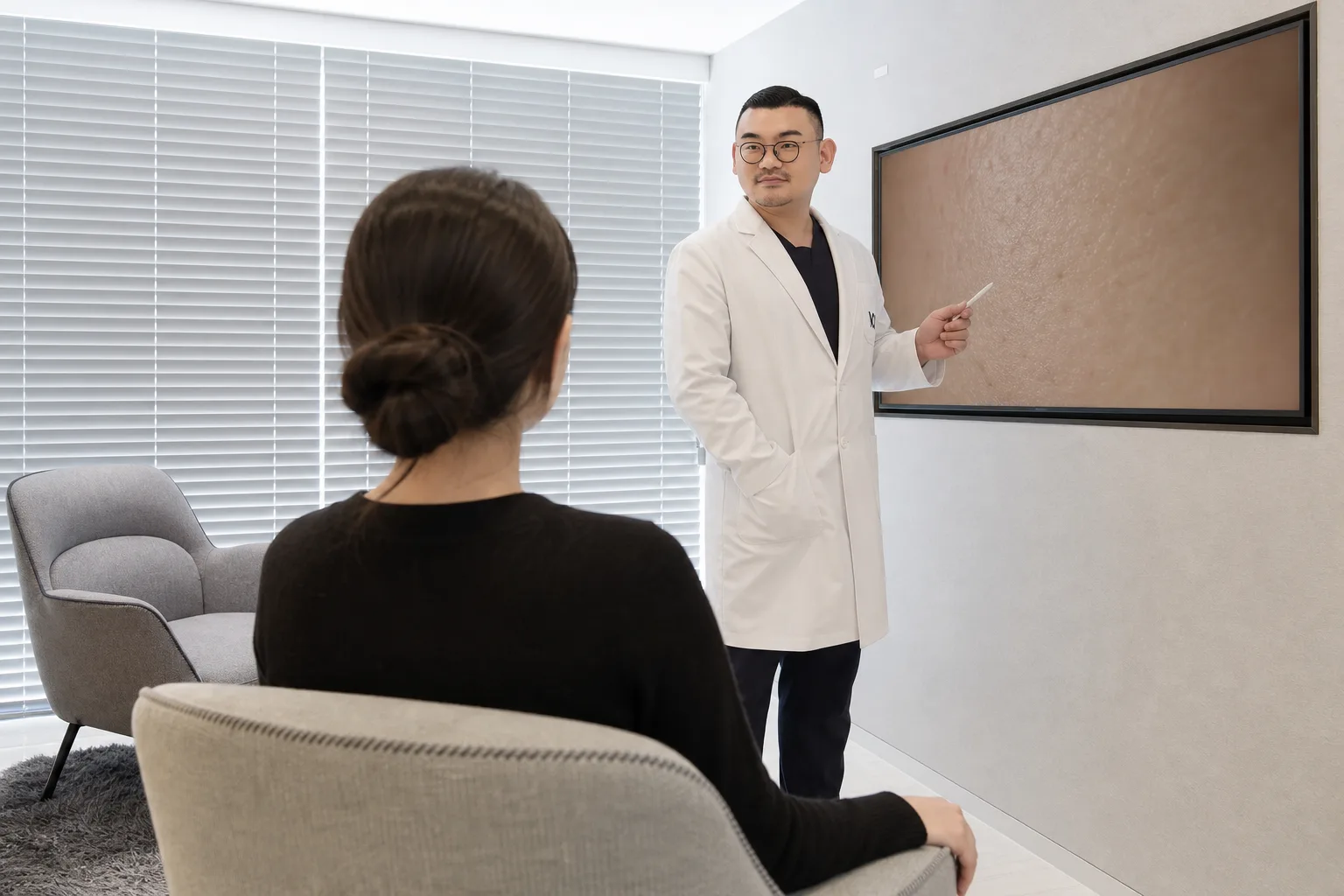
I start by finding out which dryness you have. In consultation I look at your skin in daylight, ask about your routine and any products that sting, and use our 3D skin analysis to see texture and fine lines more clearly. Your answers to "when does it feel tightest?" often tell me as much as the examination.
Then I decide the order. A weak barrier usually gets PN first, sometimes with HB where dehydration lines are visible. Deep dryness with dullness may start with Hilo Wave, because the change is felt sooner. For someone who bruises easily or has a big event right after the trip, Mirajet can be the safer scheduling choice.
I keep quantities honest. Dry skin does not need more product than the face can use. The documented Rejuran protocol is three sessions a month apart, with improvement usually within 12 weeks and lasting about six months, and I will say plainly if one visit is all your trip allows.
For reference, these are listed prices from our official English price list, copied exactly. Rejuran Healer is ₩400,000 for 2 mL. Rejuran HB is ₩350,000 for 1 mL, and ₩300,000 per 1 mL from 4 mL. Hilo Wave is ₩600,000 for 2 mL. MiraJet is ₩300,000. All prices are in KRW before 10% VAT, apply to all nationalities and may change without notice; please check the current list on our pricing page.

Before you message us
The questions above cover what most dry-skin patients ask first. Beyond them, send a clear daylight photo of your face without make-up, a short list of the products you use, and your travel dates. Tell me when your skin feels tightest and whether anything stings. With that, I can suggest whether to start with salmon DNA, hyaluronic acid or something else entirely. The clinic is in front of Dosan Park and is closed on Wednesdays, Sundays and public holidays.
Results, timing and recovery vary from person to person. Nothing here replaces an in-person consultation with a dermatologist.
Send your concern, a photo and your dates on WhatsApp, and our team will reply with a clear plan and quote before anything is scheduled.
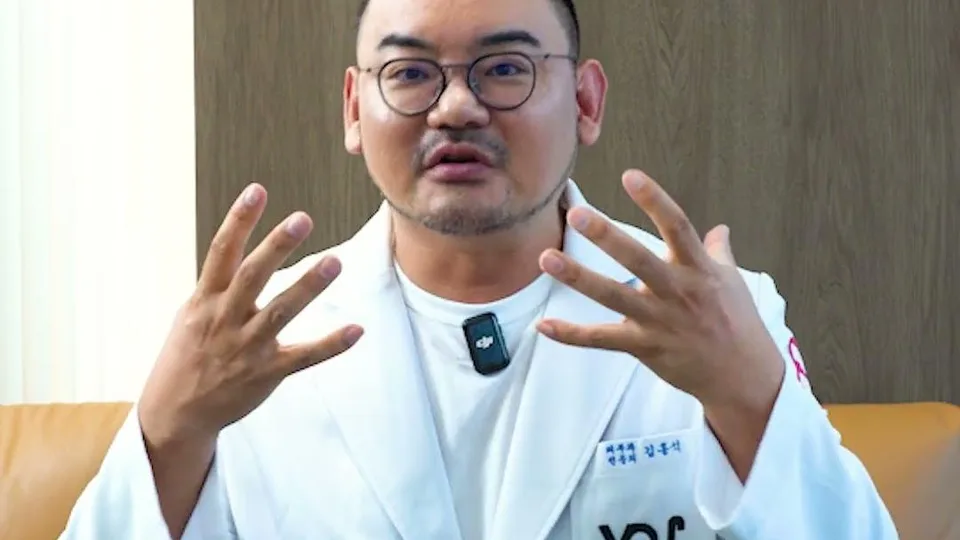
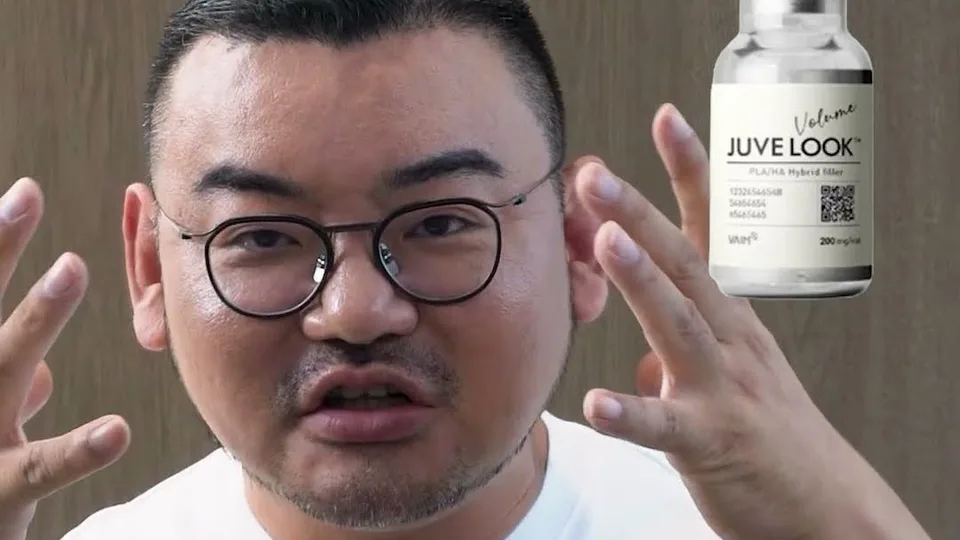
See me explain it on video
I answer the questions patients ask me on camera. The YouTube channel is in Korean with English titles; Instagram and TikTok are for international patients.

Questions readers ask about pdrn in korea for dry skin
Is PDRN or PN better for dry skin?
How soon will my dry skin feel different?
Can I keep using my retinol or acids after treatment?
Will a booster fix dryness from eczema or another skin condition?
Is one session worth it on a short trip?
Results, timing and recovery vary from person to person. This article is general information from VOS Dermatology Clinic and does not replace an in-person consultation. Any prices mentioned are from the clinic’s official price list (KRW, before VAT) and may change.
Related articles
Korean Salmon DNA Injections: What Is Really in the Syringe
Korean salmon DNA injections explained: PN vs PDRN, what purified DNA does in skin, who it suits, fish-allergy questions and prices. VOS Dermatology, Gangnam
Korean Glass Skin Treatment: Boosters Behind the Dewy Look
Korean glass skin treatment guide: which boosters build the dewy, even look, how fast it shows, what it can't do and listed prices — VOS Dermatology, Gangnam.
Korean HydraFacial: Benefits, Price and When a Booster Fits
Korean HydraFacial guide: what the 3-step, 30-minute facial does, where it stops, how it compares with skin boosters and pricing — VOS Dermatology, Gangnam.