
Korean PLLA Filler Is Not Instant Volume: Who It Really Suits
Korean PLLA filler builds volume slowly through your own collagen. A Seoul dermatologist explains who it suits and how to plan it around a flight home.

Korean PLLA filler is a poly-L-lactic acid injectable, such as Sculptra or Olidia, that restores volume gradually by prompting your own collagen over the following weeks. It suits broad, slow volume loss in the temples, cheeks and jawline, and it's a poor fit for lips, the nose or a deadline next week. For visitors the worry is the schedule and the flight home: a course usually takes more than one session spaced weeks apart, and most of the change appears after you're back home.
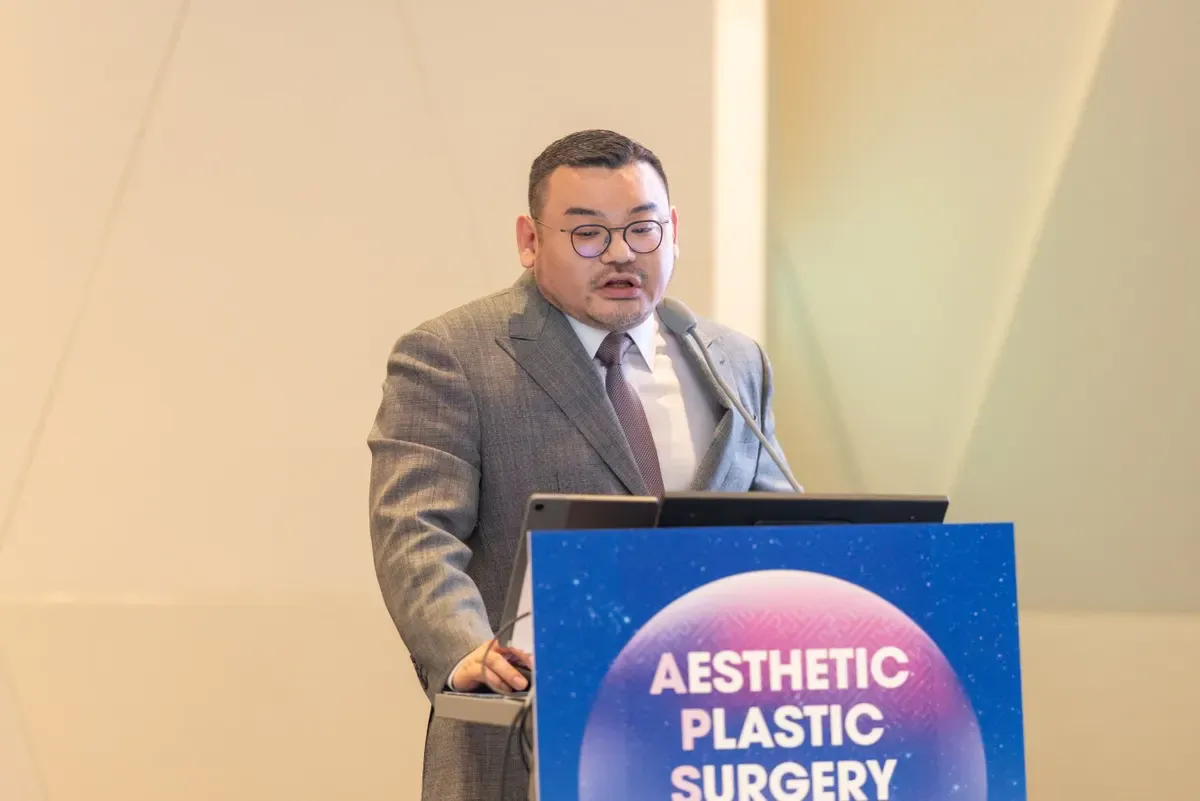
I'm Dr. Hongseok Kim, a board-certified dermatologist with 21 years in practice, and at VOS Dermatology Clinic I perform every procedure myself, from consultation to injection. I'm writing this because PLLA is the injectable people most often expect to behave like an ordinary gel filler, and that expectation is where disappointment starts.
If the timing worry is the one stopping you, send two things on WhatsApp: a daylight photo of the area that bothers you (front and both sides), and the dates you'll be in Seoul, including whether a second trip is realistic. Our coordinators reply in English.
Send a daylight photo and your Seoul dates on WhatsApp
What PLLA actually does under the skin
PLLA is a powder of tiny biodegradable particles, mixed with sterile water before injection. Right after treatment the area looks fuller, but that early fullness is mostly the water, and it fades within days as the liquid is absorbed. What stays behind are the particles, which the body slowly breaks down while laying down new collagen around them.
That's why the real result arrives over weeks to months, and why PLLA is often called a collagen stimulator. The U.S. Food and Drug Administration lists poly-L-lactic acid among the materials used in approved dermal fillers, alongside hyaluronic acid and calcium hydroxylapatite. The American Academy of Dermatology describes this type of filler the same way: results build gradually, and more than one treatment is commonly needed.
The practical consequence for you is simple. The face you see in the mirror on the day you leave Seoul is not the face you'll have in two months.
Worth knowing: the brief fullness after injection often leads people to think the treatment "didn't work" when it fades a few days later. That dip is expected. The collagen response is slower and starts afterwards.
How is PLLA different from hyaluronic acid, PDLLA and PCL?
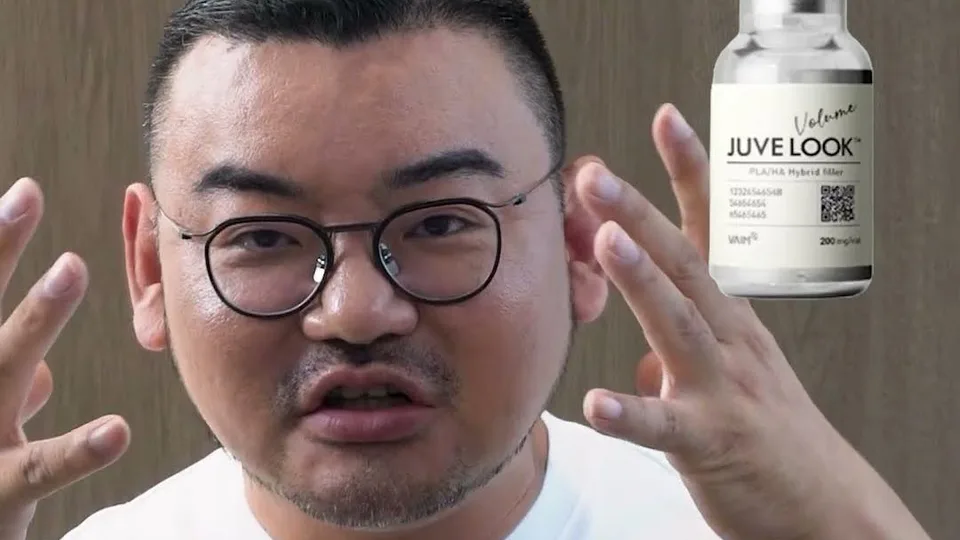
The short version: hyaluronic acid fills on the day, while PLLA, PDLLA and PCL ask your skin to rebuild support over time. On our own menu, the collagen stimulators differ by ingredient: Sculptra and Olidia are PLLA, Juvelook Volume is PDLLA, and Gouri is PCL.
| Material | On the VOS menu | How the change shows |
|---|---|---|
| Hyaluronic acid gel | Juvederm, Belotero | Visible on the day of injection |
| PLLA | Sculptra, Olidia | Builds over weeks as collagen forms |
| PDLLA or PCL | Juvelook Volume (PDLLA), Gouri (PCL) | Gradual, through collagen stimulation |
Hyaluronic acid gels come in different firmness grades for different jobs. On our menu, the firmer grades are listed for the nose, chin and jawline, and the softest for a sunken eye area. If you want to see how those gels compare, I've written about Korean fillers and how they differ from Juvederm and about the filler products and areas we list.
PCL is a different polymer again. The Gouri treatment page explains it as a liquid-type collagen stimulator aimed at sagging, fine lines and a natural tightening effect.

Who PLLA tends to suit
PLLA is a good candidate for faces where volume has thinned out across a wide area rather than in one sharp line. The typical pattern is someone in their 40s, 50s or 60s whose temples have hollowed, whose cheeks look flatter from the side, and whose skin has lost some of its firmness at the same time.
A few situations where it makes sense to consider it:
- Temples. Hollow temples make the upper face look tired and can let the brow tail look lower. Restoring volume there softens that shadow. Searches like "filler in temples to lift eyes" overstate it a little, though: volume supports the area, but it doesn't pull eyelid skin upward.
- Mid-cheek and lateral cheek. Gradual collagen support can help a cheek that has deflated. It can reduce the shadow above the jowl, but sagging skin along the jawline usually needs a lifting device as well, and that's a separate conversation.
- People afraid of looking "done". The so-called pillow face comes from too much volume placed too quickly. Because PLLA builds in steps, there's a natural pause between sessions to judge whether more is needed. Overcorrection is still possible, so the pause only helps if it's used.
It also suits people who can tolerate an unfinished look for a while. If you're arranging this for a parent, that patience matters more than age.
Which areas are a poor match for PLLA?
Lips, the nose and the thin skin directly under the eyes are generally not PLLA territory. In tissue that moves a lot, or where the skin is very thin, small particles are more likely to gather into palpable lumps.
For those areas, a hyaluronic acid gel is the usual tool, partly because it can be dissolved with an enzyme if something goes wrong. That reversibility is the main reason people searching "lip filler gone wrong" are almost always dealing with gel, not PLLA. If the under-eye hollow is your main concern, the under-eye filler article covers it in more detail.
PLLA is also a weak choice if you need a visible result for a fixed event soon, if you're pregnant or breastfeeding, if there's active infection or inflammation at the site, or if you've had problems with lumps or scarring after previous injections. Those are standard cautions for this class of product, and I'd raise every one of them before any treatment.

Can a PLLA course fit around a flight home?
Yes, but plan for it to be spread out. PLLA is usually given as a series of sessions several weeks apart, and the final look takes months, so a single short trip gives you the first step of the course, not the whole course.
That leaves three realistic shapes for a visitor:
- One session now, accept a partial result. Some people with mild hollowing are content with a single round. You'll see a modest change, and you can decide later whether to add more.
- Two trips. If you already visit Seoul regularly for work or family, a second session on the next trip often fits.
- A different first step. If you can't return and want a visible change this trip, a hyaluronic acid gel for one area may make more sense, with PLLA considered for a later visit.
After injection, commonly reported effects in the first days are swelling, tenderness, bruising and small injection marks. The aftercare usually given for PLLA is to massage the treated area regularly for several days to help the particles spread evenly. Plan your first two or three days in Seoul so bruising doesn't land on the day of an important meeting, and keep the clinic's hours in mind: we're closed on Wednesdays, Sundays and public holidays, open until 20:00 on Fridays and until 16:00 on Saturdays.
If you're weighing which of those three shapes fits your calendar, the useful thing to send is your arrival and departure dates, plus how often you're realistically in Korea. Share a daylight photo of the area at the same time. Our coordinators reply on WhatsApp in English.
Send a daylight photo and your Seoul dates on WhatsAppRisks: lumps, bruising and vascular occlusion
The complication specific to PLLA is nodules: small lumps under the skin that can appear weeks or months after treatment. They're linked to how the product is diluted, how deep it's placed, the area and how evenly it spreads. Most are small and many soften with time, but some need treatment. The VOS menu includes a Juvelook Nodule Treatment for lumps after collagen-stimulator injections.
The serious risk is shared with every injectable: accidental injection into a blood vessel, known as vascular occlusion. The FDA lists it among the rare but serious risks of dermal fillers, with possible consequences including skin damage, vision problems and stroke. Warning signs are pain out of proportion, a pale or mottled patch, or any change in vision during or shortly after injection, and these need same-day medical attention.
At home, sudden pain, colour change or vision change after any filler needs emergency care, not a wait-and-see message. Slow-developing lumps weeks later are a reason to contact your local dermatologist and to send us photos, so there's a record of what appeared and when.
Your candidacy, and which areas are sensible, is decided at the in-person consultation.

How I approach a PLLA consultation
Three questions decide whether I'd suggest PLLA: where the volume loss is, how thick the skin is over it, and whether your life allows a slow result.
The first is anatomical. Temples and cheeks with broad hollowing are where PLLA makes sense; a deep single fold, a nose bridge or lips point elsewhere. The second is the skin itself. VOS uses 3D skin analysis as part of diagnosis, and skin condition matters because very thin skin shows irregularities more easily. The third is practical, and for visitors it often decides everything: how many weeks until you're back, and how comfortable you are watching a change you can't yet see.
Doctor's note
The hardest part of PLLA isn't the injection. It's asking someone who flew a long way to accept a result that's still small when they board the plane home. I would rather someone choose a gel for one area this trip than leave with a course they can't finish and a plan they can't judge.
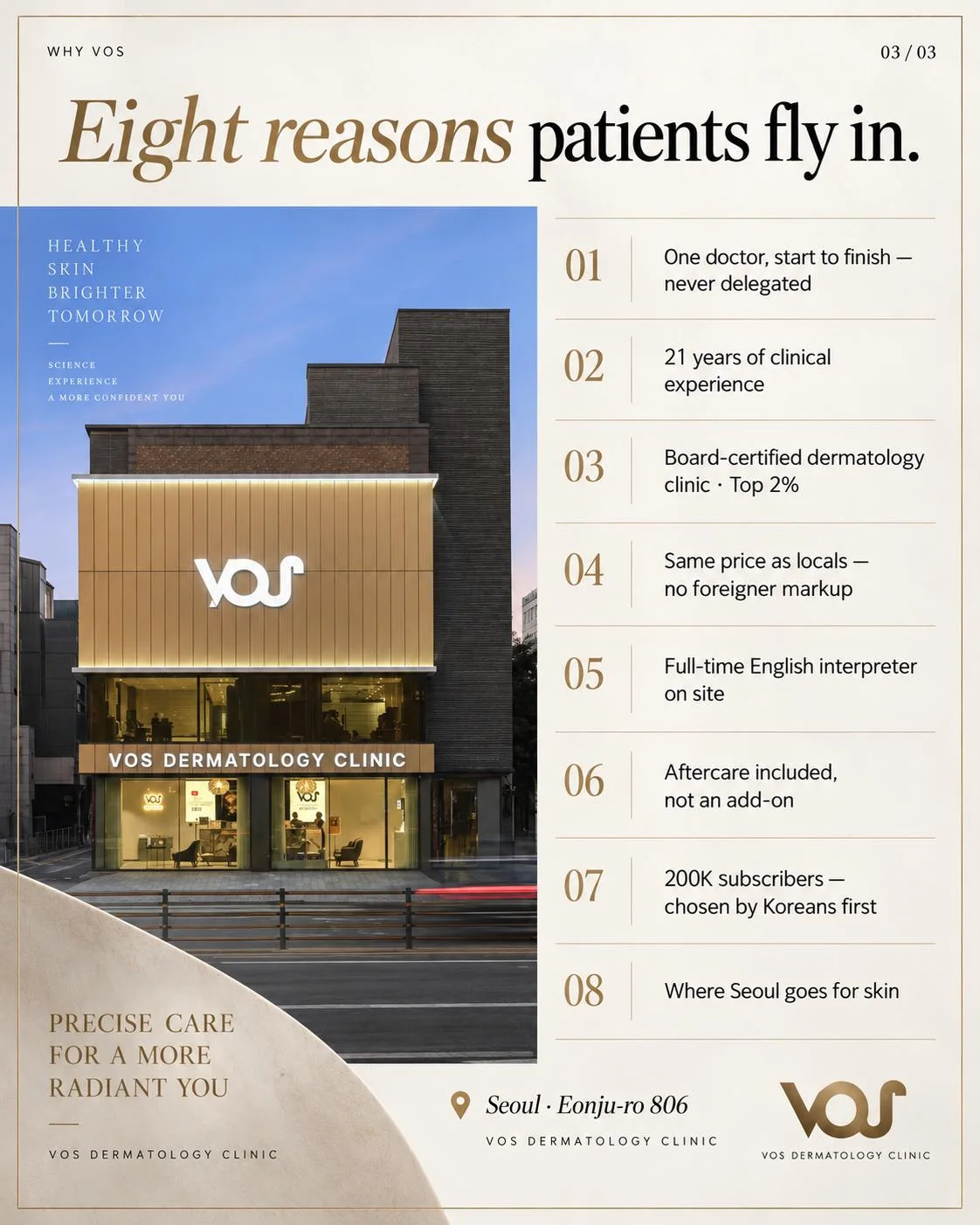
For nervous patients, the clinic offers nitrous oxide sedation, with over 5,700 cases so far; whether it fits your treatment is something to raise at consultation. The clinic is at 806 Eonju-ro, in front of Dosan Park, and the consultation rooms are on the 2nd floor. If you're also looking at areas beyond the face, such as the shoulder line, those are covered on the body fit treatments page. For lines rather than hollows, matching each wrinkle to a treatment may be a more useful starting point.
Before you message us
A useful first message has three things: a daylight photo of your face from the front and both sides, your Seoul dates, and any fillers you've had before. Add whether a second visit within a few months is realistic, since that shapes whether PLLA is worth starting this trip.
Send it on WhatsApp at https://wa.me/821096974628 and our coordinators reply in English. Results vary from person to person, and the number of sessions and the final volume differ with your skin, age and the area treated.
See me explain it on video
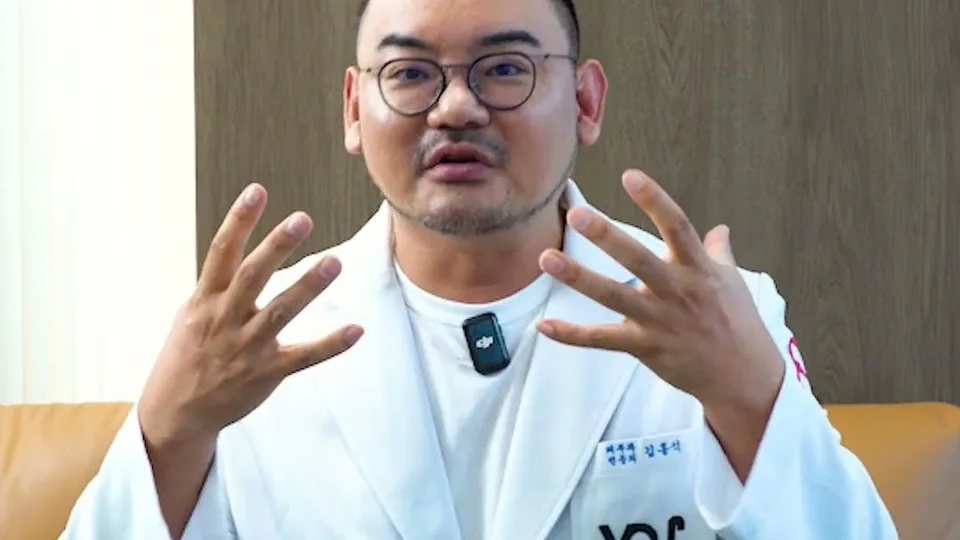
I answer the questions patients ask me on camera. The YouTube channel is in Korean with English titles; Instagram and TikTok are for international patients.

Questions readers ask about korean plla filler
Is PLLA a filler or a skin booster?
How long after PLLA can I see a difference?
Can PLLA be dissolved if I don't like it?
Is PLLA used for the nose or lips?
Can I fly home right after a PLLA session?
Results, timing and recovery vary from person to person. This article is general information from VOS Dermatology Clinic and does not replace an in-person consultation. Any prices mentioned are from the clinic’s official price list (KRW, before VAT) and may change.
Related articles

Korean Filler vs Juvederm: What Differs and What Doesn't
Korean filler vs Juvederm from a dermatologist: how HA gels differ, when brand matters less than placement, and listed filler prices. VOS Dermatology, Gangnam

Korean Filler in Seoul: Products, Areas and Listed Prices
Korean filler explained by a Gangnam dermatologist: which HA gel suits which area, real risks, trip timing and listed price per mL — VOS Dermatology, Gangnam

Korean Under Eye Filler: Hollows, Risks and Listed Prices
Korean under eye filler: when a soft HA gel helps a tear trough, when bags or thin skin need another fix, risks and listed prices — VOS Dermatology, Gangnam