
Korean Filler vs Juvederm: What Differs and What Doesn't
Korean filler vs Juvederm from a dermatologist: how HA gels differ, when brand matters less than placement, and listed filler prices. VOS Dermatology, Gangnam


I'm Dr. Hongseok Kim, a board-certified dermatologist with 21 years in practice, and I see every patient at VOS Dermatology Clinic in Gangnam myself, from the first conversation to the injection. A message I receive again and again from abroad goes something like this: "Should I ask for Korean filler or stick with Juvederm, the brand I know?" It is a fair question, and the honest answer is more useful than a sales pitch.
Here is the short version of Korean filler vs Juvederm. Both are hyaluronic acid gels, and the difference between a well-made Korean gel and a Juvederm gel is smaller than the difference between two injectors. What matters most is which gel suits which area, how much goes in and who places it. If you want the wider picture of filler in Korea first, my guide to Korean filler covers the basics; this article is for people choosing between a brand they know and a brand they keep seeing in Seoul.

What people mean by "Korean filler"
The phrase is used in two ways, and it helps to separate them. Some people mean hyaluronic acid filler made by Korean manufacturers. Korea has a large domestic filler industry, and you will see many local brand names in Seoul clinics that you may never have heard of at home.
Others simply mean filler done in Korea, whatever the brand. In that sense, Juvederm injected in Gangnam is also "Korean filler". When a reader asks me about Juvederm vs Korean filler, I usually ask which of the two they mean, because the answer changes.
Juvederm is a family of hyaluronic acid fillers made by Allergan Aesthetics, and it is one of the most widely studied filler ranges in the world. Korean HA brands are approved by Korea's Ministry of Food and Drug Safety, and some also carry approvals in other markets. Approval is the minimum; it is not a ranking.
How hyaluronic acid fillers actually differ
All of these products start from the same molecule: hyaluronic acid, a sugar that is naturally present in your skin and holds water. On its own it would break down within days. Manufacturers crosslink the chains so the gel lasts months instead. The differences between brands sit in a few technical choices.
- Crosslinking method and degree. This affects how long the gel lasts and how firm it feels.
- Firmness (often called G prime). Firmer gels hold shape and project, which suits the chin and cheekbone. Softer gels spread and suit fine lines and lips.
- Cohesivity and particle structure. This decides whether the gel stays as one smooth mass or behaves more like fine particles.
- Water uptake. Some gels draw in more water after injection, which changes how much swelling you see in the first week.
- Added lidocaine. Many modern fillers, Juvederm included, contain a local anesthetic to make injection more comfortable.
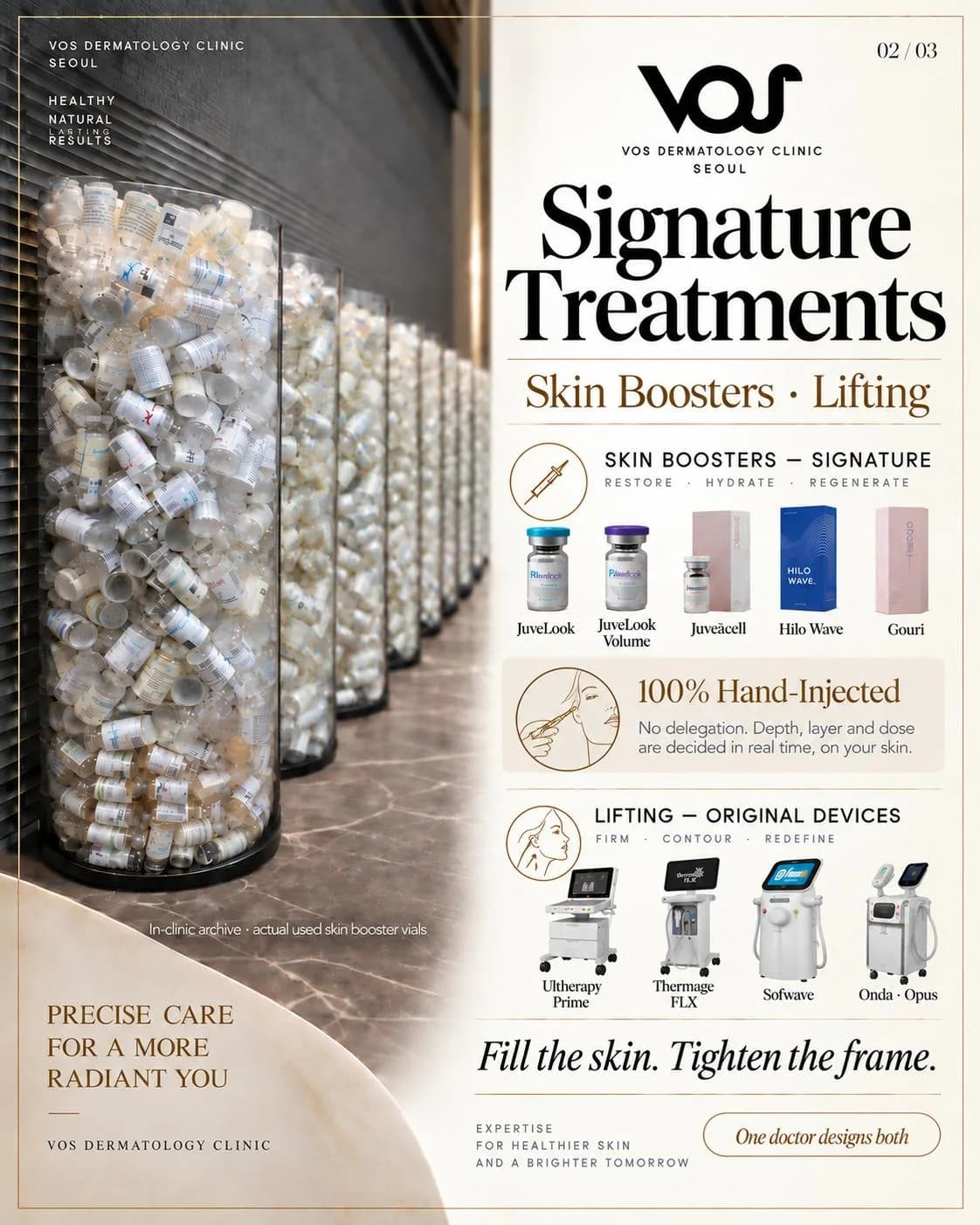
Juvederm sells a range of gels for different jobs rather than one product. On our price list you will see Volbella, Lift, Voluma and Volux, which in general move from softer, finer gels to firmer, more structural ones. Korean brands also make ranges for different depths. So a fair comparison is gel to gel, never brand to brand.
Worth knowing: A soft gel placed where a firm gel belongs, or too much of a good gel in the wrong layer, causes more problems than any brand difference. If a clinic talks only about the brand and never about the layer, the area and the amount, ask more questions before you book.

Korean filler vs Juvederm, side by side
This table is general, not a verdict on any single product. Individual Korean brands vary widely, so treat it as a starting point for your questions.
| Aspect | Korean-made HA filler | Juvederm |
|---|---|---|
| Main ingredient | Crosslinked hyaluronic acid | Crosslinked hyaluronic acid |
| Regulatory approval | Korea's Ministry of Food and Drug Safety; some also abroad | U.S. FDA and Korea, among others |
| Range of gels | Varies by brand; many make soft to firm lines | Volbella, Lift, Voluma, Volux and others |
| Published long-term data | Varies; growing for some brands | Large body of published studies |
| Familiar at home | Often unknown outside Asia | Widely available in many countries |
| Reversible with hyaluronidase | Yes, in general | Yes, in general |
| What decides the result | Placement, amount, injector | Placement, amount, injector |
For a visitor, one practical point stands out. If you have a problem after you fly home, a doctor there is more likely to recognize Juvederm by name. That is not a quality argument, but it is a real one, and I mention it to patients who are unsure.
Is Korean filler safe?
This is the question underneath most messages I receive, so I will answer it directly. An approved hyaluronic acid filler, used in the right layer by a trained doctor, has a well-understood safety profile, whether it was made in Korea, France or the United States. The serious complications of filler, such as blocking a blood vessel, are about anatomy and technique rather than the country on the box.
What you can check as a visitor:
- Ask the exact product name and gel, not just "Korean filler" or "Juvederm".
- Ask to see the sealed syringe and its label before the injection.
- Ask how many mL are planned for each area, and write it down.
- Ask who will hold the needle, and whether that person is a doctor.
- Ask what the clinic does if you notice unusual pain or skin color change after you leave.
Common short-term effects after any filler are swelling, tenderness and small bruises for a few days. These vary from person to person. Severe or worsening pain, or skin that turns pale or dusky, needs a doctor the same day, whatever the brand.
When neither is the answer
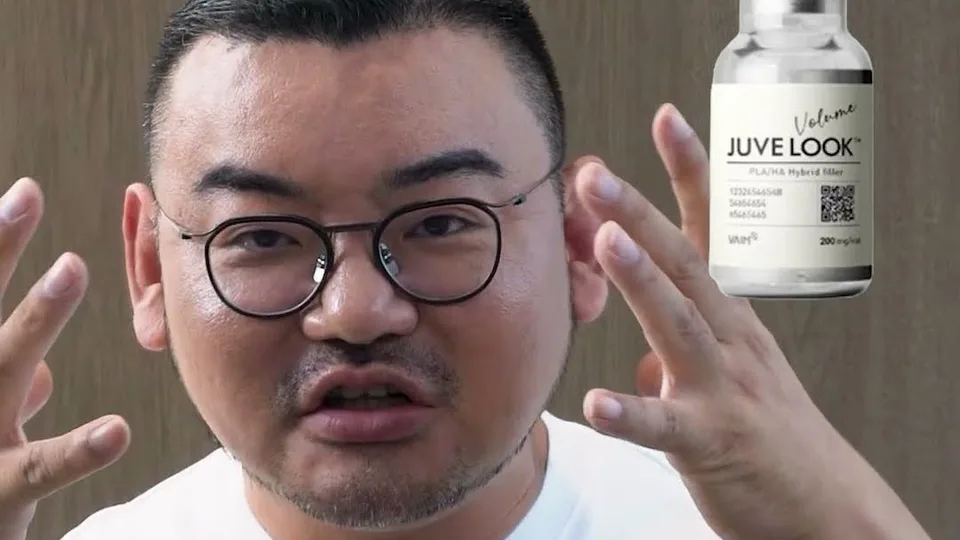
Many people who write to me asking about filler are really describing something else. Thin, hollow skin across the cheeks and temples is often better served by a collagen-building injectable than by a gel. That is where Juvelook Volume comes in: it combines hyaluronic acid with PDLLA and builds density gradually over weeks rather than filling a spot. I explain who it suits in my article on Juvelook Volume in Korea.
Sculptra is another option for broad volume loss. It is a PLLA biostimulator, and results appear from about 4–6 weeks and usually last around two years, though this varies by person. The comparison with other collagen stimulators is in my piece on Korean Sculptra, and the product details are on the Sculptra page.
Sagging is different again. Filler cannot lift a heavy jowl, and too much filler used to "lift" tends to make a face look full rather than younger. If laxity is your main concern, tell me first.
Listed filler prices at VOS
These are the dermal filler and volume lines from our official English price list, copied exactly. Prices are in KRW before 10% VAT, the same for all nationalities, and they may change without prior notice. Check the current figures on our pricing page.
- Juvederm Volbella, Lift, Voluma or Volux: ₩700,000 for 1 mL, or ₩600,000 per 1 mL from 2 mL.
- Belotero Soft, Volume or Intense: ₩600,000 for 1 mL, or ₩500,000 per 1 mL from 2 mL.
- JUVELOOK Volume: ₩1,000,000 for 1 vial, or ₩2,100,000 for 3 vials (₩700,000 per vial).
- Sculptra: ₩1,000,000 for 1 vial, or ₩2,100,000 for 3 vials (₩700,000 per vial).
Korean-brand HA fillers are not on this list, so I cannot quote a price for them. Your total depends on the gel, the number of mL your face actually needs and whether we combine treatments. All amounts above are KRW before 10% VAT; ask us on WhatsApp for a quote before you travel.

How I approach filler choices
Every plan starts with a consultation with me and a look at your skin, including our 3D skin analysis and the VOS Skin MBTI questionnaire. I look at bone support, fat pads, skin thickness and how your face moves when you talk. Only then do I decide whether a gel, a collagen stimulator, both or neither makes sense.
When I do use filler, I choose the gel for the layer and the area. A firm gel along the cheekbone and a soft gel in a fine line are different decisions, even within one brand. I would rather use less product and see you again than fill to a round number. The principles I hold the clinic to are simple: the correct amount, a genuine product and a specialist doing the work.
If you arrive set on Juvederm, I can work with that. If you arrive set on a Korean brand we do not list, I will tell you honestly and suggest what I would use instead. Results, as always, vary from person to person.

Before you message us
The questions above cover what most visitors ask. The most useful message includes a clear photo of your face in daylight, front and both sides, without make-up, plus the area that bothers you and your travel dates. If you have had filler before, tell me the product and roughly when.
Results, timing and recovery vary from person to person. Nothing here replaces an in-person consultation with a dermatologist.
Send your concern, a photo and your dates on WhatsApp, and our team will reply with a clear plan and quote before anything is scheduled.
See me explain it on video
I answer the questions patients ask me on camera. The YouTube channel is in Korean with English titles; Instagram and TikTok are for international patients.

Questions readers ask about korean filler vs juvederm
Is Korean filler safe compared with Juvederm?
Which fillers does VOS list on its price list?
Does Juvederm last longer than Korean filler?
Can I have filler and fly home a day or two later?
Should I choose filler or Juvelook Volume?
Results, timing and recovery vary from person to person. This article is general information from VOS Dermatology Clinic and does not replace an in-person consultation. Any prices mentioned are from the clinic’s official price list (KRW, before VAT) and may change.
Related articles

Korean Filler in Seoul: Products, Areas and Listed Prices
Korean filler explained by a Gangnam dermatologist: which HA gel suits which area, real risks, trip timing and listed price per mL — VOS Dermatology, Gangnam

Juvelook Volume Korea: Who It Suits and What to Expect
Juvelook Volume Korea guide: what PDLLA volume does, who it suits vs Glam, Sculptra or Lafullen, the timeline and nodule signs. VOS Dermatology, Gangnam.
Korean Sculptra: PLLA Results, Sessions and Seoul Prices
Korean Sculptra guide: how PLLA rebuilds volume, who it suits, why sessions sit a month apart, Juvelook compared and listed prices — VOS Dermatology, Gangnam.