
Korean Filler Stick or Injected Filler: What Each One Holds
Korean filler stick or injected filler? What a balm can do, how swelling and bruising unfold day by day, and how to plan trip length. VOS Dermatology…

A korean filler stick is a cosmetic balm that sits on the surface of the skin, so it can make fine lines look softer while you wear it, but it cannot add volume the way injected filler does. If you're weighing the injected version during a trip to Korea, the usual worry is how many days of swelling or bruising you'll carry, and whether they'll still be there on the flight home. At VOS, the dermatologist who examines you performs every procedure, and the clinic's record includes over 5,700 cases of nitrous oxide sedation.
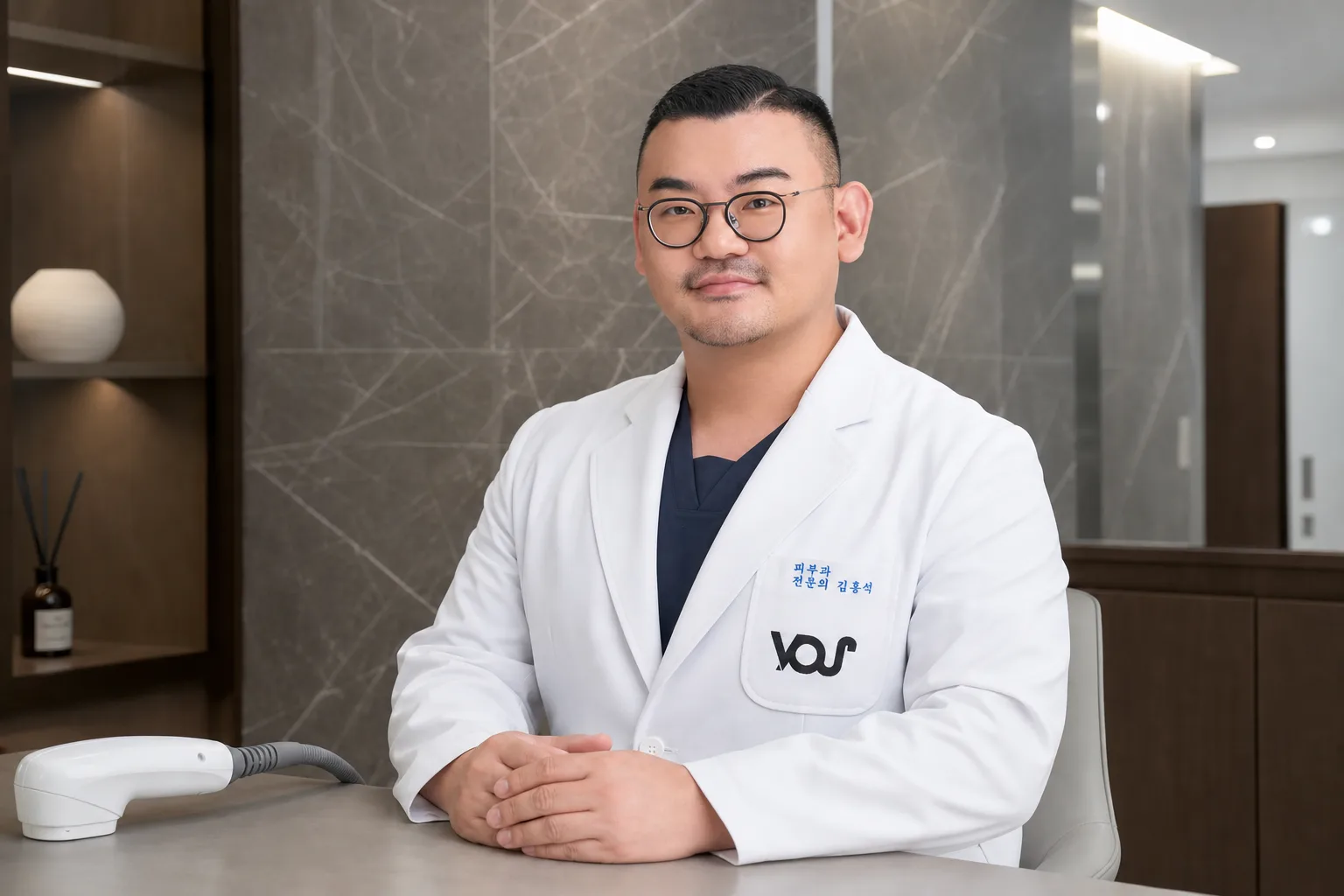
I'm Dr. Hongseok Kim, a board-certified dermatologist with 21 years of experience, and I perform the procedures at VOS Dermatology Clinic in Gangnam myself. I'm writing about the korean filler stick because the name promises more than a balm can deliver, and the question underneath it is usually about needles, downtime and what can go wrong.
For planners, the practical split is simple. Keep the stick for everyday makeup, and if you want real change in the cheeks, chin, temples or nose, plan injected filler with a few days of buffer before you fly. Swelling and bruising can appear after injection, and how long they last and how the result looks varies from person to person, so I can't give you a fixed timeline before I've seen your skin.
If you can't tell whether your concern is a surface line or lost volume, send one daylight photo of that area on WhatsApp.
Ask your one filler question on WhatsApp
What a filler stick does on the skin
Most of what a filler stick does happens in the top layer. It leaves a film that settles into tiny surface grooves and reflects light more evenly, much like a primer. Some formulas add ingredients that hold water in the outer skin, which makes it look plumper for a while.
The limit is molecular size. A widely cited paper in Experimental Dermatology (Bos and Meinardi, 2000) describes a “500 Dalton rule”: compounds above roughly that molecular weight penetrate intact skin poorly. The hyaluronic acid in a filler syringe is a large, cross-linked gel far beyond that size, so the same ingredient on a stick stays on the surface, where it moisturizes.
Risks and side effects to know
Lip-plumping sticks work by a different route. WebMD's overview of lip plumpers explains that many use mild irritants to cause a little temporary swelling. The effect is real, short-lived, and nothing like placing gel under the lip.
So the stick isn't a scam. It smooths the look of lines for the hours you wear it. It can't change a contour, fill a hollow temple or build a chin.
Is injected filler the same substance in another form?
Only the ingredient name overlaps. Injected filler is a gel placed under the skin by a trained doctor, and it changes shape and volume. The FDA notes that fillers the body absorbs over time may need repeating, with timing set by the material and the area treated.
On the clinic's menu, firmer hyaluronic acid fillers are listed for the nose, chin and jawline, medium-firm ones for cheeks, temples, forehead and nasolabial folds, and softer ones for marionette lines, sunken eyes, horizontal neck lines and fine lines around the mouth. If you're curious about products, how Korean and imported hyaluronic acid fillers compare covers what differs and what doesn't.
Worth knowing: The FDA advises against buying dermal filler products online and states that needle-free devices are not approved for injecting dermal fillers. A “filler pen” sold for home use is a needle-free device, and a balm stick contains no injectable filler at all.

Recovery day by day after injected filler
Most people go about their day straight after treatment: the American Academy of Dermatology says patients can return to everyday activities immediately after most fillers. What changes over the next days is swelling and bruising, which the FDA says appear shortly after injection.
| When | What is common | What it means on a trip |
|---|---|---|
| Treatment day | Everyday activities resume after most fillers (AAD); swelling and bruising can start shortly after injection (FDA) | Keep the evening free of plans that need a camera |
| The following days to weeks | Many short-term reactions fade within days or weeks (FDA) | Leave a buffer between treatment and the flight home |
| Months to years later | Some reactions can appear months or years later (FDA) | Keep a record of what was injected and where |
The shape you see in the mirror on day one includes that early swelling. The settled contour is something you'll judge later, often after you're home.
Shoulder filler is the one filler area where VOS publishes its own timeline: the line shows immediately, micro-swelling settles over 1–2 weeks, and the final line is seen once that swelling subsides. Facial areas aren't given the same figures on the clinic's pages, so ask about your own area directly.
What the recovery means for trip length
Put the treatment early in the trip, never on the last day, and treat the final days in Seoul as buffer. The clinic's calendar helps here: VOS is open Monday, Tuesday and Thursday 10:00–19:00, Friday 10:00–20:00 and Saturday 10:00–16:00, and closed on Wednesdays, Sundays and public holidays.
A treatment on a Tuesday or Thursday leaves open clinic days afterwards while the first days pass, and a Sunday flight then takes you home with a few days of settling already done.
The walk matters more than people think when one cheek is tender. The clinic sits in front of Dosan Park, 11 minutes on foot from Exit 3 of Gangnam-gu Office Station on Line 7, and 14 minutes from Apgujeong Station (Line 3, Exit 3) or Apgujeong Rodeo Station (Suin-Bundang Line, Exit 5).
Every treatment on the Better Body Fit menu, shoulder filler included, is planned and performed by Dr. Kim after an in-person skin analysis. For the face, the clinic lists 3D skin analysis among its diagnostic steps, and the full treatment menu shows which filler and biostimulator options sit alongside it.

The fears behind “filler gone wrong”
Most stories about filler gone wrong fall into three groups: too much volume, lumps, and the rare emergency of filler entering a blood vessel. The first two are mostly about amount and placement. The third is why anatomy knowledge matters most.
Pillow face is the overfilled look that builds when volume is added area after area, often over several years. It's a dose problem, and it's the reason the clinic's first stated principle is correct amount.
Lumps can appear soon after treatment or later; the FDA notes that some reactions can appear months or years after injection. If one appears after you're home, a local dermatologist can examine it, and the record of what was injected makes that visit far more useful.
The serious risk is the one the FDA calls the most concerning: unintentional injection into a blood vessel, with reported complications including tissue necrosis, vision abnormalities including blindness, and stroke. It's rare. Areas such as the nose call for particular care, and lip filler searches about vascular occlusion exist for the same reason.
The FDA also asks patients to tell their provider about active skin inflammation or infection, bleeding disorders, and allergies, including to lidocaine. Whether filler suits your face, and which product, is decided at the in-person consultation, and nothing written online replaces that look at your skin.
If one of these fears is the thing stopping you, whether it's a lump from a past treatment, swelling that worried you before, or a bleeding disorder, send that single question on WhatsApp.
Ask your one filler question on WhatsAppHow I approach a nervous first-timer
Fear of needles is a reasonable reason to wait. If someone does choose filler, I'd rather start with a small amount in one area than a large change they feel unsure about.
The clinic's principles are correct amount, genuine product and specialist. Genuine product matters with filler in particular, and the FDA's advice against buying filler online rests on the same idea.
Doctor's note
What I'd say to a friend is simple: a filler stick is fine for what it is, and you don't owe anyone a needle. If you do choose filler, take a small first step you can watch settle before you decide on the next one. A face that changes gradually is easier to live with than one that changes overnight.
If you want to check who is holding the syringe, what board certification means for a Korean dermatologist explains the training behind the title. If filler is one piece of a longer plan, how a dermatologist layers anti-aging treatments over time shows where it usually fits.

If you'd rather stay needle-free
Staying needle-free is a valid choice, and several clinic options work on skin quality instead of volume. They won't build a chin or fill a temple, and they don't claim to.
HydraFacial takes about 30 minutes with an immediate return to daily activities, and VOS describes it as addressing dryness, pores, redness, fine lines and impurities. Energy devices on the menu, such as Sofwave and Thermage FLX, are aimed at firmness and do not add volume. What each clinic facial option actually does lays out the non-injection menu if that's the direction you lean.
And the stick still has a place. A korean filler stick in your bag before a dinner is a reasonable cosmetic habit, as long as you expect makeup results from it.

Before you message us
The most useful first message is one photo of the area in daylight and one sentence about what you want changed: a line, a hollow or an outline. Add your travel dates if you have them. Results vary from person to person, including how long swelling and bruising last after filler. One photo and one sentence is enough to start.
See me explain it on video
I answer the questions patients ask me on camera. The YouTube channel is in Korean with English titles; Instagram and TikTok are for international patients.


Questions readers ask about korean filler stick
Do Korean filler sticks contain hyaluronic acid?
How soon after filler can I fly home?
Is a hyaluron pen an alternative to needle filler?
What does pillow face mean with filler?
Does VOS also use filler outside the face?
Results, timing and recovery vary from person to person. This article is general information from VOS Dermatology Clinic and does not replace an in-person consultation. Any prices mentioned are from the clinic’s official price list (KRW, before VAT) and may change.

Korean Filler vs Juvederm: What Differs and What Doesn't
Korean filler vs Juvederm from a dermatologist: how HA gels differ, when brand matters less than placement, and listed filler prices. VOS Dermatology, Gangnam

Korean Dermatologist: What Board Certification Means
Korean dermatologist guide: what board certification means in Korea, how to check who treats you and what to ask before booking — VOS Dermatology, Gangnam.
Korean Anti Aging: How a Dermatologist Layers Treatments
Korean anti aging, layer by layer: how I combine lifting devices, skin boosters and toxin, what each does, and listed prices. VOS Dermatology, Gangnam.