
Korean Face Pack for Glowing Skin: Barrier First, Glow Second
A korean face pack for glowing skin hydrates the surface for hours. Who packs suit, why they sting, and when clinic care fits. VOS Dermatology, Gangnam.

A korean face pack for glowing skin works by soaking the outer layer of skin with water and humectants for a few hours, so the glow you see that evening is real but temporary. If your skin stings under sheet masks, a pack can leave you redder than when you started, and trying a clinic treatment in Seoul brings its own worry: will you still be flushed or swollen when you board the flight home? Both problems have practical answers.
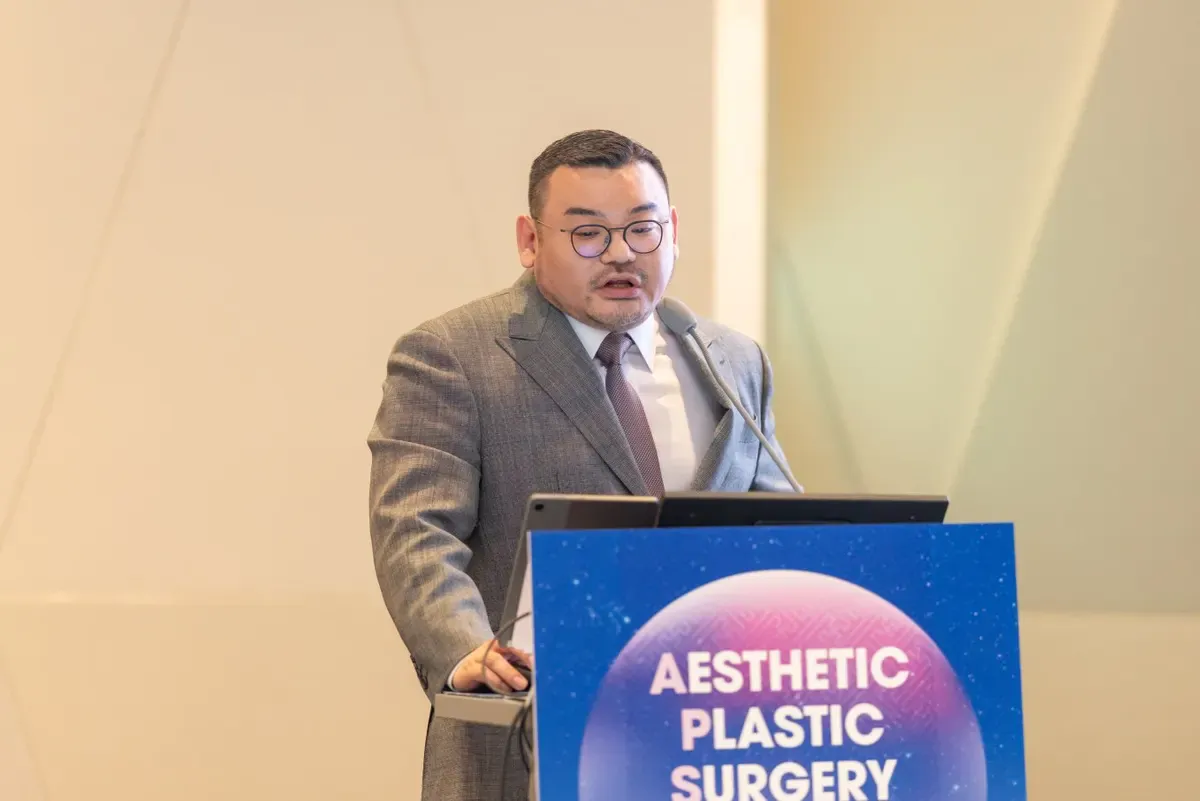
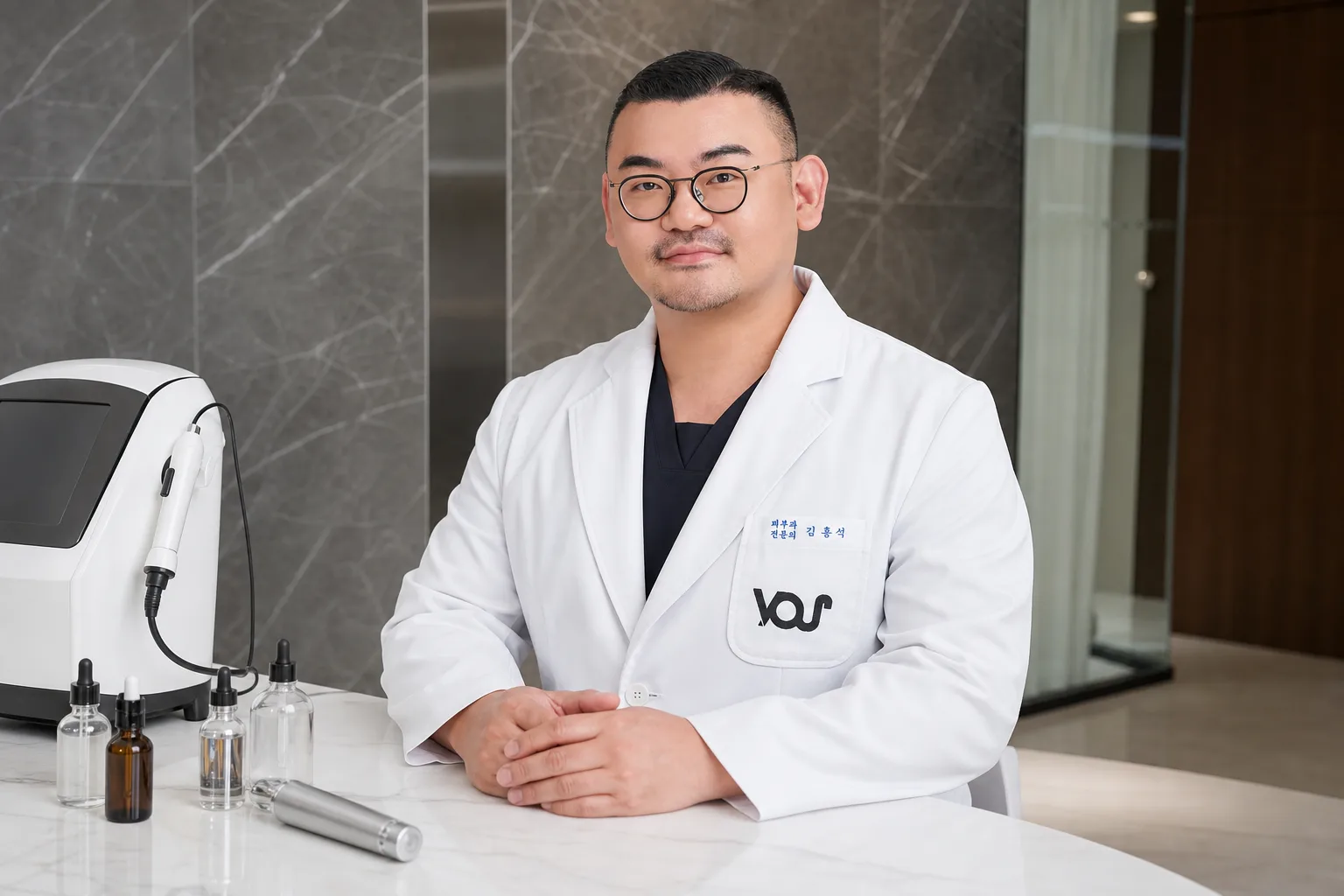
I'm Dr. Hongseok Kim, a board-certified dermatologist with 21 years in practice, and at VOS Dermatology in Gangnam I see every patient from the consultation through the treatment myself.
The short version: a pack suits skin that is basically healthy and a little dehydrated. It doesn't rebuild a damaged barrier, shrink pores or change the shape of your face. If packs sting, calm the barrier first and add glow second.
If your skin reacts to packs and a Seoul trip is on the calendar, send two things on WhatsApp: a daylight photo of your bare face and the dates you'll be in Seoul. Those two details are what the first conversation about this trip is built on: which treatments fit the days you have, and what to leave for a later visit.
Send a daylight photo and your Seoul dates on WhatsApp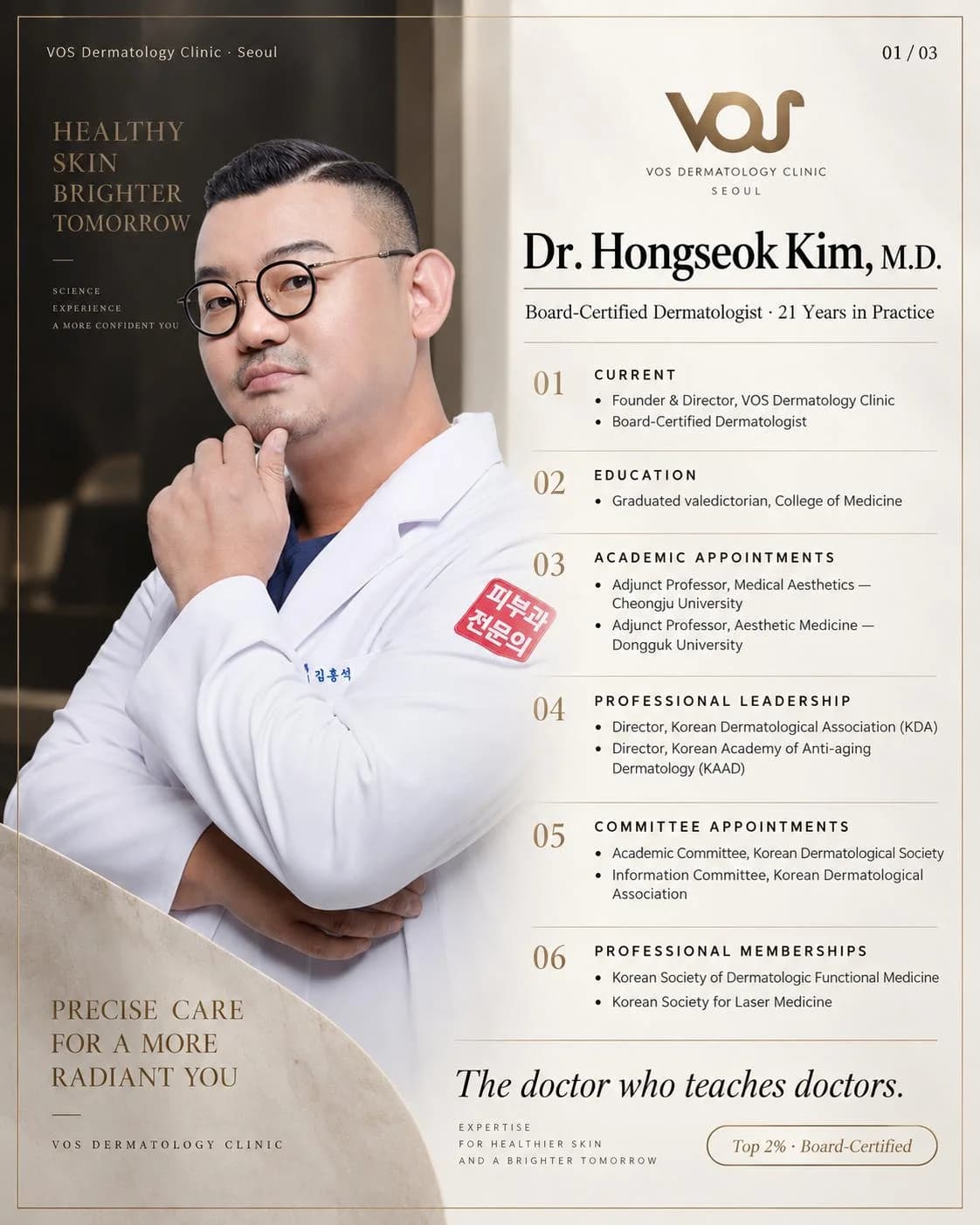
What a Korean face pack actually does to your skin
A face pack raises the water content of the stratum corneum, the thin outermost layer of dead cells, for a few hours. Swollen, flattened cells reflect light more evenly, and that even reflection is what reads as glow.
Sheet masks do this by occlusion. The sheet slows evaporation, so humectants such as glycerin or hyaluronic acid hold more water in the surface while it sits on your face. Wash-off clay and peel-off packs work differently: they absorb oil or lift dead cells, which can make oily skin look clearer but rarely more dewy. Once the extra water evaporates, usually over the rest of the day, the surface goes back to where it was.
Labels that promise collagen or peptides deserve a second look. A paper in Experimental Dermatology by Bos and Meinardi (2000) described the 500 dalton rule: compounds much larger than about 500 daltons pass poorly through intact skin, and collagen molecules are far larger than that. Collagen in a pack works as a moisturizing film on top. Your own collagen is made in the dermis, below anything a pack reaches.
None of this makes packs pointless. Hydrated skin feels more comfortable, makeup sits better, and for a dinner or a photo the effect is useful. Plan around a glow that lasts an evening, and you won't be disappointed by one.
Why do packs sting on sensitive skin?
Stinging under a pack usually means the barrier is letting ingredients in faster than the skin can tolerate. Fragrance, essential oils, alcohol and exfoliating acids are the common triggers, and occlusion makes them act more strongly because the sheet holds them against the skin for 15 to 20 minutes.
This matters most if you have rosacea, eczema, very dry skin or a history of reacting to cosmetics. In those cases a sting is a signal, and repeating the pack to push through tends to deepen the redness. Signs that the barrier needs attention before any glow product: tightness after washing, burning with a plain moisturizer, flaking around the nose and mouth, or redness that lingers more than an hour after a mask.
The American Academy of Dermatology's guidance on exfoliating at home applies here too. People with sensitive or dry skin are generally better off with the gentlest method at a lower frequency, followed by moisturizer, because over-exfoliating irritates skin. Many glow packs contain AHA, BHA or enzymes, so a pack can quietly become an extra exfoliation step on top of whatever else you use.
A practical test before a trip: apply a new pack to a small patch on the side of the neck or behind the jaw for its full time, two nights in a row. If that area stays calm, your face is more likely to tolerate it. Never try a new pack for the first time the night before a flight.
Which pack suits oily, dry or sensitive skin?
Choose the pack by what your skin lacks, and choose the cleanser before it by how much oil your skin makes. A harsh foaming wash followed by a hydrating pack cancels much of the benefit.
| Skin situation | Pack that usually suits | Worth avoiding |
|---|---|---|
| Oily, congested | Light gel or sheet with niacinamide; clay once a week | Heavy, oil-rich sleeping packs |
| Dry, tight | Sheet or cream pack with glycerin, ceramides, hyaluronic acid | Clay, peel-off and acid packs |
| Sensitive, flushes easily | Unscented, short ingredient list, panthenol or centella | Essential oils, alcohol, AHA/BHA |
| Acne-prone | Non-comedogenic gel, short contact time | Thick occlusive packs left overnight |
For cleansing, people searching for a Korean face wash for oily skin usually want a low-pH gel that removes oil without leaving the skin squeaky. For dry skin, a cream or milk cleanser that leaves the face soft is the better match. If a wash leaves your skin feeling stretched, the pack afterwards is mostly repairing what the wash did.
Treat the table as a starting point. Skin shifts with season and travel, and Seoul's humid summers and dry winters are different environments: the same pack can suit you in August and sting in January.
Can a face pack change a round or wide face?
No. A pack works on the surface, and the outline of a round or wide face comes from deeper structures: fat in the cheeks and under the jaw, the size of the masseter muscle, and bone. Hydrated skin can soften the look of a tired face, but the shape stays the same.
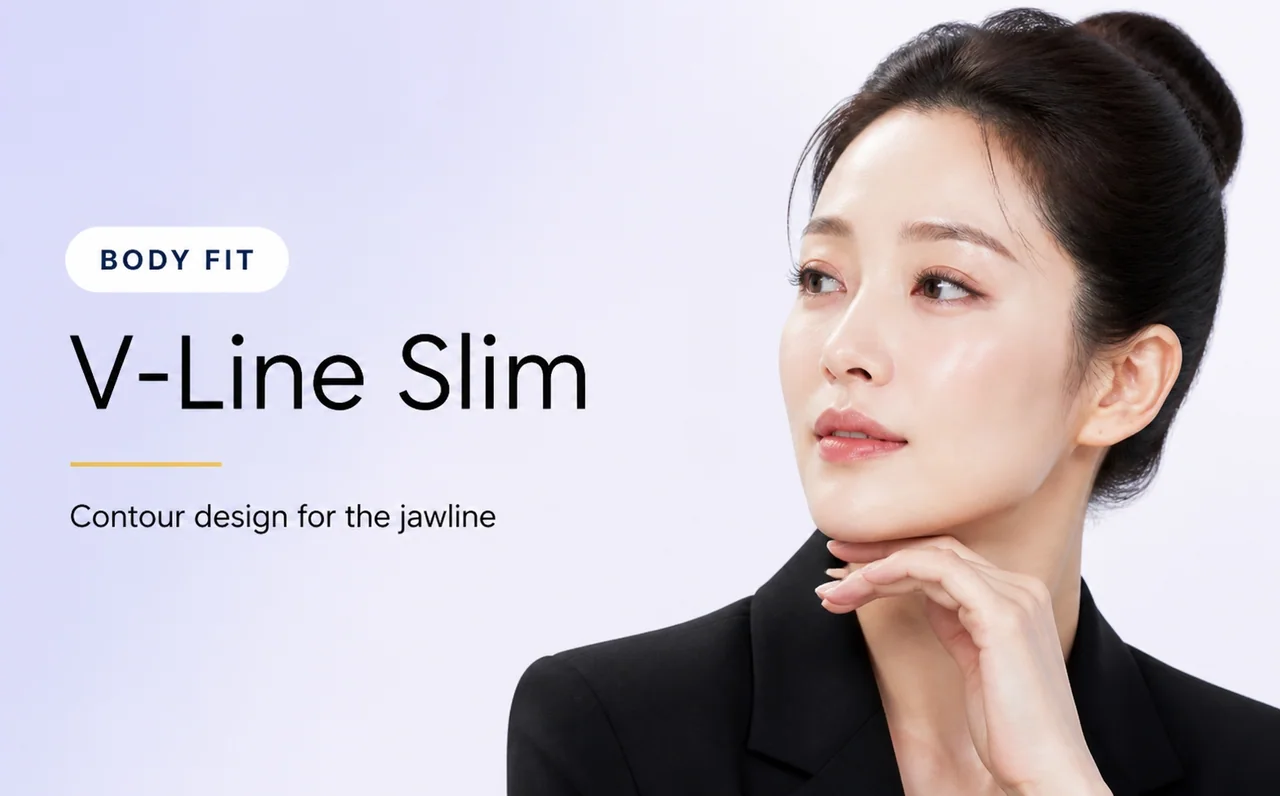
For a fuller lower face or a soft jawline, dermatology has injectable options that work at the right depth. At VOS, the V-Line Slim Injection uses cholic acid or deoxycholic acid to reduce localized fat along the jawline and under the chin. The treatment takes about 10–20 minutes, and temporary swelling, bruising or redness may occur for 1–2 days.
Contour improvement generally shows within 12 weeks, and 3–5 sessions at 12-week intervals are recommended, so plan it across several trips. A wide jaw from a large masseter muscle is a different problem, usually treated with botulinum toxin.
Telling fat from muscle from bone needs an in-person exam: fat can be pinched, muscle hardens when you clench, bone does neither. The body-fit treatments page lists what each option involves.
When the glow needs more than a pack
If your skin looks dull even when it's well hydrated, the cause usually sits below the surface: uneven texture, dehydration deeper in the skin, or a barrier that keeps getting irritated. Three clinic options sit closest to what people hope a pack will do.
HydraFacial cleans, exfoliates and hydrates in a session of about 30 minutes, with immediate return to daily activities. It is the closest of the three to a pack: an instant, surface-level result that suits the last day of a trip. How to time a hydra glow facial in Seoul covers the scheduling side.
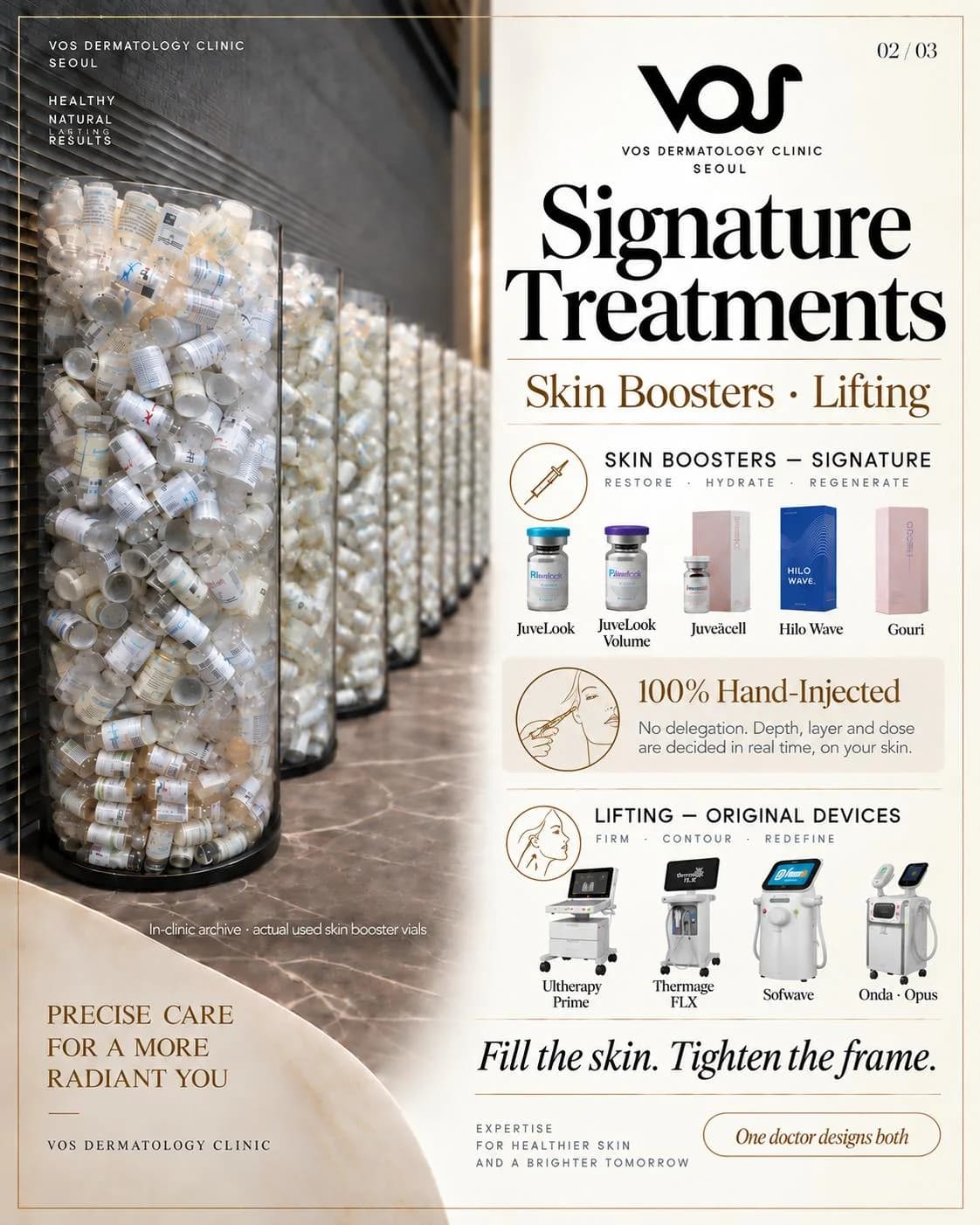
Rejuran Healer is an injectable skin booster based on polynucleotide (PN), used on the face and neck to improve skin barrier function and reduce fine lines. Rejuran HB+ adds hyaluronic acid for hydration and contains lidocaine to reduce discomfort during treatment. A systematic review in the Journal of Cosmetic Dermatology found encouraging results for polynucleotides in skin rejuvenation while calling for larger, better-designed trials. The Rejuran treatment page explains the three product lines.
Opus in UniLarge Mode uses unipolar radiofrequency to heat the dermis evenly, aimed at firmness and overall skin quality with minimal downtime.
For reactive skin, order matters. Boosters and energy devices work on calm skin, so a barrier that stings under sheet masks often needs a few weeks of simple care first. The order that works for glass skin walks through that sequence.
Risks and side effects: will you be red on the flight home?
Packs and clinic treatments carry different risks. With packs, the main one is irritant or allergic contact dermatitis: redness, itching or small bumps, most often from fragrance or preservatives. It usually settles once you stop the product, but a reaction that spreads, swells or blisters needs a doctor.
With clinic treatments, the risks grow with depth. HydraFacial is listed with no downtime.
Injectables, including skin boosters and the V-Line Slim Injection, can leave small bumps, redness, swelling or bruising at injection points, usually for a day or two. Energy devices can cause temporary redness and, rarely, burns or pigment changes. Infection after injections is uncommon but possible, which is why technique matters; VOS uses 5μm ultra-fine filter syringes and single-use disposables. Which of these suits your skin is decided at the in-person skin analysis.
For travel, put anything that can bruise or swell early in the trip and keep the last day for surface care. The U.S. CDC's medical tourism guidance also advises travelers to plan follow-up care and keep copies of their records, which applies to cosmetic treatments too.
Worth knowing: If a new pack stings the night before your flight, rinse it off with cool water, apply a plain unscented moisturizer and skip everything else. Redness from a pack usually settles faster when you stop adding products.
If the 1–2 days of possible swelling are what worry you, send your arrival and departure dates on WhatsApp, along with the names of any products that stung. Those two details shape a trip plan more than anything else: whether an injectable fits before the flight, or whether this visit should stay on the surface.
Send a daylight photo and your Seoul dates on WhatsApp
How I approach a glow plan for reactive skin
At VOS, every plan starts with a skin analysis, and I perform the treatments myself after it. For someone whose skin stings under packs, three questions decide the plan, in this order.
First, is the barrier intact? Flaking, persistent redness and sensitivity to plain products point to a barrier problem, and that comes before any glow treatment. Second, where is the dullness coming from: surface dehydration, uneven texture, pigment, or loss of firmness? Each has a different tool, and a pack only addresses the first. Third, how many days do you have in Seoul, and what are you doing on the last one? A treatment that suits your skin can still be the wrong choice if its swelling window overlaps your flight.
The clinic's 3D Skin Analysis helps with the second question because it looks at what is happening beneath the surface, which a mirror and a sheet mask can't show you.
Doctor's note
When packs sting, I read it as information about your barrier. I'd rather a first visit calms the skin than chase a glow that fades by evening, and a treatment chosen for a sensitive face should leave you comfortable on the plane. If the answer for this trip turns out to be a HydraFacial and a gentler cleanser, that is a reasonable plan.
Before you message us
Send three things on WhatsApp: a daylight photo of your face without makeup, your Seoul dates, and the names of any packs or creams that stung. The conversation starts from those: which treatments fit your dates, and what could change the plan.
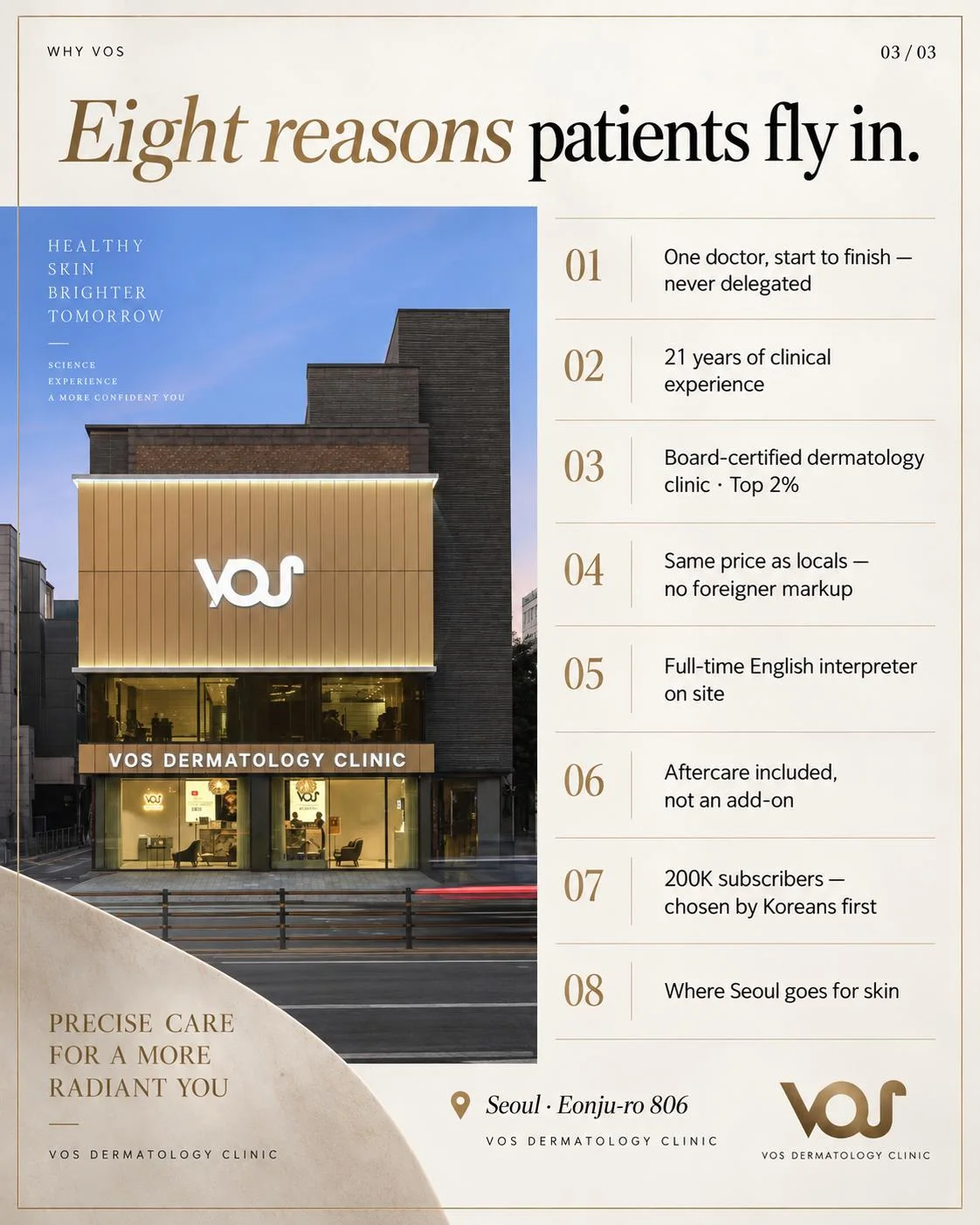
Results and recovery vary from person to person. VOS Dermatology is at 806 Eonju-ro, Gangnam-gu, in front of Dosan Park, an 11-minute walk from Line 7 Gangnam-gu Office Station Exit 3. The clinic is closed on Wednesdays, Sundays and public holidays, so leave those days out when you send your dates on WhatsApp.
See me explain it on video
I answer the questions patients ask me on camera. The YouTube channel is in Korean with English titles; Instagram and TikTok are for international patients.

Questions readers ask about korean face pack for glowing skin
How often should I use a Korean face pack?
Can I use a sheet mask after a skin booster or laser in Seoul?
Do Korean face packs help with acne?
Is a face pack enough to get glass skin?
What should I bring from home if my skin is sensitive?
Results, timing and recovery vary from person to person. This article is general information from VOS Dermatology Clinic and does not replace an in-person consultation. Any prices mentioned are from the clinic’s official price list (KRW, before VAT) and may change.
Related articles
Korean Hydra Glow Facial: How to Time the Glow in Seoul
Korean hydra glow facial: where the HydraFacial glow comes from, how long it lasts, how to time it for an event and booster add-ons — VOS Dermatology, Gangnam.
How to Achieve Korean Glass Skin: The Order That Works
How to achieve Korean glass skin in order: what to stop at home, the daily basics, then cleansing, boosters and Seoul trip timing. VOS Dermatology, Gangnam
Rejuran Injection Korea for Thin, Sensitive Skin, Explained
Rejuran injection korea explained: what the PN gel does, how Healer, HB+ and i differ, and whose skin it suits. Written at VOS Dermatology, Gangnam.