
Korea Thermage FLX Procedure Steps in Order: Who Should Wait?
Korea Thermage FLX procedure steps in order, who should wait, what decides the cost, and recovery, from Dr. Hongseok Kim of VOS Dermatology, Gangnam.

Want the Korea Thermage FLX procedure steps in order before you let a clinic abroad heat your face, and quietly worried that your skin is the kind that reacts badly?
Read this before you book the session.
You'll know each step from consultation to month six, who should wait, what decides the cost, what reviews get right and wrong, and how much recovery a short trip needs. Then you can judge whether FLX fits your skin on this visit.
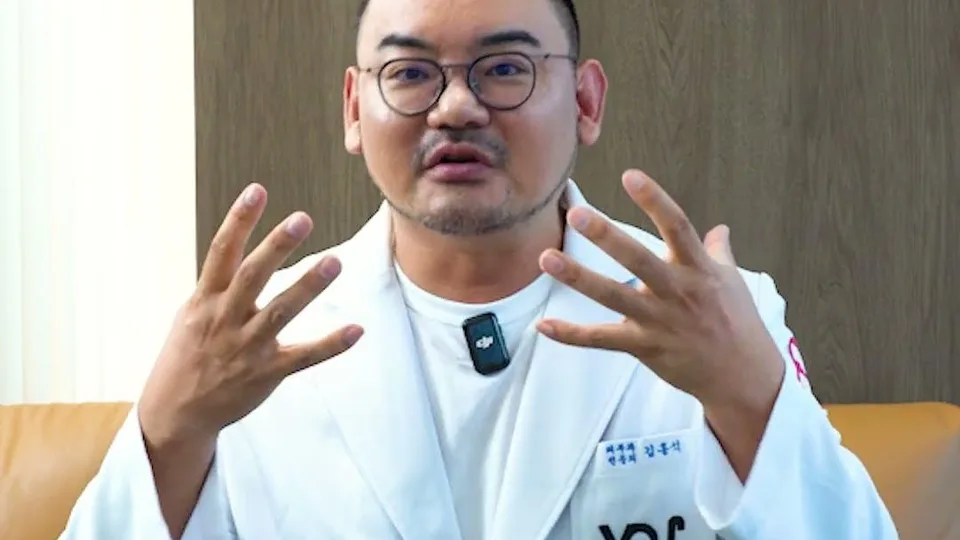
Hello, I'm Dr. Hongseok Kim, a board-certified dermatologist with 21 years of practice and the Medical Director of VOS Dermatology Clinic. I see every patient myself, from the first consultation to the procedure, so the first step below is the one I care about most.
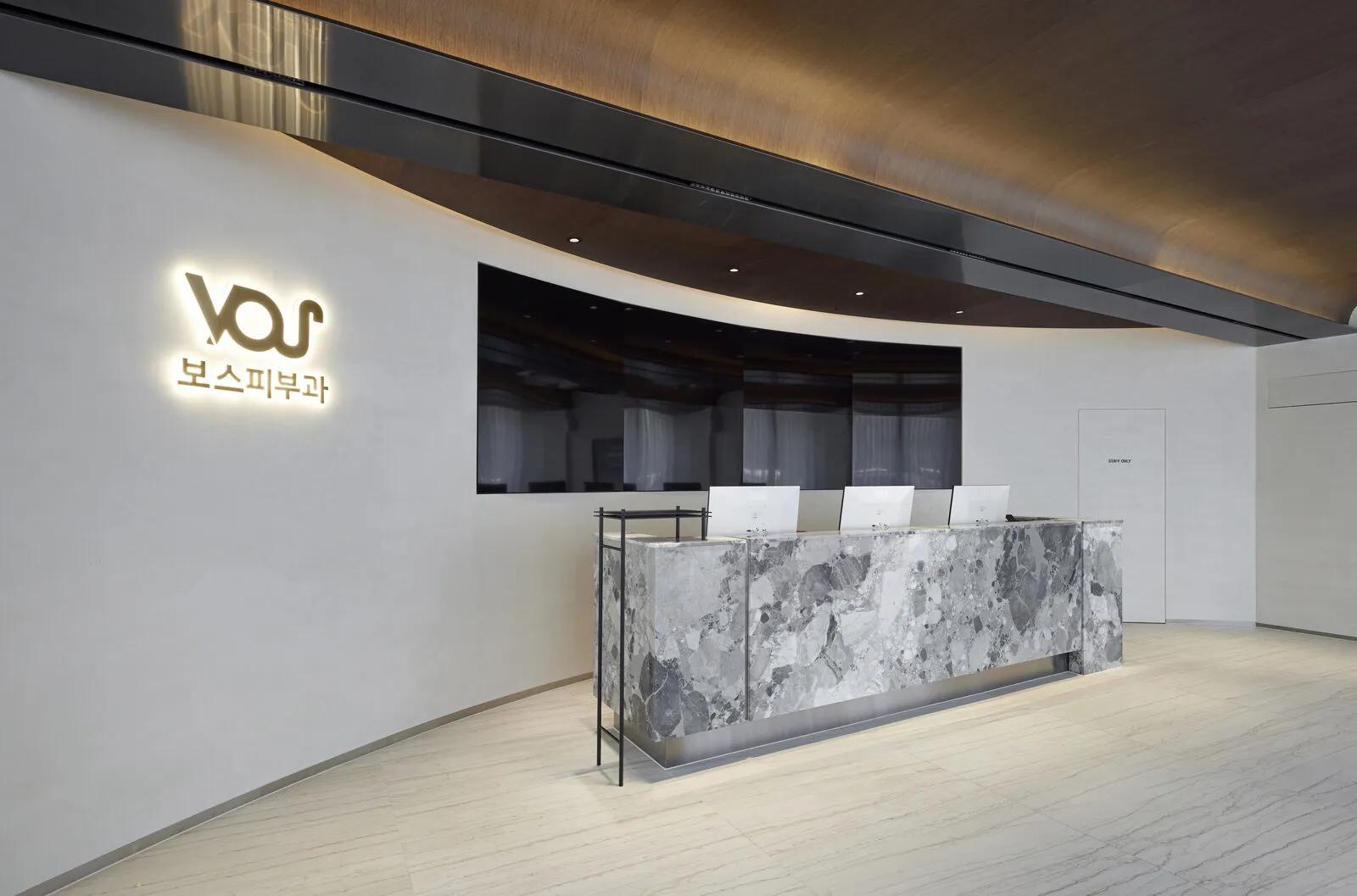
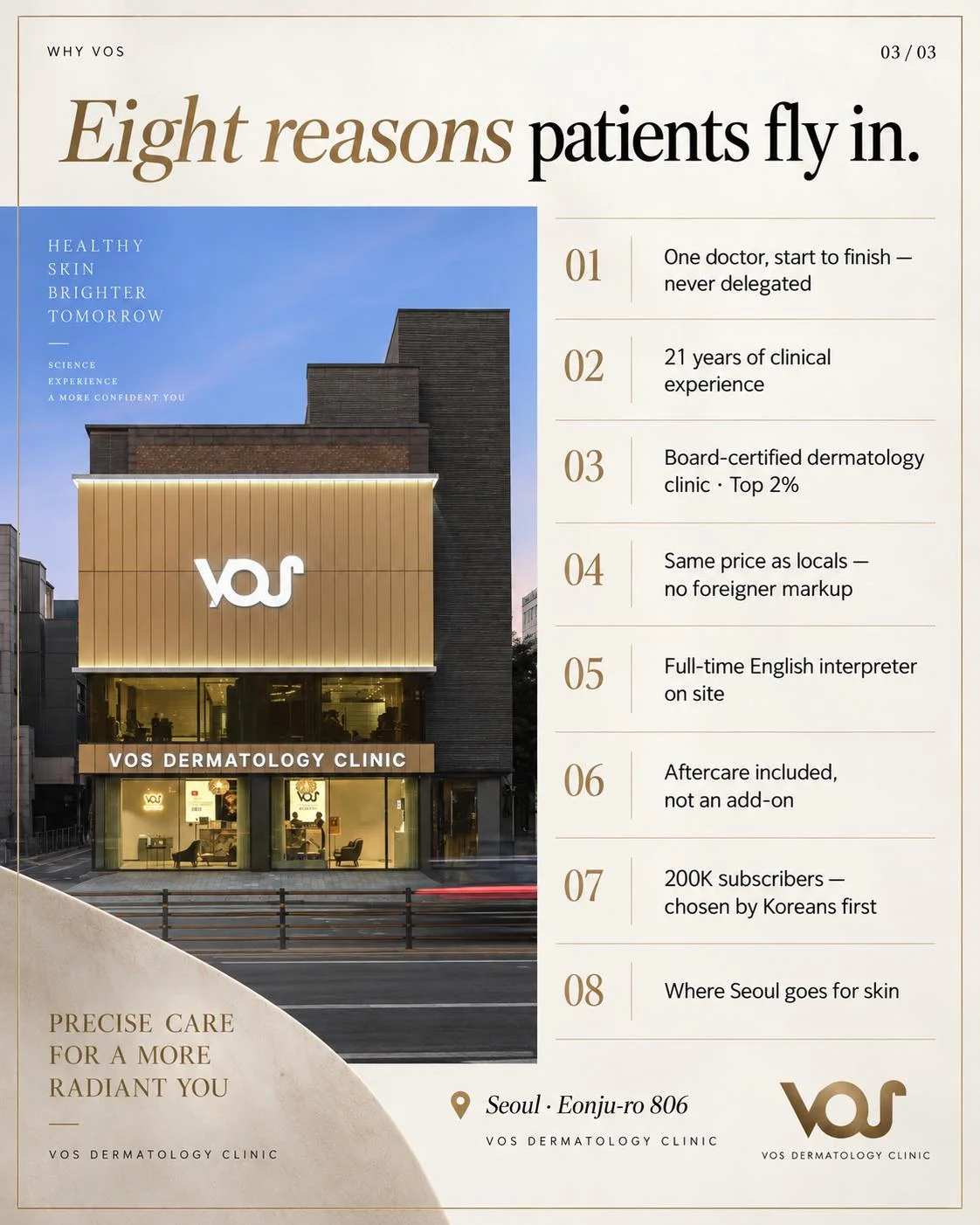
VOS has its own four-floor building in front of Dosan Park in Gangnam. Energy treatments happen in the laser room on the third floor, the Thermage FLX tips are genuine, and the price list is the same for every nationality.
I wrote this because most people research the session itself and skip the decision that comes before it: whether their skin should be heated right now at all.
In order, the steps are a consultation and skin check, cleansing, a temporary grid on the skin, cooling gel, passes of radiofrequency energy adjusted to what you feel, and cleanup. Most people leave with pinkness that fades within hours, and the firming builds over the next 2 to 6 months.
If you think you might be a borderline case, send one front photo and one side photo taken in daylight on WhatsApp, with a single question: is FLX right for my skin now, or should I wait? You'll get a view of what is realistic, and a quote, before you book anything.
Send a front and side photo on WhatsApp
Korea Thermage FLX procedure steps in order, from consult to month six
The first row decides whether the other six happen at all.
| Step | What happens | What you'll notice |
|---|---|---|
| 1. Consultation | I check your skin, then set the areas, energy level, tip and shot count | Questions about medicines, pregnancy and implants |
| 2. Cleansing | Makeup, sunscreen and oil come off the treatment area | A bare, clean face |
| 3. Grid | A temporary grid is usually transferred to the skin so each pulse lands once | Faint marks that wipe off |
| 4. Cooling gel | Gel goes on so the tip makes even contact | Cool, slightly slippery skin |
| 5. Energy passes | The tip cools the surface, heats the deep dermis, then cools again | Deep heat or a brief sting with each pulse |
| 6. Cleanup | Gel and grid are wiped off | Pink, warm skin for a few hours |
| 7. Months 2 to 6 | New collagen forms | Gradual firming |
Step 1 is the one I'd ask you not to rush. Every plan here starts with a skin analysis, and I choose the tip and the number of shots only after seeing your skin. The Total Face Tip covers broad areas such as the cheeks and forehead. The Eye Area Tip is made for the thin skin around the eyes, and the eye session is a separate item. Both tips are described on the Thermage FLX treatment page.
During step 5, tell me each time a pulse feels too hot. FLX uses AccuREP energy tuning and a vibration comfort system that distracts the nerves during each pulse, and the energy can be turned down. If heat is your main fear, ask about nitrous-oxide sedation when you book; the clinic has more than 5,700 sedation cases behind it.
The device was developed by Solta Medical in the US. It was cleared by the US Food and Drug Administration through a 510(k) notification, K170758, and it is approved by Korea's MFDS.
What does the heat actually do under the skin?
Monopolar radiofrequency sends current through the deep dermis. The tissue resists it, and that resistance turns into heat. The tip cools the surface at the same time, so the heat sits lower down.
Two things follow. Heated collagen fibers contract, which is why many people feel tighter right after the session. Then the skin treats the heat as a mild injury and lays down new collagen over the following months. Reviews of monopolar radiofrequency, including one in Lasers in Surgery and Medicine, describe this collagen remodeling as the mechanism behind the gradual change.
Thermage warms a whole area evenly, where Ultherapy focuses energy at set points. That makes FLX a match for overall firmness, crepey skin around the eyes and refining the facial contour.
What heat can't do matters just as much. It doesn't replace lost volume, it doesn't reposition a heavy jowl the way surgery does, and it can't tighten skin that isn't loose yet. If you're past 50, my notes on facial procedures in Korea for over-50s cover where devices stop being enough. For a wider look at the device, see my guide to Thermage FLX in Korea.
Who should wait or skip Thermage FLX?
Risks and side effects to know
The common reactions are short. Redness and mild swelling usually settle within hours, and some people find the skin tender to the touch for a few days. Less often, a pulse that ran hot leaves a small blister or crust, or an area feels tingly or numb for a while. A rare complication of radiofrequency is a small dent where the fat under the skin has shrunk.
A retrospective review of more than 600 monopolar radiofrequency facial treatments, published in the Journal of Drugs in Dermatology in 2006, found the side effects were mostly temporary.
As a matter of general medicine, some people should wait. If you're pregnant or breastfeeding, put it off. If you have a pacemaker or another implanted electronic device, monopolar radiofrequency is generally not used. An active infection, a cold sore, an open wound or an inflamed flare in the area means waiting until it settles, and so does laser resurfacing or a chemical peel in recent weeks. If you've taken isotretinoin recently, mention it, because skin can heal more slowly for a time after a course.
And if you're in your twenties with firm skin, the effect can be limited, because there is little laxity to tighten.
Say you're 46, flying in from Sydney, with thin, crepey lower cheeks and rosacea that flared three weeks ago. I'd look at the redness before the laxity. Heat on an active flare can make it worse, so if the cheeks are still inflamed when you arrive, FLX belongs on a later trip and the redness comes first. My piece on Korean rosacea treatment covers what helps it. If the skin is calm, FLX at a moderate energy becomes a reasonable conversation.
If something changes after you fly home, such as blisters, crusting that spreads, a dent or lump weeks later, or numbness that isn't fading, see a dermatologist where you live and show them what was done. The US Centers for Disease Control and Prevention advises people who travel for treatment to take copies of their medical records home and plan follow-up care before they leave. So before your flight, ask for a written note of the areas treated, the tip and the shot count.
Before your consult, send a list of your current medicines and any laser, peel or injection from the last three months on WhatsApp, with the question: does anything here change my timing?
How I approach a Thermage FLX consultation
Every skin is different, and the diagnosis and the plan have to differ too. When I look at a face for FLX, the question I'm answering is where the looseness comes from. If it's the skin itself, thin and creased, heat has something to work with. If it comes from lost volume in the cheek or temple, heat alone will disappoint, and a collagen stimulator or a different device belongs in the conversation.
I also weigh how the skin is likely to behave under heat. Reactive, flushing skin and very thin skin over bone call for lower energy and more care around the eyes. That is a trade-off: a gentler session, a smaller change. I'd rather explain that trade before the session than after it.
Because I examine and treat you myself, there's no handover between the person who sets your expectations and the person holding the tip.
Worth knowing: Thermage FLX tips are single-use and programmed for a set number of pulses. Unauthorized tips are a known cause of side effects with these devices, so on the day you can ask to see the tip before the session starts.

What do Thermage FLX reviews get right and wrong?
Review threads tend to repeat four claims. 'It tightened straight away' is partly true: collagen contraction gives many people a firmer feel that day, but the main change arrives over 2 to 6 months, so a photo from the same evening tells you little.
'It hurt a lot' depends on the area, the energy and the person. Bony areas such as the forehead and jawline tend to feel hotter, and the energy can be adjusted pulse by pulse.
'It did nothing' usually comes from a mismatch. Firm young skin has little to tighten, and heavy sagging needs more than heat.
'It melted my face' points to fat loss, which is a real but rare complication of radiofrequency. Matching the energy to the skin in front of you is what lowers that risk.
What decides the cost of Thermage FLX for your face?
The price list is the same for every nationality, so the variables are your face and your plan. The first is the area: the full face, the eyes, or both, since the eye session is a separate item. The second is the shot count, which on the price list means a 600-shot face session and a 450-shot eye session. The third is whether you combine FLX with another treatment on the same visit. The fourth is sedation, if you want it.
The fifth sits outside the clinic: how many nights you stay in Seoul.
My post on Thermage cost in Korea goes through the listed options line by line. For the figure for your own plan, ask on WhatsApp what FLX would cost for the areas you have in mind: face, eyes or both.

How much recovery does a short Seoul trip need?
Very little, medically. FLX is non-invasive, there's no special aftercare, and you can return to your day after the session. Redness usually fades within hours.
The calendar needs more thought. The clinic is open Monday, Tuesday and Thursday 10:00 to 19:00, Friday until 20:00 and Saturday 10:00 to 16:00, and closed on Wednesdays, Sundays and public holidays. If you land on a Tuesday night, your earliest session day is Thursday. I'd leave one spare day between the session and your flight, so that if your skin turns out more reactive than expected, you notice it in Seoul.
The results arrive later, at home. The fuller change builds over 2 to 6 months and typically lasts around 1 to 1.5 years, so judge it in month three or four, not in week one.
Before you message us
Send two things on WhatsApp at https://wa.me/821096974628: a front and a side photo of your face in daylight, and your arrival and departure dates. Add the one question that has been holding you back, whether it's your rosacea, an implant or a past treatment that went badly.
When you come in, I examine your skin and recommend what fits it: Thermage FLX, another approach, or a later date. Results vary from person to person.
See me explain it on video
I answer the questions patients ask me on camera. The YouTube channel is in Korean with English titles; Instagram and TikTok are for international patients.

Questions readers ask about korea thermage flx procedure steps in order
Does Thermage FLX hurt during the session?
Can I fly home the day after Thermage FLX?
How long do Thermage FLX results last?
Can the eyelids be treated with Thermage FLX?
Can I wear makeup or exercise after Thermage FLX?
Results, timing and recovery vary from person to person. This article is general information from VOS Dermatology Clinic and does not replace an in-person consultation. Any prices mentioned are from the clinic’s official price list (KRW, before VAT) and may change.
Facial Procedures in Korea for Over-50s: What Holds Up
Facial procedures in Korea for adults over 50: which common beliefs hold up, what's non-surgical, how many sessions and what to plan. VOS Dermatology…
Thermage FLX in Korea: An Honest Guide to RF Lifting
Thermage FLX in Korea explained: how monopolar radiofrequency tightens skin, who it suits, the timeline, risks and recovery — VOS Dermatology, Gangnam.

Korean Rosacea Treatment: What Helps Redness in Seoul
Korean rosacea treatment explained: types, triggers, creams, vascular lasers and what one trip can realistically do for redness — VOS Dermatology, Gangnam.