
Stem Cell Injection Korea: Whose Cells, for Which Problem?
Stem cell injection Korea: what the term can actually mean, which questions to ask, and how Dr. Hongseok Kim approaches it at VOS Dermatology in Gangnam…


There isn't one treatment called a stem cell injection. Depending on who offers it, the term covers your own processed cells, products made from donor cells or the factors those cells release, or a skin booster with “stem cell” in its marketing name, and each comes with different evidence and different risks. If you're researching stem cell injection Korea offers, the worry underneath is probably the one the headlines feed: is what goes into my face regulated, and will anyone tell me plainly what it is?
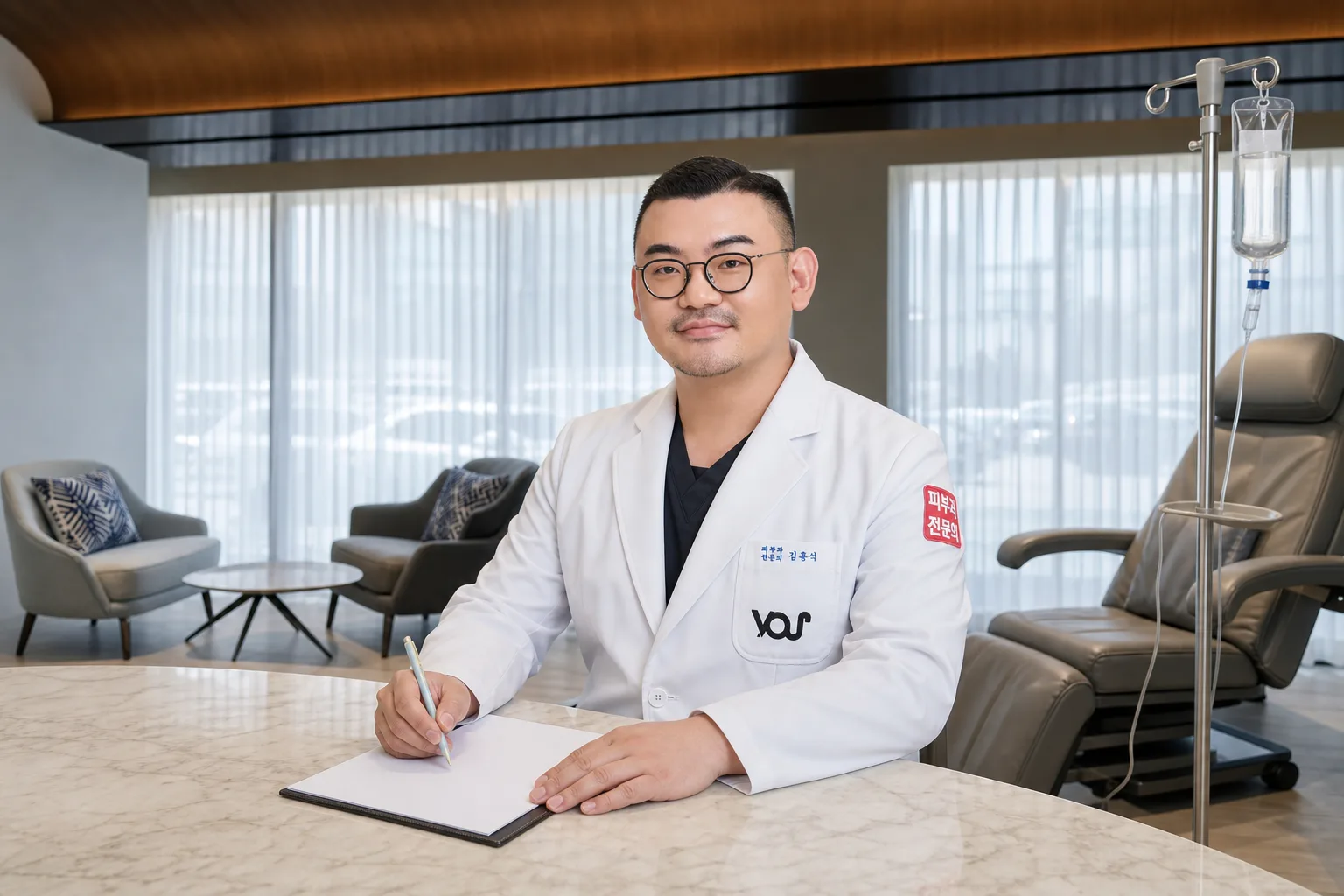
I'm Dr. Hongseok Kim, a board-certified dermatologist with 21 years of experience, and I perform every procedure at VOS Dermatology in Gangnam myself, including the work of the stem cell center on our second floor. “Stem cell” is one of the vaguest labels in aesthetic medicine, and a few direct questions pin it down fast.
If you're weighing stem cell injection Korea options for a specific skin concern, send a daylight close-up of that area on WhatsApp with a line about what you hope would change.
Clinic address: 806 Eonju-ro, Gangnam-gu, Seoul, South Korea (1F–4F) — in front of Dosan Park
Send a daylight photo of the area on WhatsApp
What does “stem cell” mean on a skin clinic menu?
In skin treatment, the label usually falls into one of three groups. The first is autologous: material taken from your own body, typically fat or blood, processed and returned to you. The second is donor-derived: cells grown from another person's tissue or, more often, the fluid those cells release into their culture, sometimes called conditioned media, which carries growth factors and proteins but not the cells themselves. The third is cosmetic: ingredients with “stem cell” in the name, many of them plant cell extracts, used in creams and serums.
A “stem cell facial” usually belongs to the second group: a cell-derived solution applied right after microneedling or a laser has opened small channels in the skin. Salmon-derived PN and PDRN boosters often get lumped in too, but they're purified DNA fragments with no cells in them; I've covered what's actually in a salmon DNA injection separately.
Worth knowing: A moisturizer sold as a “stem cell” cream works as skincare.
Are these my own cells, a donor's, or neither?
In short, this is the first question to ask, because the answer changes everything after it. Your own cells avoid rejection concerns, though the harvest is a small procedure of its own and the processing still has to be sterile. Donor-derived products depend on how the source tissue was screened and how the product was manufactured, none of which you can see from the treatment chair.
So ask for three plain facts: the product's name, its manufacturer, and whether the vial contains living cells, cell fragments or secreted factors. You're entitled to all three before anything is injected, wherever you're treated.

What should it do for your skin, and how will you know?
Aesthetic use of cell-derived products is aimed at skin quality: texture, fine lines, the dull look of tired skin, and recovery after procedures such as laser or microneedling. The published evidence for these uses is still limited, mostly small studies with short follow-up, so expect modest, gradual change at most.
Ask what change you should look for and by when. If the answer is that it rejuvenates everything, there's nothing to measure and nothing to tell you whether it worked. A useful answer names one or two things, such as finer texture or less dullness, and a time frame in weeks.
What the US FDA says, and why it still matters in Seoul
The US Food and Drug Administration's patient guidance on regenerative medicine lists stem cells, stromal vascular fraction (fat-derived cells), umbilical cord blood, amniotic fluid, Wharton's jelly and exosomes, whether taken from your own body or someone else's, and says they need FDA licensure or approval before being marketed to consumers. In the US, the only approved stem cell products are blood-forming stem cells from cord blood, for disorders of blood production. The FDA also reports receiving accounts of blindness, tumor formation and infections linked to unapproved products.
That page describes the US market. Korea has its own regulator and its own rules, and I won't paraphrase Korean law from memory here. But the harms on the FDA's list are about biology, not paperwork, which makes one more question worth asking in any country: is this product approved in Korea, and approved for what? That question belongs in every stem cell injection Korea consultation, mine included.

How I approach regenerative treatments at VOS
Every plan I make starts with a skin analysis, and I choose the treatment or combination for your face rather than starting from a package. Ask me the same questions about it that you'd ask anyone: what's in it, where it comes from, and what change to expect.
Two parts of the clinic's safety setup matter for any injection. Injectables are drawn through 5μm ultra-fine filter syringes, designed to catch particles such as ampoule glass fragments, and disposables are used once and discarded. And I hold to exact dosing for every injectable, no more and no less than your skin needs.
Doctor's note
If “stem cell” appeals because it sounds like it treats the cause rather than the symptom, I understand that. But for most skin-quality concerns, the deciding factors are still sun protection, the state of your skin barrier and how much support your face has lost, and a single injection doesn't change those. I'd rather you spend a trip on what your skin actually needs.
Who is a stem cell injection for, and who should wait?
Put simply, it can suit an adult with a specific skin-quality concern, such as texture, dullness or slow recovery after procedures, who expects gradual, modest change and has had clear answers to the questions above.
As general medicine, these are reasons to wait or skip:
- pregnancy or breastfeeding
- an active infection, cold sore or inflamed skin at the treatment site
- a current or past cancer, since many doctors are cautious with growth-factor-rich products in that situation; raise it before anything else
- an autoimmune condition, or medication that suppresses the immune system
- blood thinners, which raise the chance of bruising
- a known allergy to any component of the product
- a recent course of isotretinoin, or a recent laser or peel on the same area, for facial versions that involve microneedling
If what you're really looking for is a stem cell treatment for joint pain, back pain or a disease, a dermatology clinic is the wrong door. That's a conversation for a specialist in that field, ideally at home first.
If any line on that list applies to you, or you take regular medication, put it at the top of your WhatsApp message along with any injectable treatments you've had and roughly when.

Risks and side effects to know
The common effects are temporary: redness, swelling and small bruises at injection points, usually settling over a few days. With microneedling-based facials, expect a sunburn-like flush and some dryness for a day or two.
Less common problems include lumps or swelling that lasts longer than expected, a reaction to a component, and infection at the site. The serious, rare end is infection from a contaminated product, the kind the FDA describes, which is why a product's source and handling matter more than its name.
If redness spreads, a spot turns hot and painful, or you develop a fever after flying home, treat it as a possible infection and see a doctor locally the same day; then send photos on WhatsApp. The CDC's advice for anyone having a procedure abroad includes planning follow-up care at home before you travel and keeping copies of your treatment records.
What about stem cell drips?
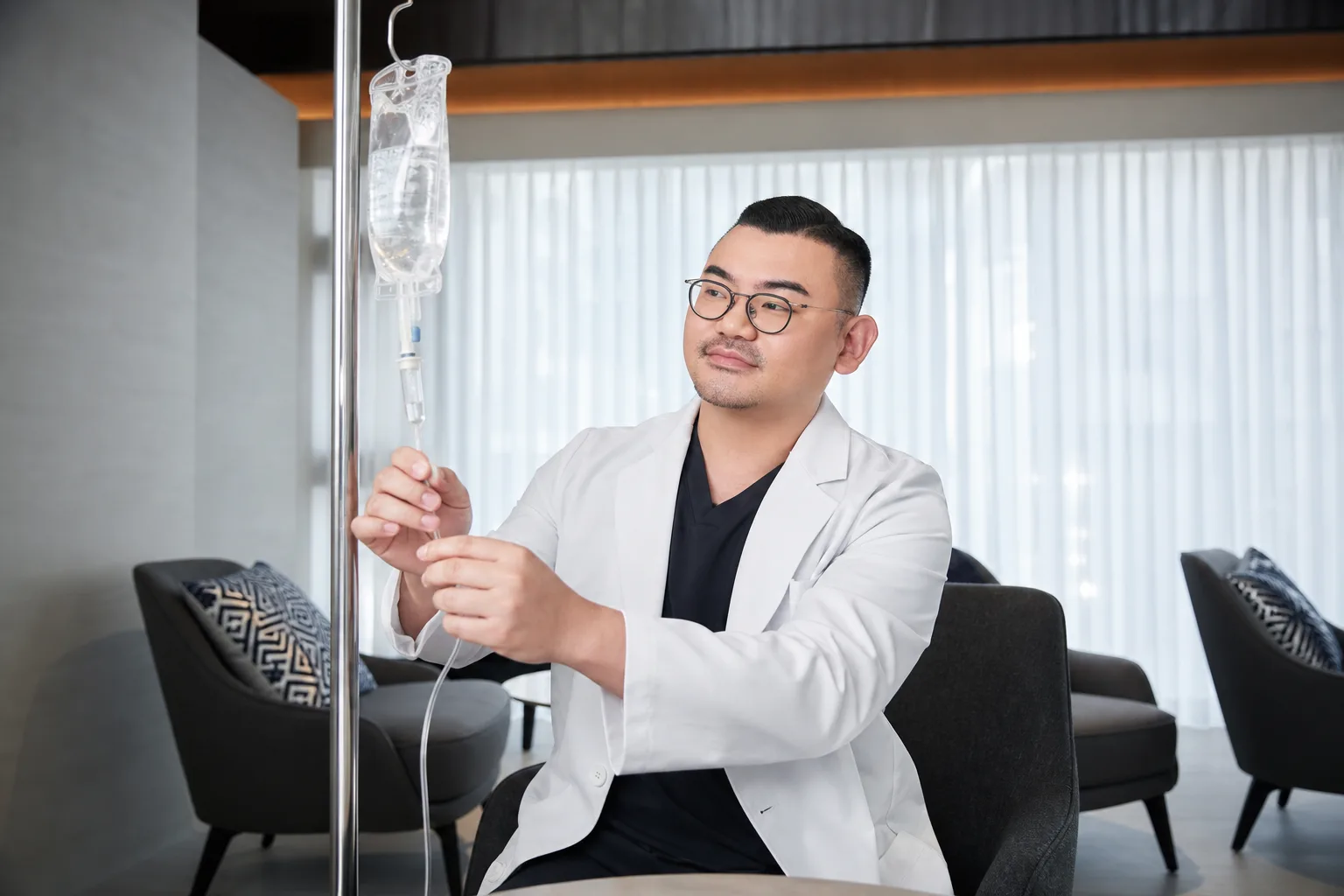
Drips with “stem cell” in the name raise the same questions with higher stakes, because what enters a vein reaches the whole body rather than one patch of skin. Infusion names can hide a lot; you can see how much in what goes into a pink glutathione drip and what glutathione injections can and can't do.
Thermage FLX in Korea: An Honest Guide to RF Lifting go further into what usually comes next.

Before you message us
Write one message with a daylight close-up of the area, a list of your regular medications, and the single result you'd most want from treatment. Results vary from person to person. Send it on WhatsApp, and you'll get an honest answer about what is realistic before you book.
See me explain it on video
I answer the questions patients ask me on camera. The YouTube channel is in Korean with English titles; Instagram and TikTok are for international patients.

Questions readers ask about stem cell injection korea
Is a PN or PDRN skin booster a stem cell treatment?
Can a regenerative injection be combined with lifting on the same trip?
Can I fly soon after a cell-based injection in the face?
Can a stem cell injection help joint or back pain?
How soon would I notice a change in my skin?
Results, timing and recovery vary from person to person. This article is general information from VOS Dermatology Clinic and does not replace an in-person consultation. Any prices mentioned are from the clinic’s official price list (KRW, before VAT) and may change.
Korean Salmon DNA Injections: What Is Really in the Syringe
Korean salmon DNA injections explained: PN vs PDRN, what purified DNA does in skin, who it suits, fish-allergy questions and prices. VOS Dermatology, Gangnam
Korean Pink Glutathione Injection: What the Pink Drip Is
Korean pink glutathione injection explained: what makes the drip pink, what else is in it, side effects and the questions to ask first. VOS Dermatology, Gangnam
Korean Glutathione Injection: What It Can and Cannot Do
Korean glutathione injection explained: what the drip is, what evidence says on skin tone, the risks, IV plans and listed prices — VOS Dermatology, Gangnam.