
Mole Removal Korea: CO₂ Laser, Healing and Listed Prices
Mole removal Korea guide: which moles suit a CO₂ spot laser, which need a lab check first, healing on a trip and the listed price — VOS Dermatology, Gangnam.

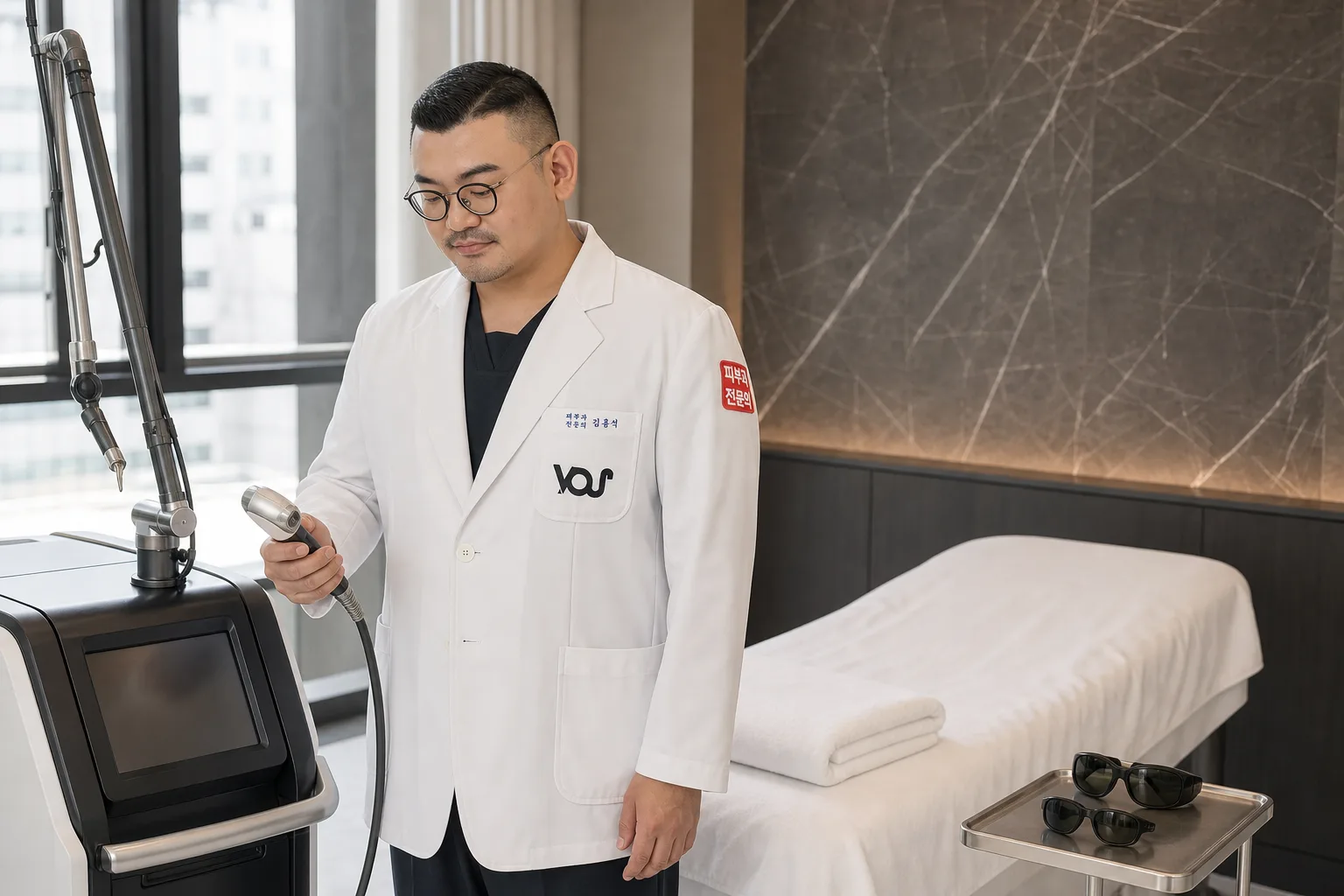
I'm Dr. Hongseok Kim, a board-certified dermatologist with 21 years in practice, and at VOS Dermatology Clinic in Gangnam I examine and treat every patient myself, one person at a time. Moles come up in my consultation room more often than people expect. Visitors book for a lifting treatment or a skin booster, and then, near the end, they point to a spot on the cheek or neck and ask whether I can take it off while they are in Seoul.
The short answer on mole removal in Korea is this: small, flat or slightly raised benign moles are commonly removed with a CO₂ spot laser in a short visit, and the spot heals over one to two weeks. The real decision comes before the laser. A mole has to look benign under examination first, and some should be removed in a different way so they can be checked in a lab. This guide is for adults planning a trip to Seoul who want to know which moles suit a quick laser removal, what healing looks like on a travel schedule, and what it costs.

What a mole is, and why "removal" means different things
A common mole is a small cluster of pigment cells called melanocytes. Some sit flat at the surface; others reach deeper into the dermis and form a soft, raised, skin-colored or brown bump. Most people have between a handful and a few dozen, and the great majority are harmless.
The word "removal" covers two different jobs. One is cosmetic: you have a spot you have known for years, it has not changed, and you simply prefer your face without it. The other is medical: a mole has changed, and the goal is to find out what it is. Those two jobs need different methods, and mixing them up is the most important mistake in this whole topic.
Patients also bring me spots that are not moles at all. Many "moles" on the face turn out to be seborrheic keratoses, small skin tags, milia or flat warts. That matters, because each one behaves differently after removal. If your spots are flat and brown rather than raised, my guide to Korean dark spot treatment may describe them better than this article does.
The CO₂ spot laser, in plain terms
At VOS, the documented option for small benign lesions is the CO₂ Spot Laser. On our price list it is described as precision laser treatment for benign pigmented and superficial skin lesions, including moles, milia, seborrheic keratoses, skin tags and flat warts (verruca plana).
A CO₂ laser emits light that water in the skin absorbs strongly. The energy vaporizes tissue in very thin layers, so the lesion can be removed a little at a time while the surrounding skin is mostly spared. Because the beam also seals small blood vessels, there is usually very little bleeding. The result is a small, shallow wound that heals from its edges.
This is ablative treatment, which means it removes tissue rather than just breaking up pigment. It is a different family from the toning and IPL treatments people use for diffuse pigment. If you want to see how the CO₂ laser fits next to the other laser families, I lay them out side by side in my guide to Korean laser treatment.
| Lesion | What it usually looks like | How spot laser removal behaves, in general | What to expect afterwards |
|---|---|---|---|
| Flat mole | Small, even brown dot, unchanged for years | Removed in thin layers; may need a second pass | Pink spot fading over months |
| Raised mole | Soft dome, skin-colored to brown | Flattened to skin level; deeper cells may remain | Small dip or pale dot is possible |
| Seborrheic keratosis | Rough, "stuck-on" brown spot | Sits near the surface; usually comes off cleanly | New ones can still appear with age |
| Skin tag | Small soft flap, often neck or eyelids | Removed at the base | Tiny scab for several days |
| Milia | Firm white bead, often around the eyes | Opened and cleared | Heals quickly in most people |
| Flat wart | Slightly raised, skin-colored, in clusters | Treated spot by spot | Can recur, as warts are viral |
This table is general dermatology. Two moles that look alike can still behave differently, and results vary from person to person.
Which moles suit a laser, and which do not
A spot laser is a reasonable choice when a mole is small, symmetrical, evenly colored, has a smooth edge and has looked the same for years. Many facial moles that bother people for cosmetic reasons fit this description.
A laser is the wrong tool when a mole looks or behaves in a way that needs an answer. In those cases the safer route is removal that keeps the tissue intact, so a pathologist can examine it under a microscope. A laser vaporizes the lesion, so there is nothing left to test.
These are the signs that make me stop and look harder:
- The mole has grown, changed shape or changed color recently
- It has more than one color, or an irregular, smudged edge
- It bleeds, crusts or itches without an obvious reason
- It is noticeably larger than your other moles or looks different from them
- It appeared in adulthood and keeps changing
- You have a personal or strong family history of skin cancer
Worth knowing: The most useful thing a dermatologist does in a mole visit happens before any device is switched on. If I see a mole I am not comfortable lasering, I will tell you, even if it means you leave Seoul with that mole still there. A clean cosmetic result is never worth missing a diagnosis.
What the visit looks like on a short trip
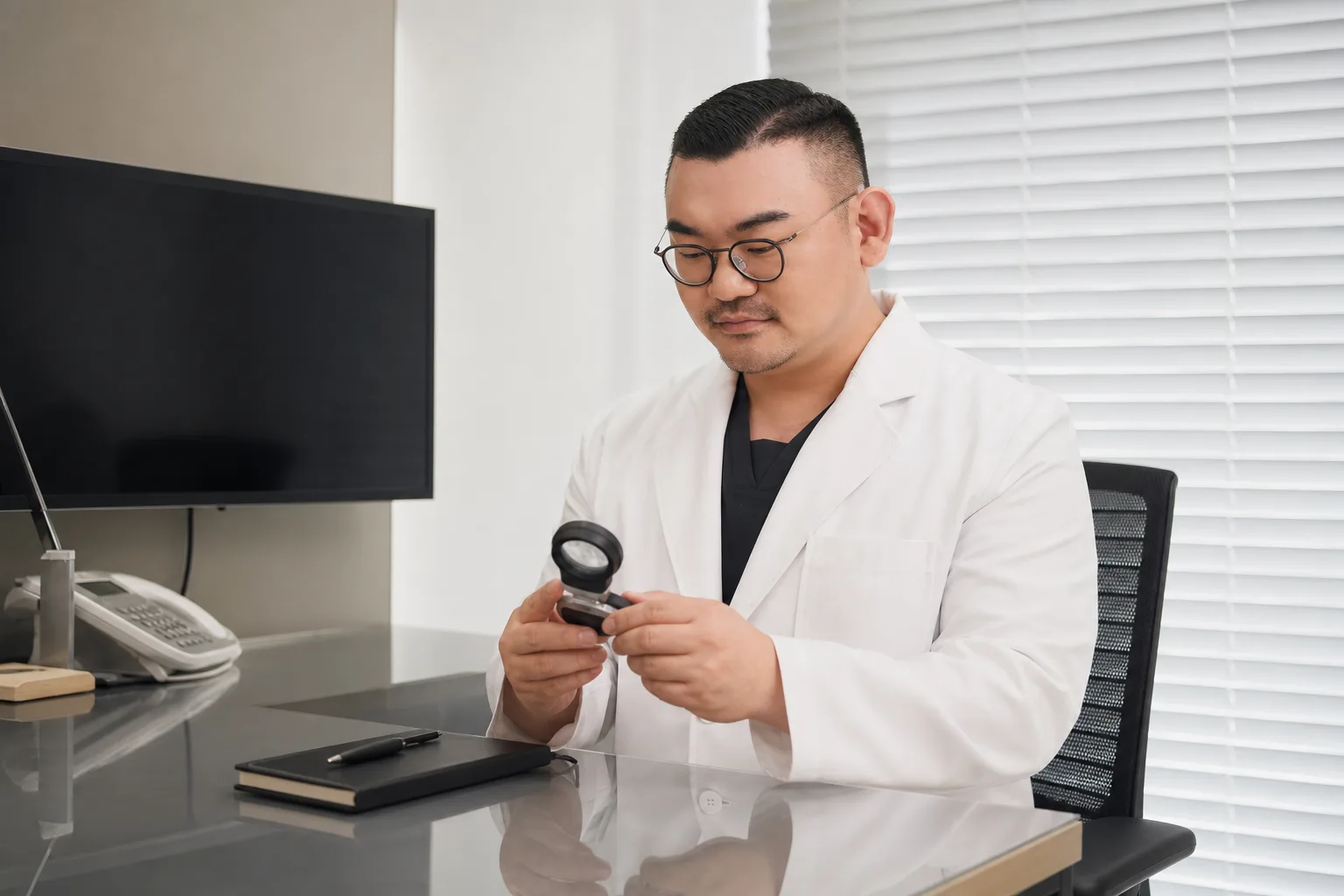
A mole visit with me starts with a conversation and a close look at each spot under magnification. I ask how long you have had it, whether it has changed and how your skin has healed after past cuts or acne. Our VOS Skin MBTI questionnaire and in-clinic analysis help me understand how your skin tends to react, which affects how I plan the depth and how many spots to do at once.
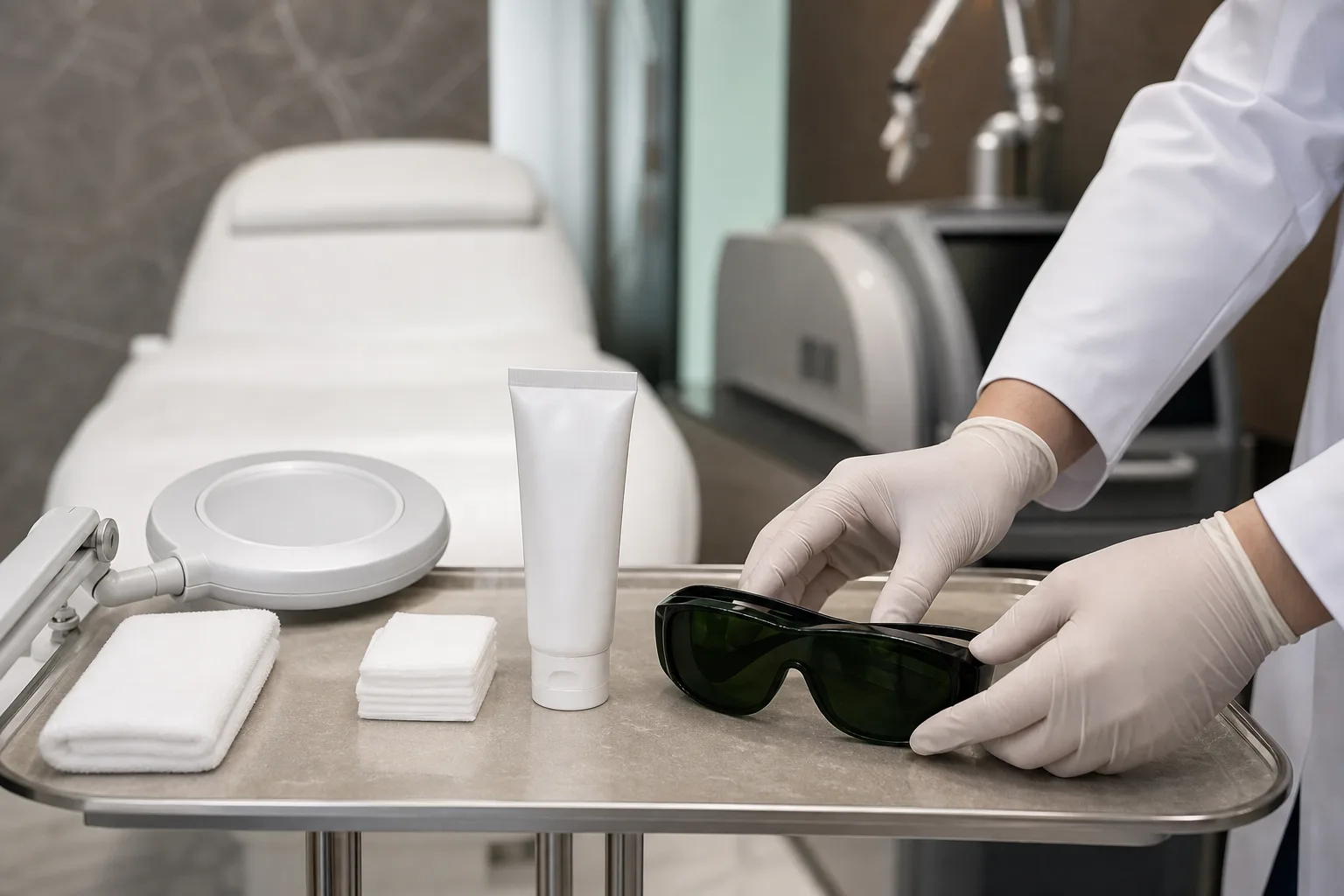
If the spots are suitable, the treatment itself is short. In general, the area is numbed first, then the laser removes each lesion in passes. You will notice warmth, a snapping sound and a faint smell. Small spots take seconds each; several spots in one visit add up but rarely make for a long appointment.
You leave with small, open or lightly crusted spots. In general, wounds like these are kept moist with an ointment or a thin hydrocolloid patch, depending on the site, and I go through the aftercare before you leave. Most people go straight back to sightseeing, as long as the spots stay clean and out of the sun.

Healing day by day, and what it means for your flight
The wound from a spot laser heals in stages. The timing below is typical for small facial spots; larger or deeper ones take longer, and body skin heals more slowly than face skin.
- Days 1–3: The spot is moist and pink or slightly sunken. Keep it clean and covered as advised.
- Days 4–10: A thin scab or new pink skin forms. Do not pick it, even if it itches.
- Weeks 2–8: The spot is flat and pink, and slowly blends toward your normal color.
- Months 2–6: Redness fades. Any shadow of remaining pigment becomes easier to judge.
For a trip, this means booking mole removal early in your stay, not the day before you fly. It also means sun protection for the months after, because a fresh spot exposed to strong sun can darken into a brown mark that lasts far longer than the original wound. A hat and a high-SPF sunscreen on the area every day are part of the treatment, not an extra.
Swimming pools, saunas and heavy sweating are worth skipping until the surface has closed. If you are prone to raised scars, tell me before treatment, because the plan for you will be more conservative.
Scars, recurrence and other honest caveats
Laser removal of a mole is a small procedure, but it is still a wound. These are the outcomes worth knowing about before you book:
- A mark: Most small spots leave a faint pink or pale dot that fades over months. Deeper moles can leave a small dip.
- Recurrence: Some pigment cells may sit deeper than it is sensible to chase. A faint regrowth can appear, and a second, smaller session is often the answer.
- Pigment change: On darker or tanned skin, or with sun exposure during healing, the spot can darken for a while.
- Raised scars: People who form keloids or thick scars need a careful discussion first, especially on the chest, shoulders and jawline.
If any of this sounds familiar from past acne marks, the same principles of slow, careful healing apply; I explain them in more depth in my article on Korean acne scar treatment.
Mole removal cost in Korea at VOS
On our official English price list, the CO₂ Spot Laser appears in the Pigmentation, Redness & Benign Lesions section with a range of ₩10,000–₩50,000. The list gives a range rather than one fixed figure, and where your spots fall within it, as well as the total for several spots, is confirmed after I have examined them. Prices are in KRW before 10% VAT, the same for all nationalities, and may change without prior notice; check the current list on our pricing page before you travel.
What changes the total is mostly the number of spots and their size and type. A single small mole and a scattering of skin tags along the neck are different visits. Anything I decide should not be lasered is not part of that range, and I will explain what the next step should be instead.
How I approach mole removal
My first job is to sort the spots. I separate what is clearly benign and cosmetic from anything that needs a closer look, and I tell you which group each spot belongs to before we talk about treatment. If you would like to understand how I read the skin as a whole in that first visit, my article on skin analysis in Seoul covers it.
For the spots that suit a laser, I go conservatively. I would rather remove a raised mole down to skin level and accept a faint shadow than dig deep enough to leave a visible pit. If the shadow bothers you once it has healed, a second, smaller session is a simpler fix than correcting a scar.
I also plan around your trip. If you have three days left, I may suggest removing only the spots where healing is quickest, and leaving the rest for a later visit. That is not upselling; it is the difference between going home with small pink dots and going home with open wounds on a long flight.

Before you message us
The questions above cover what I hear most about mole removal. The most helpful thing you can send is a clear, close photo of each spot in daylight, with a coin or ruler beside it for scale, plus how long you have had it and whether it has changed. Add your travel dates, and I can tell you whether a laser seems reasonable or whether a spot should be examined first. The clinic is in front of Dosan Park and is closed on Wednesdays, Sundays and public holidays.
Results, timing and recovery vary from person to person. Nothing here replaces an in-person consultation with a dermatologist.
Send your photos and dates on WhatsApp, and our team will come back to you with my view on each spot and a clear quote before anything is booked.
See me explain it on video
I answer the questions patients ask me on camera. The YouTube channel is in Korean with English titles; Instagram and TikTok are for international patients.

Questions readers ask about mole removal korea
Will a mole come back after laser removal?
Will mole removal leave a scar?
Can I fly home the day after mole removal?
Can you remove a mole that has changed recently?
Does mole removal hurt?
Results, timing and recovery vary from person to person. This article is general information from VOS Dermatology Clinic and does not replace an in-person consultation. Any prices mentioned are from the clinic’s official price list (KRW, before VAT) and may change.
Related articles
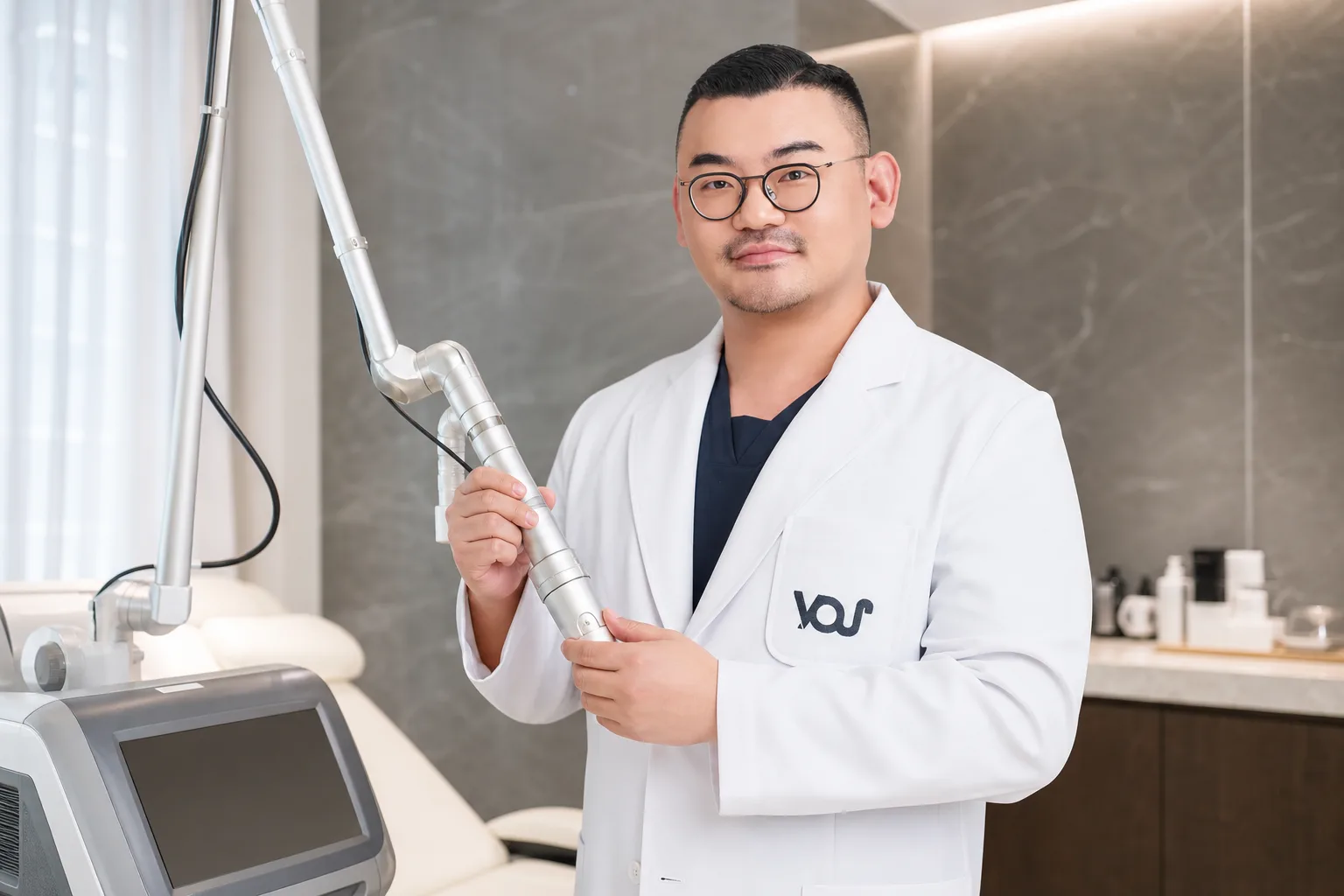
Korean Dark Spot Treatment: Types, Lasers and Aftercare
Korean dark spot treatment explained: which spot is which, how lasers and creams work, sun rules afterwards and what a trip allows — VOS Dermatology, Gangnam.
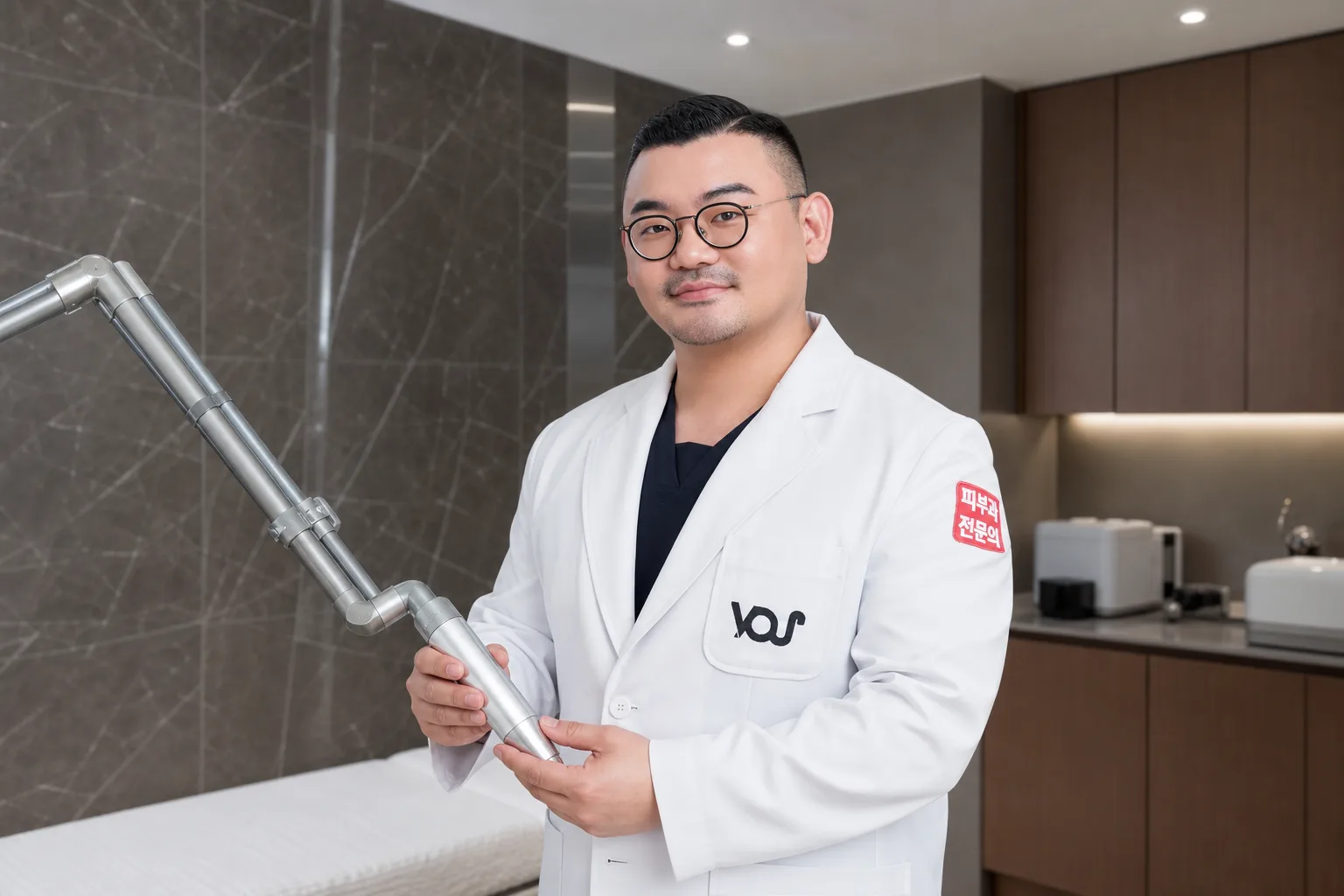
Korean Laser Treatment: Types, Risks and a Realistic Plan
Korean laser treatment explained: toning, fractional, IPL and vascular lasers, who suits each, short-trip downtime and real risks — VOS Dermatology, Gangnam.
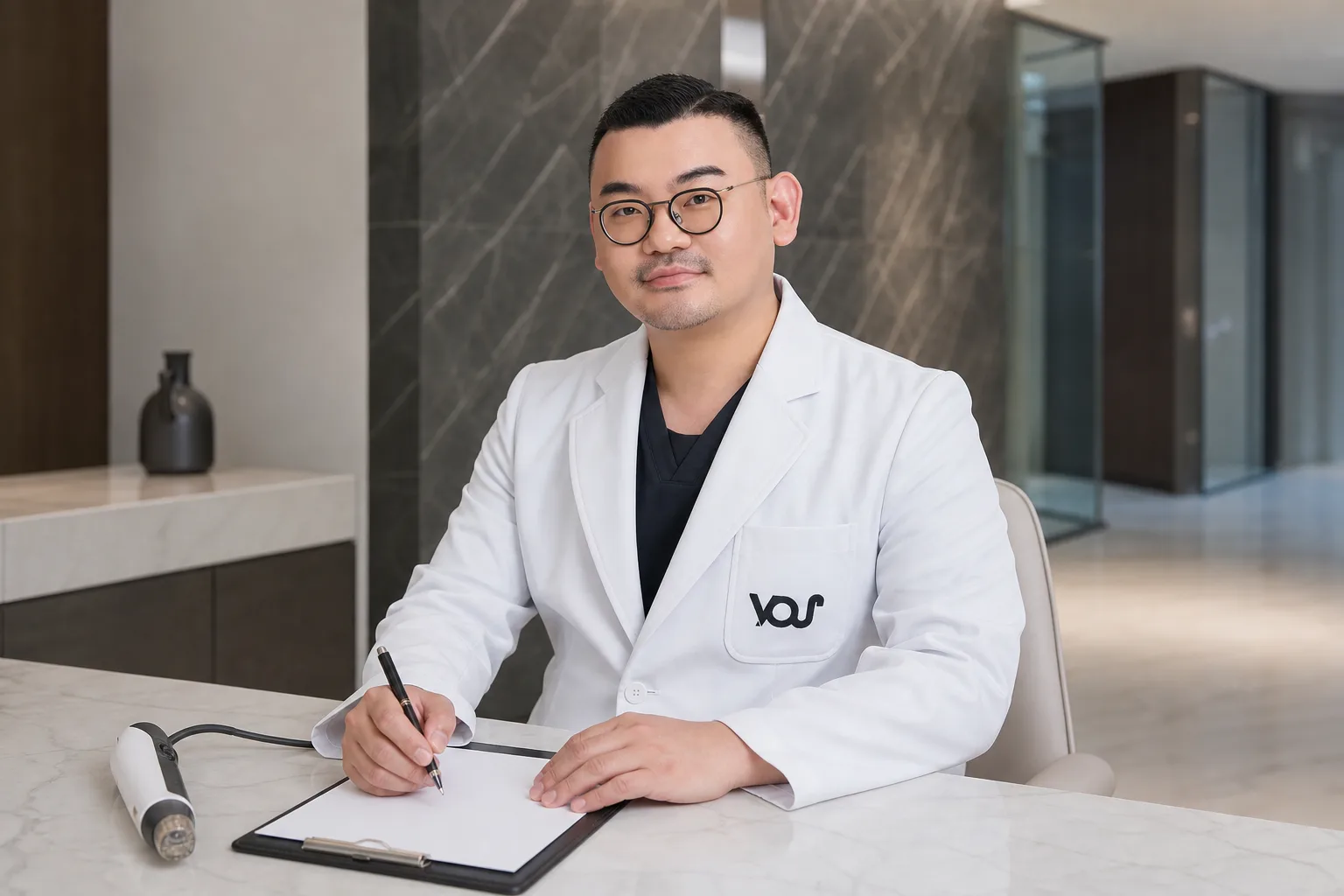
Korean Acne Scar Treatment: Scar Types, Program and Prices
Korean acne scar treatment explained: which scar types respond to what, the Signature Acne Scar Program's components and listed price. VOS Dermatology, Gangnam.