
Can a Korean skin whitening injection fade spots? Rarely
What a korean skin whitening injection contains, what the research shows and who should skip it. A dermatologist's guide from VOS Dermatology, Gangnam.


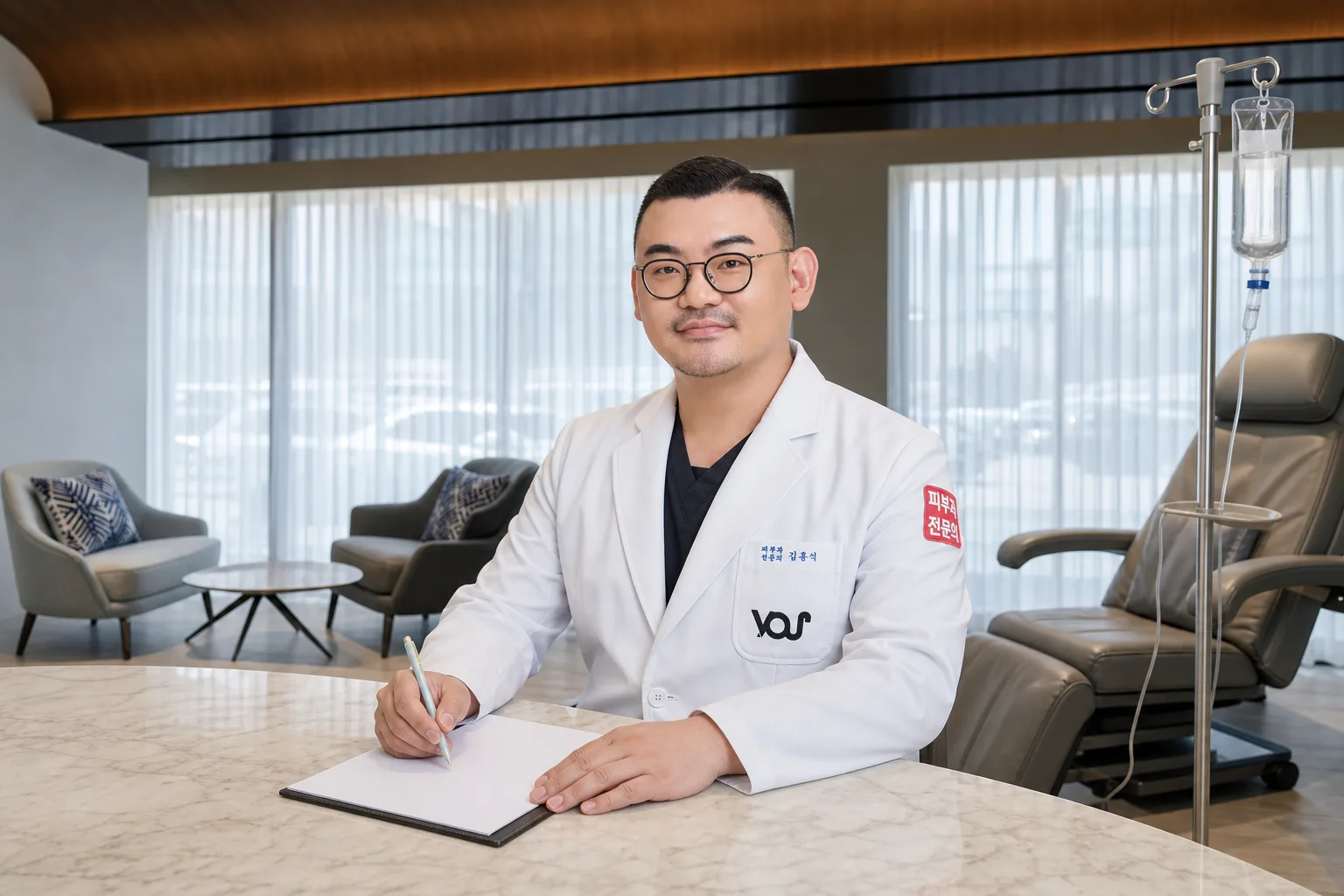
A “korean skin whitening injection”, as people search for it, is usually a glutathione shot or drip, sometimes with vitamin C added, and the evidence that it lightens skin is thin and short-lived. On a short trip the bigger catch is that these are sold as courses, and shot number four can't happen once you've flown home. What's worth doing comes down to the kind of darkness you have: a tan, sun spots, melasma or old acne marks. I'm Dr. Hongseok Kim, a board-certified dermatologist with 21 years in practice, and at VOS I see each patient myself from consultation to procedure; I wrote this because one label, whitening, covers problems that need opposite treatments.
The short version: a whitening injection may brighten skin slightly for a few months in some people, it doesn't clear spots, and the intravenous form has real side effects. An even tone usually comes from treating the specific pigment you have and from daily sun protection. Glow and texture are a separate goal, and skin boosters work on those.
If you're still deciding whether anything is worth booking, send two daylight photos of the area without makeup, plus your travel dates, on WhatsApp. The clinic is closed on Wednesdays, Sundays and public holidays, so check your itinerary against those days first.
Send daylight photos and your travel dates on WhatsApp
What is actually in a Korean whitening injection?
Mostly glutathione, an antioxidant your own cells already make, given as an injection or an IV drip and often mixed with vitamin C. Search “korean skin whitening injection” and you'll find dozens of named recipes, but the name is marketing and the contents differ from one place to another.
The theory is that glutathione nudges pigment cells toward a lighter type of melanin. That effect shows up in lab work; in real skin it is modest. The pink-coloured drips you may have seen are a variation on the same idea, and I explain what goes into the pink glutathione drip separately. The oral, topical and injected forms are compared in my piece on glutathione injections.
What an injection doesn't do matters more for your decision. It doesn't target a sun spot the way a pigment laser does. It doesn't change the shade your skin was born with. And it doesn't protect you from next summer's sun.
What the glutathione research shows
The signal is small, temporary and based on very few trials. A 2025 narrative review in Cureus looked at oral, topical and intravenous glutathione.
The same review points out that there is no standardised IV dosing protocol, and it reports liver dysfunction and one case of anaphylaxis among trial participants. Its authors suggest intravenous use stay in closely supervised clinical settings. That isn't a reason for panic, but it is a reason not to treat a drip as a beauty extra squeezed between shopping stops.
Two practical points follow. A single injection on holiday is unlikely to show much. And when there is an effect, it tends to fade, which turns the treatment into a habit you'd have to keep feeding.
Worth knowing: When any lightening product is sold in sessions, ask three things: how many, how far apart, and what happens when you stop. For glutathione, the published answer to the last question is that the change fades.

Which kind of dark skin are you trying to change?
Pin this down first, because each kind of darkness sits in a different layer and responds to different things. A drip that circulates through your whole body can't tell a sun spot from your natural shade.
| What you see | What it usually is | What tends to help |
|---|---|---|
| Overall darker tone after a sunny season | Tan | Time and daily sunscreen |
| Flat brown spots on cheeks or hands | Sun spots (solar lentigines) | Pigment laser in suitable skin, plus sunscreen |
| Symmetrical brown patches on cheeks, forehead or upper lip | Melasma | A slow, gentle plan; heat can make it worse |
| Brown or pink marks where acne was | Post-inflammatory pigmentation | Calming the acne first, sunscreen, time |
| An even shade you've always had | Your natural skin colour | Nothing needs treating |
Melasma is the row I'm most careful with. It is driven by sun, heat and hormones, it tends to come back, and aggressive treatment can leave it darker than before. Someone with melasma who books a quick lightening session before a beach week is setting up the conditions for it to return.
Which device, how many sessions and whether your skin type tolerates them are settled by examining your skin. I've written more on what brightening treatments can realistically do, including the lasers.
How I approach a request to whiten skin
A request for whitening is usually one of two different wishes: a lighter shade, or a more even one. The second is something dermatology can work on. The first, when your skin is simply your natural colour and evenly toned, isn't a medical problem, and I don't think it should be treated as one.
What separates them is concrete. Where the pigment sits, and whether its edges are sharp or blurred. Whether it is symmetrical. Whether it darkens in summer or around hormonal changes. Whether small injuries, like a scratch or a pimple, have left marks that lasted months. At VOS the starting point is a 3D skin analysis and a one-to-one consultation, and every procedure that follows is one I perform myself.
Some findings push me toward a slower plan: pigment that comes and goes with heat or hormones, a history of dark marks after minor injuries, or a month of strong sun ahead of you. In those cases a fast course of anything is more likely to irritate than to even out.

Who should skip a whitening injection?
Skip it if you're pregnant or breastfeeding, have liver or kidney disease, have had a serious allergic reaction to an injection, or expect it to clear melasma or sun spots. In each of those cases the downside is larger, or the treatment simply doesn't match the problem.
Risks and side effects to know
The common side effects of any injection are bruising, soreness and redness at the site, usually short-lived. With intravenous glutathione the review above adds liver changes and anaphylaxis to the list. Products bought online and injected at home add a different risk: you can't know what is in the vial or how it was made.
Clinic hygiene is the part you can check. At VOS that means single-use disposables, an autoclave and UV sterilizer, staff infection-control training and a 5μm filter syringe that blocks ampoule glass fragments. None of that changes what the drug itself can or can't do, and whether any injection suits you is decided at the in-person exam.
If one of the points above applies to you, mention it in your first WhatsApp message together with any medicines you take, and add a photo of the area. You'll get a reply in English, and that information sets what is worth discussing when you come in.
Send daylight photos and your travel dates on WhatsAppBrighter is a different goal from lighter
Much of what people mean by whitening is a wish for skin that reflects light evenly: smoother, better hydrated, less dull. Those changes come from the skin's structure and surface, and they are what skin boosters and facials work on.
Rejuran delivers polynucleotide (PN) into the dermis through small injections. Its role is regeneration and texture, not colour. The clinic's treatment page describes a course of three sessions at one-month intervals, which matters if you only have one trip. A systematic review of polynucleotides in aesthetic medicine, published in the Journal of Cosmetic Dermatology, reported improvements in skin quality across the studies it included, while calling for larger, better-designed trials. For what PN actually is, see what is really in a salmon DNA injection.
If you have a single afternoon, a HydraFacial is listed on the body and skin conditioning page as taking about 30 minutes with no downtime. It gives hydration and a brighter look that day. It won't remove a sun spot either, and it doesn't claim to.

What happens after you fly home?
Anything sold as a course leaves you with the same problem once you're back home: the later sessions either happen on another trip or not at all. Plan for that before you start.
The CDC's guidance on medical tourism recommends getting copies of your records and planning follow-up care at home before you travel. For skin treatment that means knowing the name of what was injected or which laser was used, and on which date, so a dermatologist at home can make sense of it.
The schedule is practical too. VOS is open Monday, Tuesday and Thursday 10:00–19:00, Friday until 20:00 and Saturday 10:00–16:00, with lunch from 13:00 to 14:00 on weekdays. The building is at 806 Eonju-ro in Gangnam, in front of Dosan Park, an 11-minute walk from Gangnam-gu Office Station Exit 3 on Line 7. A consultation plus a single treatment fits a weekday; a three-session course needs three visits spaced a month apart.
Whatever you have done, sunscreen is the step that protects the result. Pigment work and a week of unprotected sun cancel each other out.

Before you message us
Send two things on WhatsApp at https://wa.me/821096974628: daylight photos of the area without makeup, and a short note on how long the darkness has been there and whether it changes with the seasons. Add your travel dates if you have them. You'll get a reply in English, and your consultation can be fitted to those dates.
How skin responds varies from person to person, so treat any plan, including mine, as a starting point that the examination refines.
See me explain it on video
I answer the questions patients ask me on camera. The YouTube channel is in Korean with English titles; Instagram and TikTok are for international patients.
Questions readers ask about korean skin whitening injection
Is a whitening injection the same as a glutathione drip?
How long does the effect of a glutathione injection last?
Can a whitening injection treat melasma?
Is it safe to inject glutathione bought online at home?
Can I fly the day after a skin injection in Seoul?
Results, timing and recovery vary from person to person. This article is general information from VOS Dermatology Clinic and does not replace an in-person consultation. Any prices mentioned are from the clinic’s official price list (KRW, before VAT) and may change.
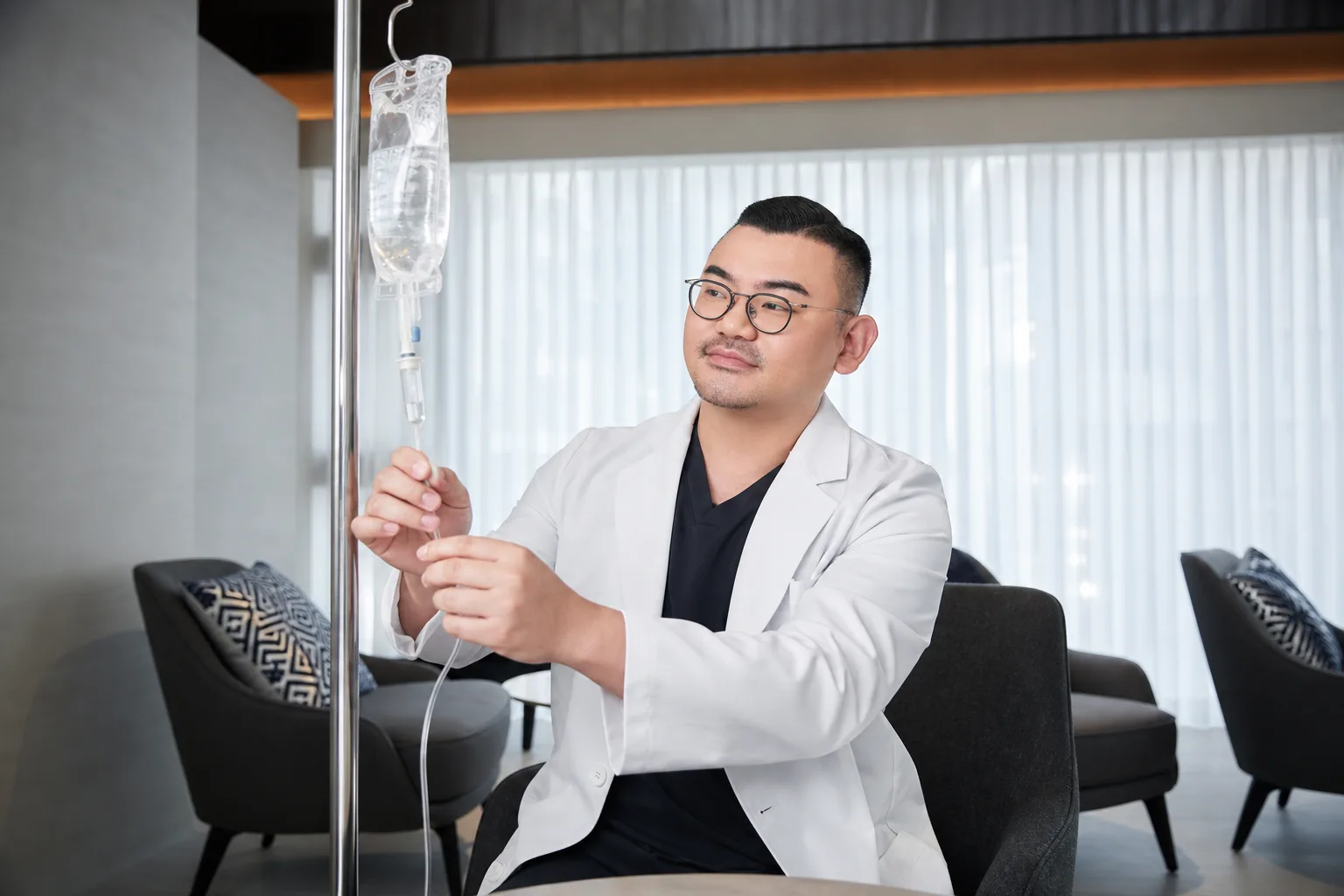
Korean Pink Glutathione Injection: What the Pink Drip Is
Korean pink glutathione injection explained: what makes the drip pink, what else is in it, side effects and the questions to ask first. VOS Dermatology, Gangnam
Korean Glutathione Injection: What It Can and Cannot Do
Korean glutathione injection explained: what the drip is, what evidence says on skin tone, the risks, IV plans and listed prices — VOS Dermatology, Gangnam.

Korean Skin Whitening Treatment: What Brightening Can Do
Korean skin whitening treatment, honestly: what lasers can and cannot change about tone, which pigment responds and listed prices — VOS Dermatology, Gangnam.