Korean Skin Whitening Treatment: What Brightening Can Do
Korean skin whitening treatment, honestly: what lasers can and cannot change about tone, which pigment responds and listed prices — VOS Dermatology, Gangnam.


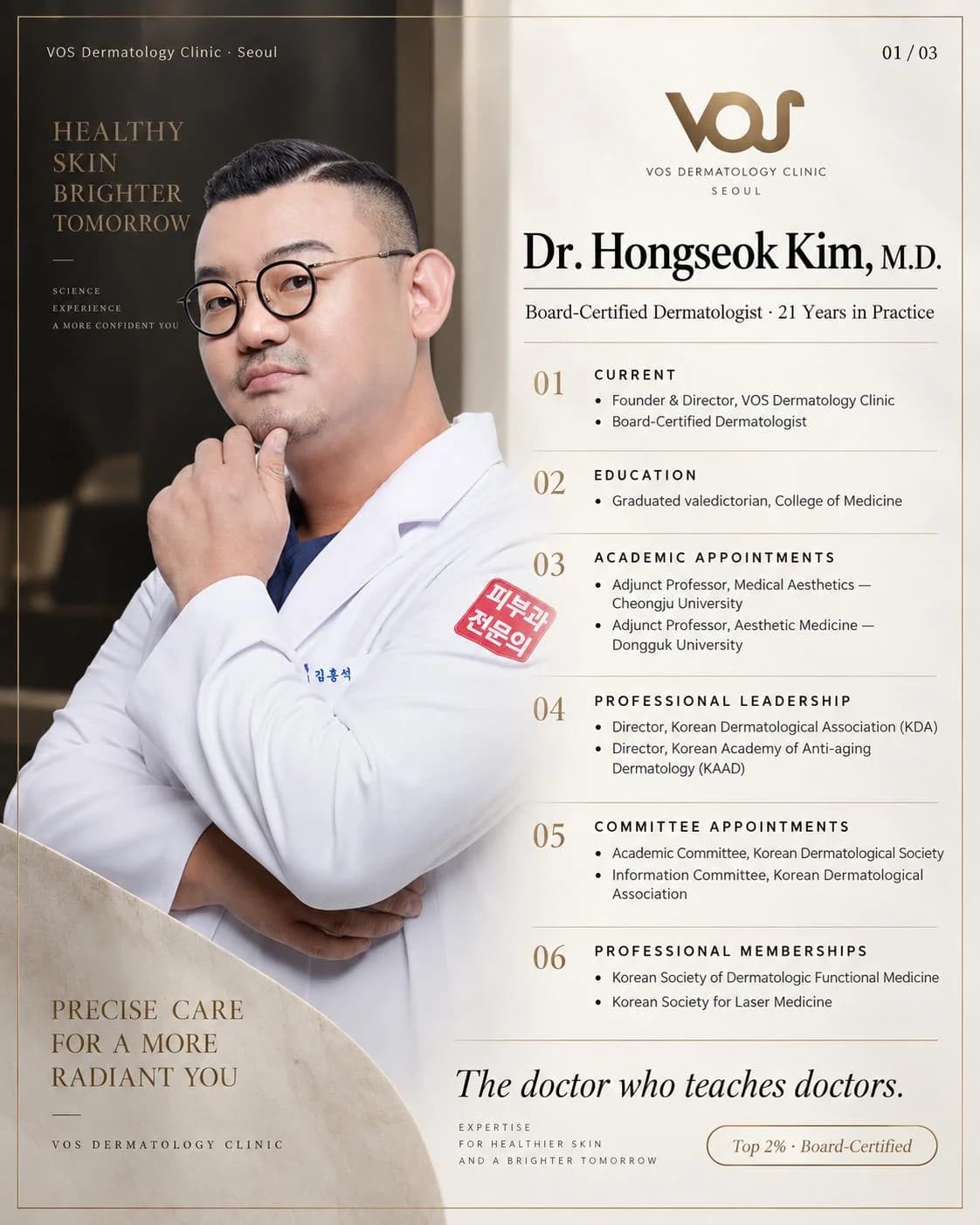
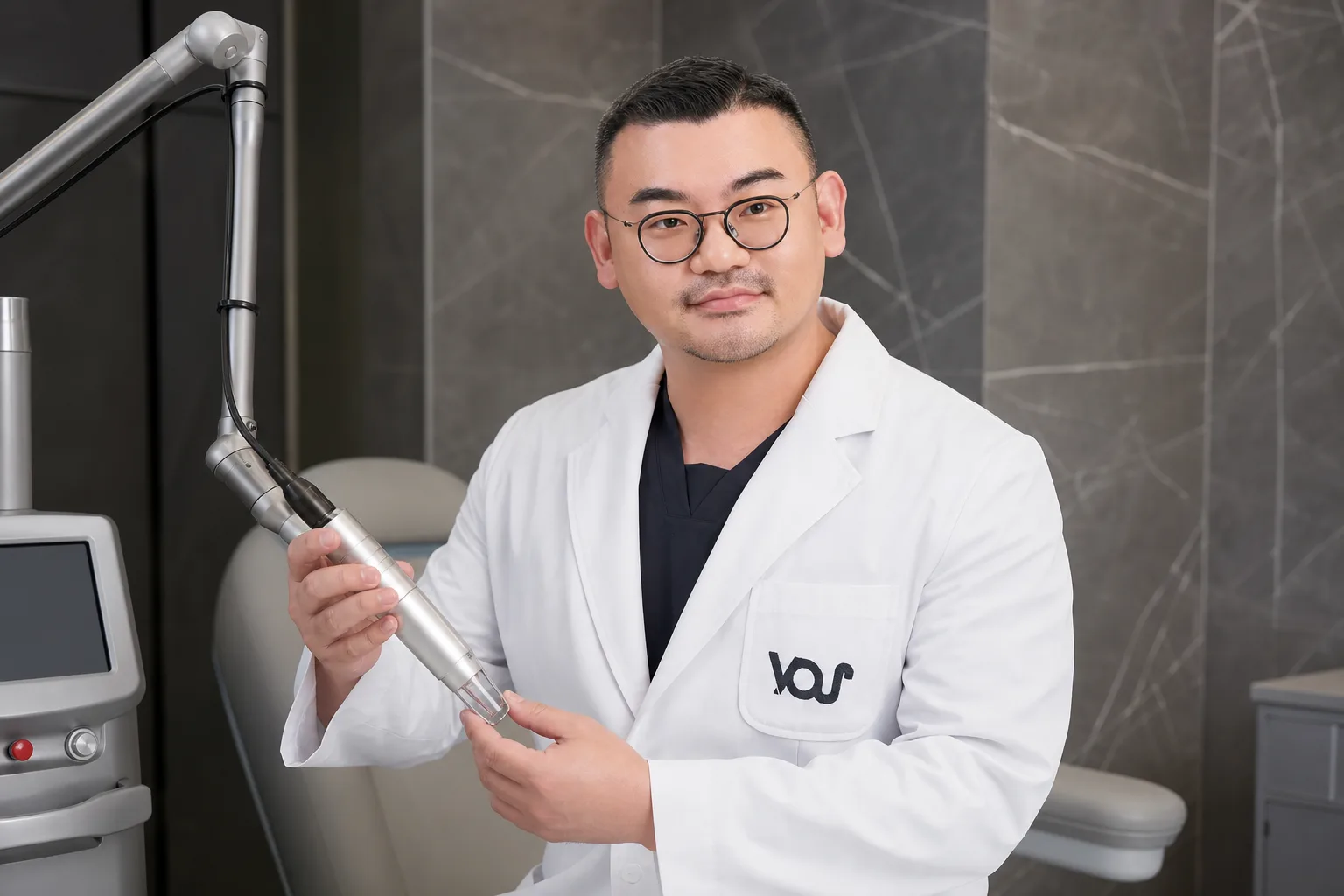
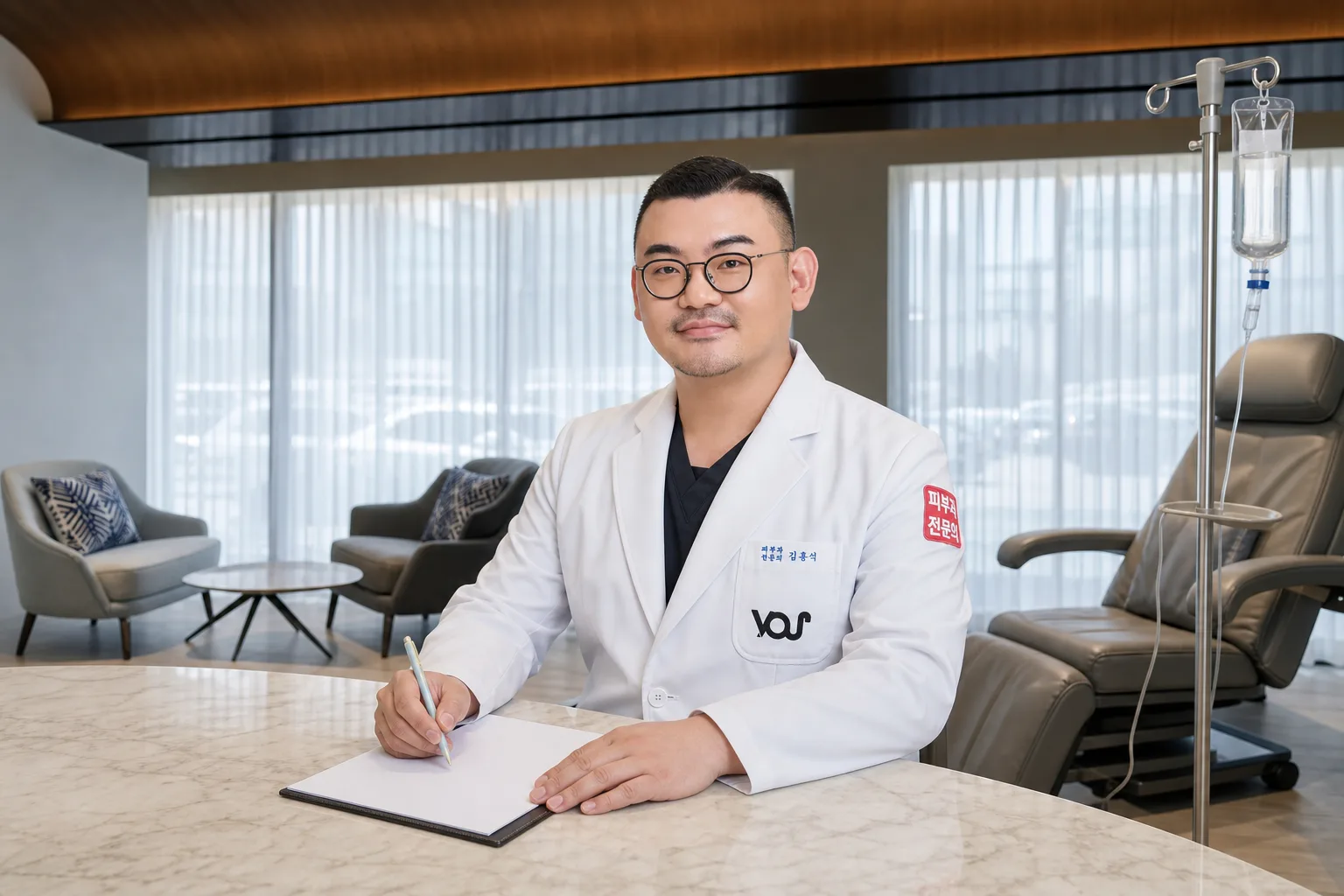
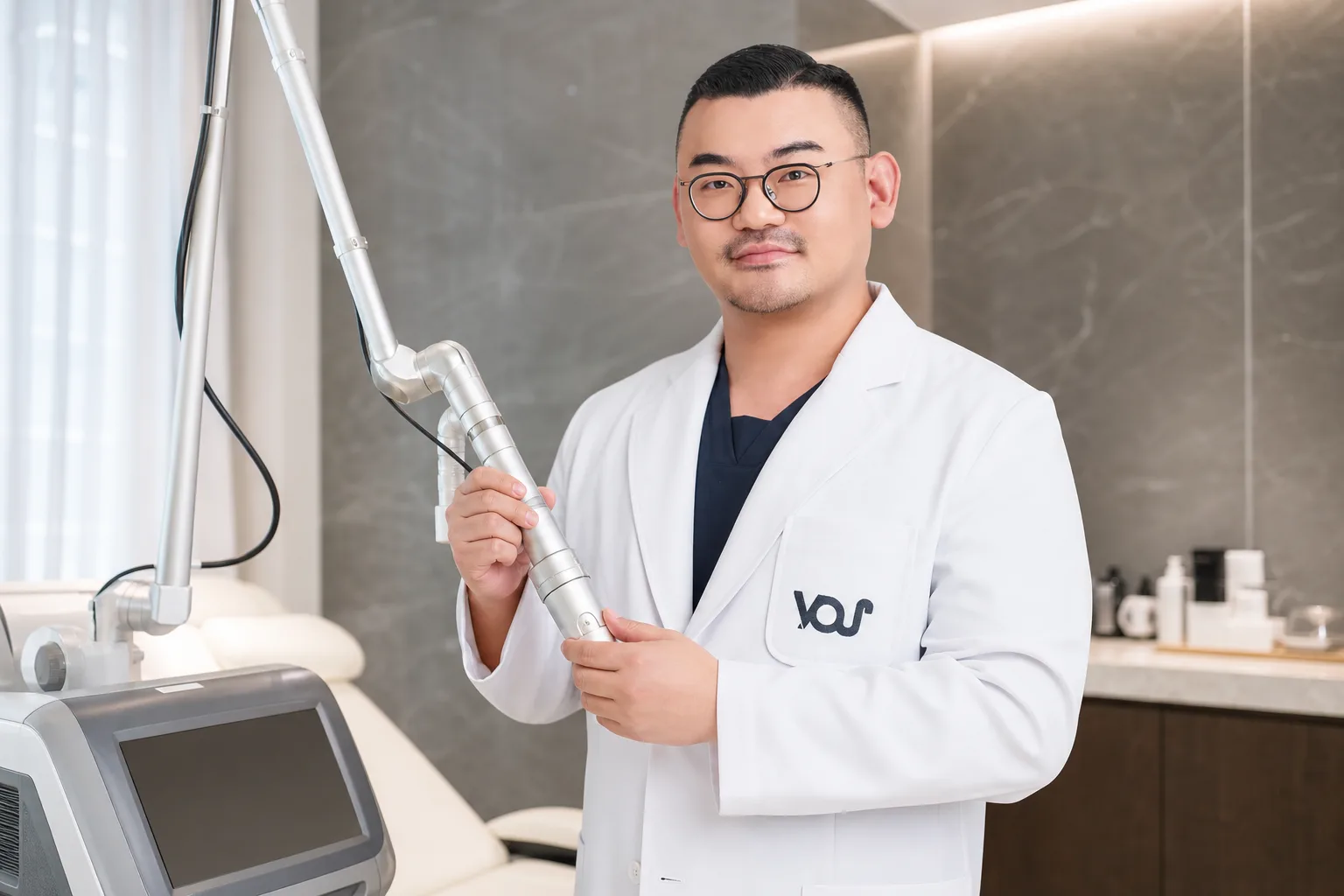
My name is Dr. Hongseok Kim. I am a board-certified dermatologist with 21 years in practice, and at VOS Dermatology Clinic in Gangnam I do every consultation and every treatment myself, one patient at a time. "Can you make my skin whiter?" is a question visitors put to me in one form or another again and again, and I think it deserves a straight answer before anyone books a flight for it.
Here is that answer. A Korean skin whitening treatment, done responsibly, does not bleach your natural color; it removes extra pigment and dullness so your own tone looks even, clear and brighter. In Korean clinics this is usually called "tone up", and it is built on low-energy lasers, light treatments and skin-quality care repeated over a series. This guide is for adults abroad who want a brighter complexion and want to know what is realistic, what is risky and what it costs.
What "whitening" means in a Korean dermatology clinic
The word "whitening" came into English from Asian skincare marketing, and it causes confusion. In a dermatologist's office, nobody is trying to change the color you were born with. That baseline is set by genetics, and no laser or drip changes it safely.
What we treat is the pigment and the dullness that sit on top of that baseline. Most people who ask for whitening are really describing one or more of these:
- Sun-related brown spots and freckles that make the face look uneven
- Melasma, the blotchy shadow on the cheeks, forehead or upper lip
- Brown marks left behind after acne or irritation
- A tired, grey or sallow look from rough texture and dehydration
- Redness that makes the skin look blotchy rather than clear
Each of these responds to something different. That is why the term "skin brightening treatment" is more honest than "whitening", and why I start with what is actually on your face.
How tone-up treatment works
Pigment-targeting lasers deliver light that melanin absorbs. In low-energy "toning", a gentle beam passes over the whole face, breaking excess pigment into smaller particles without much heat. The body then clears those particles over the following weeks. Because each pass is gentle, toning is done as a series rather than one strong session.
Light-based and fractional treatments work differently. Intense pulsed light treats brown and red together and suits scattered sun damage. Fractional lasers treat tiny columns of skin at a time, improving tone and texture together, with a few days of redness and dryness.
The other half of a brighter complexion is skin quality. Smooth, well-hydrated skin reflects light more evenly, so it looks brighter even when the pigment has not changed much. That is where skin boosters and gentle resurfacing earn their place, and it is the idea behind the glow I describe in my article on glowing skin, Korean style.
Options at VOS and their listed prices
These are the tone-related options on our official English price list, described in the list's own terms. Prices are copied exactly in KRW before 10% VAT, are the same for all nationalities and may change without prior notice; check the current list on our pricing page.
| Option | What it is listed for | Listed price (KRW, before VAT) |
|---|---|---|
| Fotona Nd:YAG | Low-fluence laser for melasma, freckles and diffuse pigmentation; multiple sessions recommended | ₩300,000 |
| M22 IPL | Pigmentation, redness, vascular lesions and overall skin tone | ₩500,000 |
| Fraxel Dual 1927 (Thulium) | Melasma, pigmentation, sun damage, uneven tone and texture | ₩800,000 |
| Melasma Treatment Program | Fotona Nd:YAG + Potenza RF + MiraJet combination; multiple sessions recommended | ₩800,000 (listed down from ₩1,100,000) |
| MiraJet | Needle-free delivery of skin-booster solutions for texture, pores and hydration | ₩300,000 |
The total for a whitening plan depends on how many sessions your pigment needs, whether we combine treatments, and how many visits your stay allows. A single toning session and a full series are very different budgets. All figures are KRW before 10% VAT and may change, so ask us for a written quote based on your photos.
Who suits a skin brightening plan, and who should wait
A tone-up plan tends to go well if you have uneven tone from sun or freckles, mild to moderate melasma, or dullness from dryness and texture. It also suits people who are ready to use sunscreen every single day afterwards, because without that the result fades quickly.
It is better to wait, or to start more gently, in these situations:
- A fresh tan or a beach holiday planned right after treatment
- Active acne, eczema or irritation on the face
- Recent use of oral isotretinoin, or strong peels in the past few weeks
- Pregnancy or breastfeeding
- A spot that has changed recently, which needs examination, not a laser
Medium and darker skin tones can be treated, but they respond to heat with more pigment. For you, the energy is lower, the series is longer and the progress is slower. That is the right way to do it, not a limitation.
Worth knowing: The fastest way to make pigment worse is to chase a quick result. Strong settings can give a dramatic first week and then leave rebound darkening or pale spots that take months to settle. If a clinic promises a whiter face in one session, treat that as a warning sign.

Risks and the products I ask people to stop
Pigment lasers are well-studied, but they have side effects worth knowing. Rebound darkening (post-inflammatory hyperpigmentation) can appear after too much heat or sun. Light spots (hypopigmentation) can follow repeated aggressive toning. Melasma can flare if it is treated like a sun spot. Redness and dryness for a short time are common after fractional work.
The risks I worry about more often come from outside the clinic. Some whitening creams sold online have been found to contain mercury or potent steroids, which can thin and damage the skin. Strong bleaching creams used for months without supervision can cause their own discoloration. If you are using any brightening product now, bring it with you, and I will tell you what to stop before treatment.
Glutathione drips are often sold as whitening injections. I explain honestly what they can and cannot do for skin tone in my article on Korean glutathione injection. At VOS, IV formulations are prescribed individually through our IV Clinic after diagnosis, for overall skin condition and recovery rather than as a whitening shortcut.
Fitting tone-up treatment into a trip to Seoul
Toning is designed as a series, and most visitors are in Seoul for a week or two. That gap is the main thing to plan around. One or two sessions on one trip can give a fresher, more even look, but they are a start, not the full course. If you can stay longer or return, the plan becomes more complete.
Treat early in your stay. Gentle toning usually leaves mild redness for a few hours, while fractional work can leave redness and dryness for several days. Plan for the sun as well: a broad hat, a high-SPF sunscreen reapplied through the day and no deliberate tanning for several weeks. How fast your skin settles varies from person to person.
If melasma is the main reason you want a brighter face, the timeline is longer and relapse is part of the story; I explain why in my guide to Korean melasma treatment. If your concern is a few distinct brown spots rather than overall tone, my article on Korean dark spot treatment sorts the spot types and how each responds.

How I approach a whitening request
I begin by translating the word. When someone asks me for whitening, I look at what is actually making the face look darker or uneven: sun spots, melasma, post-acne marks, redness or dullness. I map those areas on a face diagram with you, so we both know what we are treating. Our VOS Skin MBTI questionnaire and in-clinic analysis help me understand how your skin reacts to heat and irritation, which matters a great deal for pigment.
From there, I choose the gentlest plan that can do the job. For diffuse pigment, that often means low-energy toning over several sessions rather than one strong pass. For dullness and rough texture, a needle-free booster such as MiraJet can help the skin reflect light more evenly, with mild redness that usually settles within hours to a day.
What I will not do is promise a shade. I will tell you which part of your concern can improve, how many sessions that is likely to take, and what you need to do at home to keep it.
Before you message us
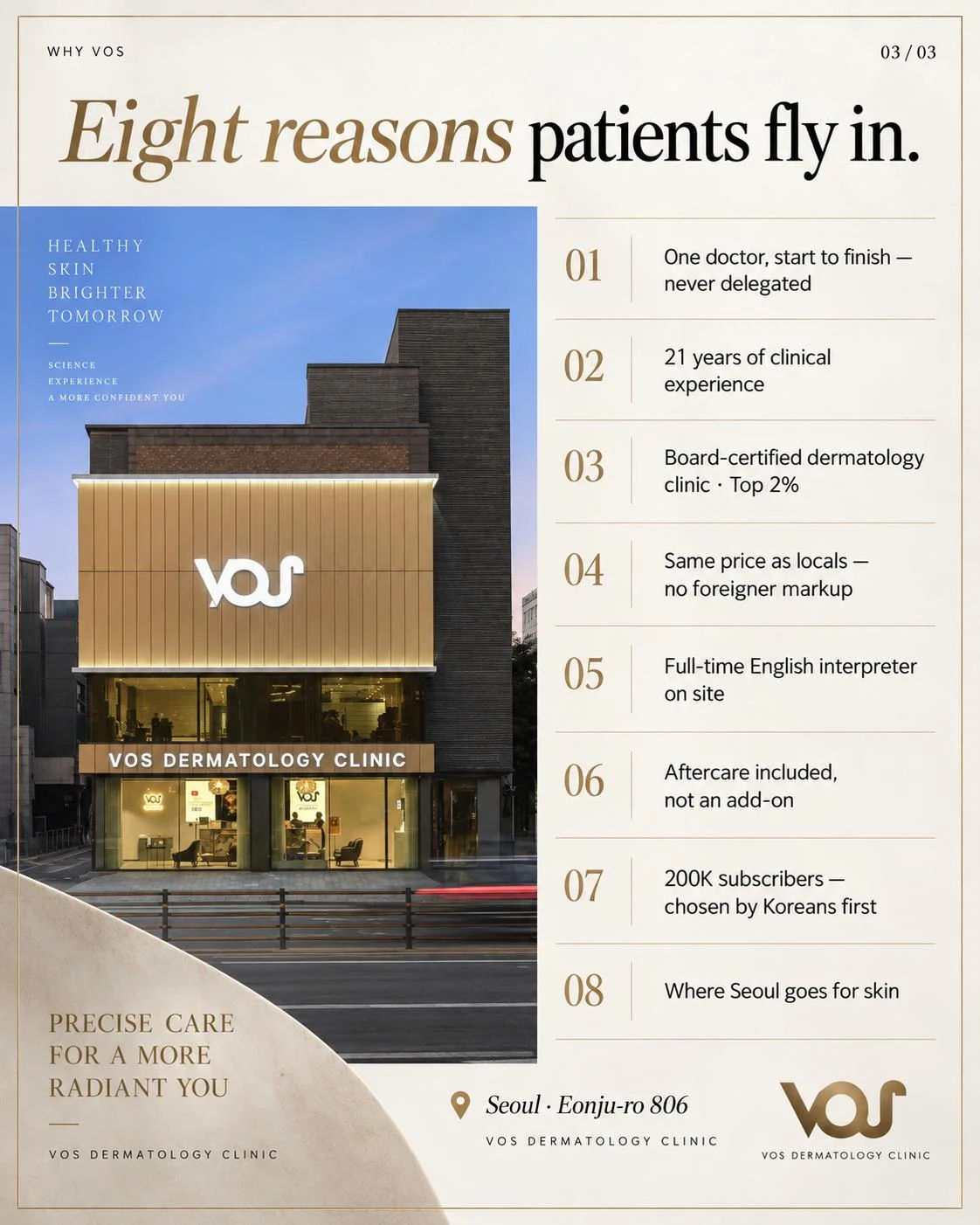
The questions above cover what I hear most about whitening and tone-up treatment. The most useful thing you can send is a clear photo of your face in daylight, without make-up, plus a close-up of any area that bothers you most. Add your travel dates and any creams or medicines you use. With that, I can tell you which option fits and how many sessions your trip allows. The clinic is in front of Dosan Park and is closed on Wednesdays, Sundays and public holidays.
Results, timing and recovery vary from person to person. Nothing here replaces an in-person consultation with a dermatologist.
Send your photos and dates on WhatsApp, and our team will reply with my view and a clear quote before anything is scheduled.
See me explain it on video
I answer the questions patients ask me on camera. The YouTube channel is in Korean with English titles; Instagram and TikTok are for international patients.
Questions readers ask about korean skin whitening treatment
Can a Korean whitening treatment change my natural skin color?
How many laser toning sessions do I need?
Is laser toning safe for darker skin?
Do whitening creams or injections bought online work the same way?
When will I see a brighter tone after treatment?
Results, timing and recovery vary from person to person. This article is general information from VOS Dermatology Clinic and does not replace an in-person consultation. Any prices mentioned are from the clinic’s official price list (KRW, before VAT) and may change.
Related articles
Korean Melasma Treatment: Lasers, Relapse and Real Timelines
Korean melasma treatment explained: why melasma returns, gentle lasers vs creams and tablets, what one Seoul trip can do — VOS Dermatology, Gangnam.
Korean Glutathione Injection: What It Can and Cannot Do
Korean glutathione injection explained: what the drip is, what evidence says on skin tone, the risks, IV plans and listed prices — VOS Dermatology, Gangnam.
Korean Dark Spot Treatment: Types, Lasers and Aftercare
Korean dark spot treatment explained: which spot is which, how lasers and creams work, sun rules afterwards and what a trip allows — VOS Dermatology, Gangnam.